A repair fixes one spot. A replacement takes the whole roof off and rebuilds it in layers, from the wood up. That is why it costs more, and why the details in the written scope matter so much. Here is what a full job looks like, step by step.
A roof is a system, not just shingles
From the bottom up, a shingle roof has these parts:
- Deck. The wood sheets nailed to the rafters. All else sits on it.
- Underlayment. A water-shedding sheet rolled over the deck. It is the backup if a shingle fails.
- Drip edge. A thin metal strip along the roof edge that sends water into the gutter and not behind it.
- Flashing. Metal strips that seal the joints around chimneys, walls, vents and valleys.
- Shingles. The part you see. They shed water and take the sun and hail.
- Ridge cap and vents. Special shingles along the peak, plus vents that let hot air out of the attic.
A repair touches one or two of these in one place. A replacement renews all of them.
What happens on the day
- Protect the house. Tarps go over plants, the AC unit and the driveway. A trailer or dumpster is parked close.
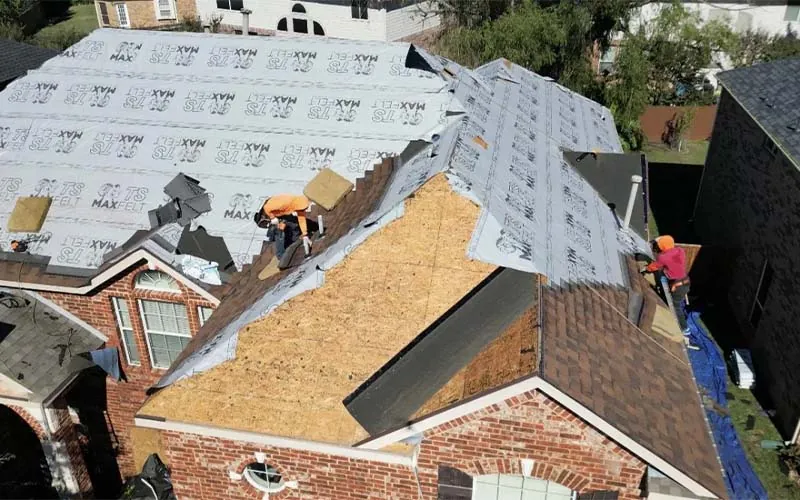
- Tear off. The old shingles and underlayment come off down to the bare wood.
- Check the deck. The crew walks the wood and looks for soft, wet or rotten sheets. Bad ones are cut out and replaced. This step is not possible without a tear-off.
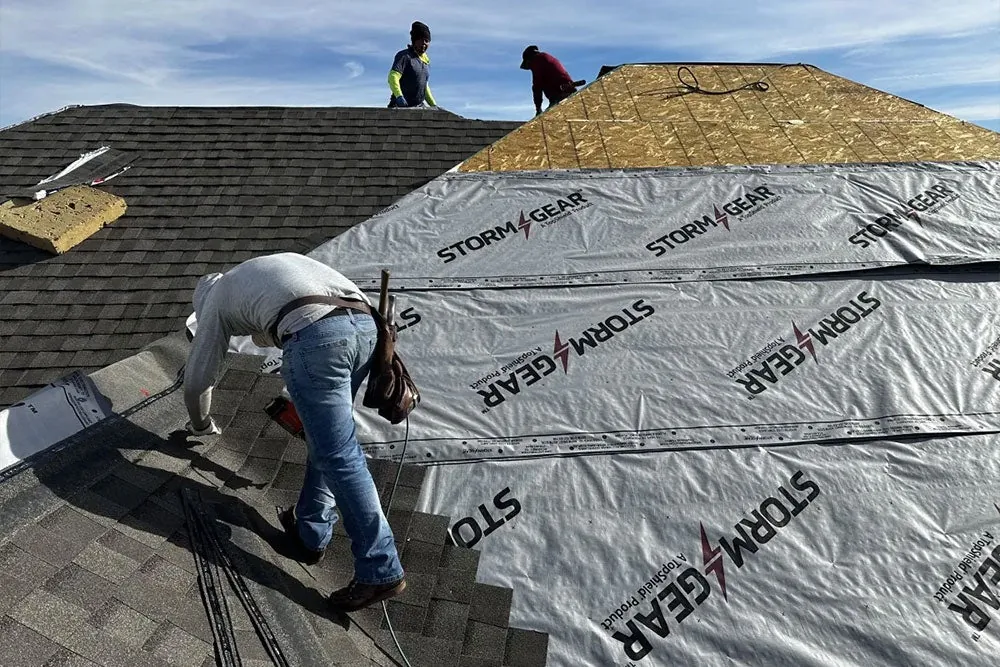
- Dry in. New underlayment and drip edge go on. Now the house is sealed even if the weather turns.
- Flash the joints. New metal goes around the chimney, walls, pipes and valleys.
- Lay the shingles. From the bottom edge up, each row over the one below, nailed in the strip the maker marks.
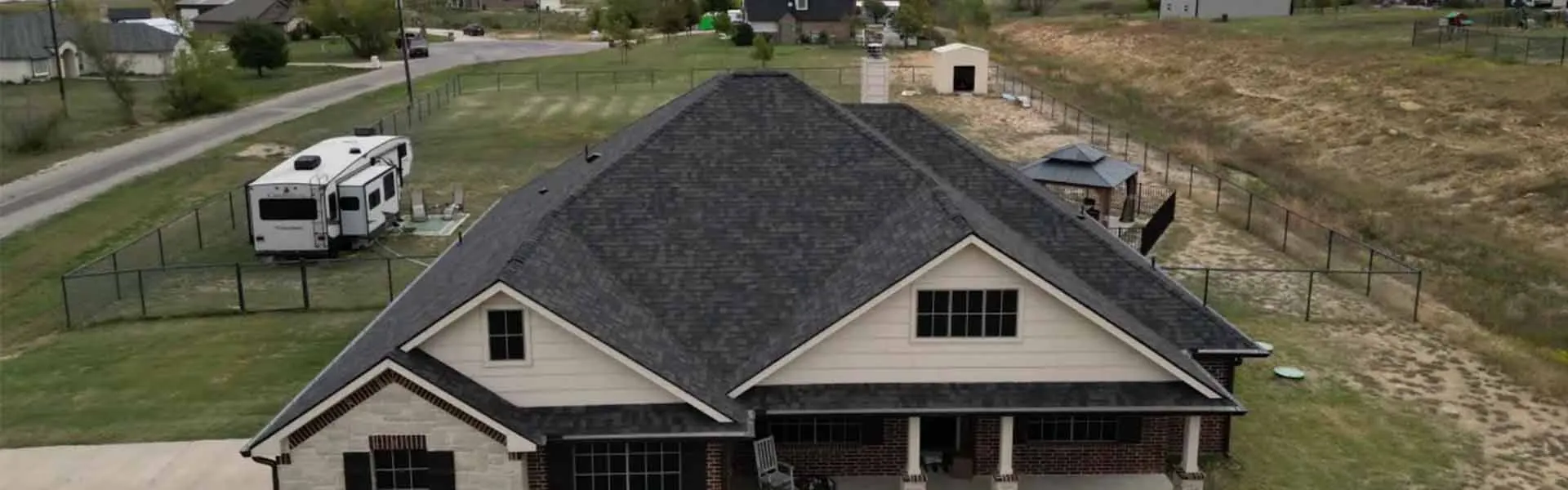
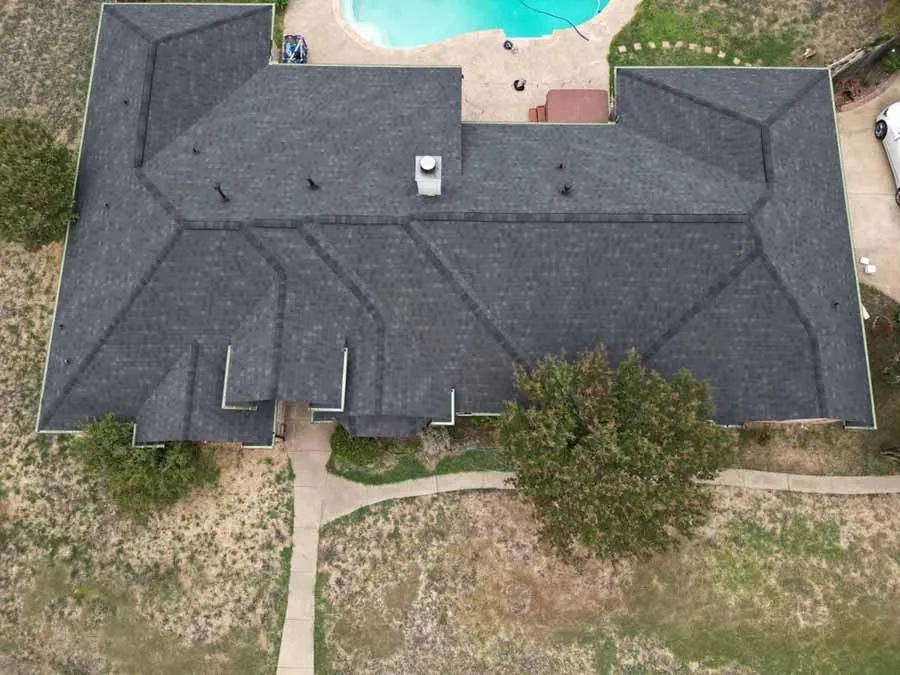
- Cap and vent. Ridge cap and vents finish the peak.
- Clean up. The crew hauls off the old roof, clears the gutters and sweeps the yard with a magnet for nails.
Most houses take one to three days. Steep or cut-up roofs take longer.
Where shortcuts hide
Two bids for the "same" roof can be very different jobs. These are the common places a low price saves money:
- Laying new shingles over old ones, so no one sees the deck.
- Reusing old flashing.
- Skipping drip edge.
- Leaving soft wood in place.
- Ignoring attic vents.
- A quick cleanup that leaves nails in the grass.
You will not see most of these from the street on day one. You find them years on, when the roof leaks early.
When you do not need all this
If the trouble is in one spot and the rest of the roof is sound, a roof repair is the right job. A full replacement is for a roof that is worn out all over, or damaged across most slopes. Ask to see photos before you agree to either one.
What to do next
If you are getting prices, ask each roofer to list every step above in writing, and ask us the same. See what is in our roof replacement and ask for a written scope and price for your house.