A roof emergency is anything that lets a lot of water in right now, or puts people at risk: a tree limb through the roof, a section of shingles torn off, or water pouring through a ceiling. Those need help the same day. A slow drip, one missing shingle or a stain that is not growing is a problem, but it can wait a day or two for a proper fix. Either way, your job in the first hours is the same: keep people safe, keep water off your things, and stay off the roof.
What counts as a roof emergency
Call a roofer right away if you see any of these:
- A tree or a big limb on the roof. Even if no water is coming in yet, the wood under the shingles may be cracked.
- A hole you can see. Daylight through the attic boards, or a spot where the wood is broken.
- A large patch of shingles gone. High wind can peel off a whole strip at once and leave bare wood or felt.
- Water coming in fast. A steady stream, more than one drip, or water in more than one room.
- A sagging ceiling. Drywall that bulges is holding water and can fall.
- Water near wiring. Drips around a light, a ceiling fan or an outlet.
What can usually wait a day or two
- One or two shingles in the yard after a windy night, with no leak inside.
- A small, dry stain on the ceiling that is not getting bigger.
- Dents on vents or gutters after hail.
- A gutter that pulled loose at one end.
These still need a look soon. A missing shingle is a dry problem today and a leak at the next rain. But you have time to call around and get it fixed right.
What to do first, inside the house
- Get people safe. If a tree hit the house, keep everyone out of that room. If water is near anything electric, turn off that room's breaker.
- Catch the water. Buckets, trash cans and towels. Move furniture, rugs and electronics out of the way.
- Watch the ceiling. If it bulges, stand clear. A small hole at the low point lets the water drain into a bucket instead of bringing the ceiling down.
- Take photos. The roof from the ground, the ceiling, the floor and anything that got wet. Phone photos have the date built in.
Our post on the first hour of a roof leak has more on finding where the water starts.
Stay off the roof
This is the one people get wrong. After a storm the roof is wet, the shingles may be loose, and the wood under a hole may be weak. A fall from a one-story roof can do far more harm than any leak. Do not climb up to look, to clear a branch, or to throw a tarp over the hole, even if the rain has stopped. Look from the ground, or use binoculars. If a limb is touching a power line, stay away and call the power company first.
What a roofer does in an emergency
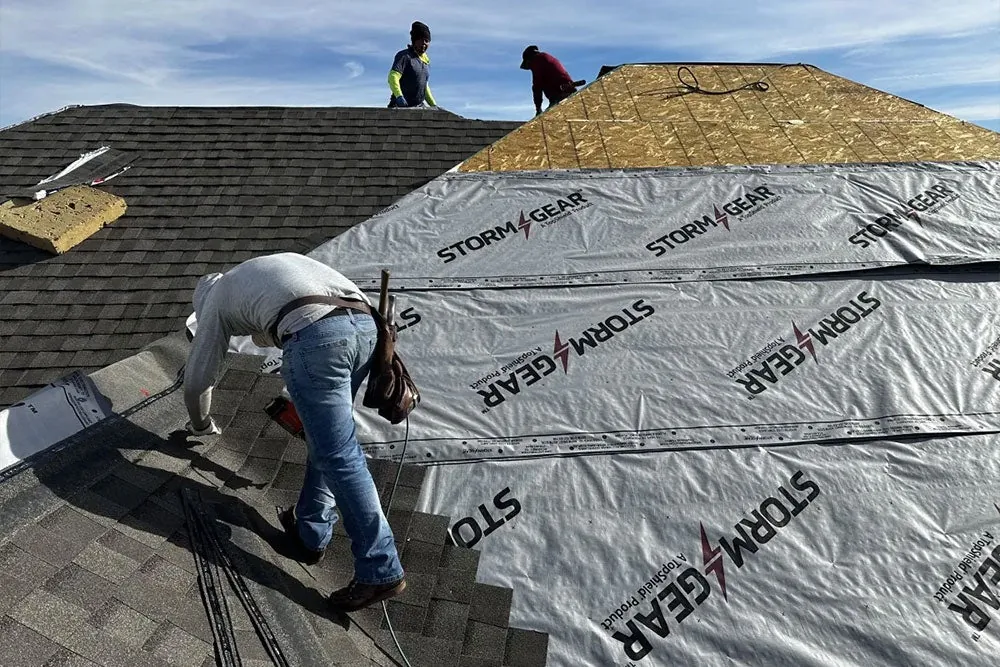
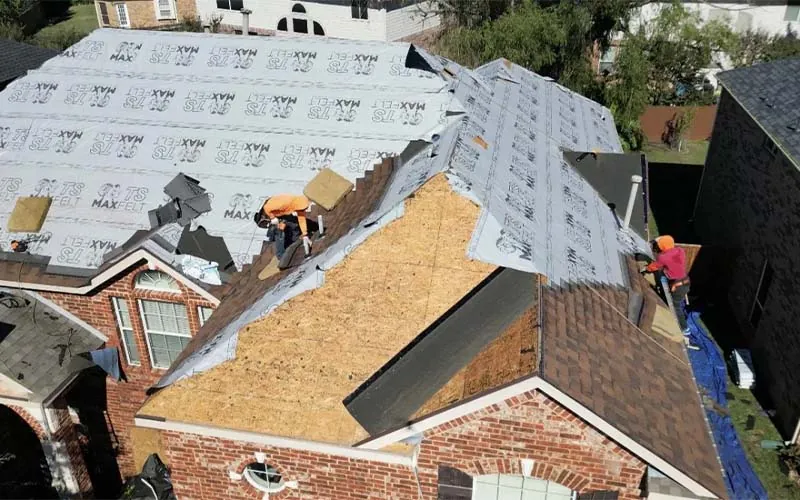
An emergency fix has one goal: stop the water until the real repair can be done. That usually means one of these:
- A tarp. A heavy tarp is laid over the hole, run up past the ridge (the peak of the roof), and held down with wood strips nailed through the edges. A tarp that is only weighed down with bricks will blow off in the next gust.
- A quick patch. For a few missing shingles, new shingles or a sealed patch can go on the same day.
- Sealing around a part. A cracked pipe boot (the rubber collar around a pipe) or loose flashing (the metal where the roof meets a wall) can often be sealed for now and replaced later.
Once the roof is dry and covered, the roofer should come back to look at the whole thing: the wood under the hole, the shingles around it, and the attic. That is when you learn if it is a roof repair or something bigger.
After the storm: be careful who you hire
After a big storm in Fort Worth, Arlington or Mansfield, trucks from out of town show up fast. Most are honest. Some are not. Watch for these signs:
- They knock on your door before you called anyone.
- They want a big payment up front before any work.
- They push you to sign today.
- They have no local office or local phone number.
- They will not put the price and the work in writing.
A short emergency job should come with a written note of what was done. A good roofer also shows you photos of the damage, so you can see it for yourself. For coverage questions, ask your insurance agent.
How to lower the odds of an emergency
- Trim trees. Keep branches 6 to 10 feet back from the roof. Dead limbs over the house come down first in wind or ice.
- Fix small things early. A lifted shingle or a cracked pipe boot is a small fix on a dry day.
- Clean the gutters. Clogged gutters push water back under the roof edge in a hard rain.
- Get a check after big storms. Hail and wind can loosen shingles without a leak showing up until weeks later.
What to do next
If water is coming in or something hit the roof, call Legacy Roofing at (817) 602-2057. We are based in Crowley and work across Fort Worth, Burleson, Mansfield, Cleburne and nearby towns. We find where the water gets in, show you a photo, and tell you what the fix costs before we start. If nothing is leaking but you want to know where the roof stands after a storm, book a free drone roof survey. Someone needs to be home for the flight, you see the pictures before we leave, and you get a written photo report.