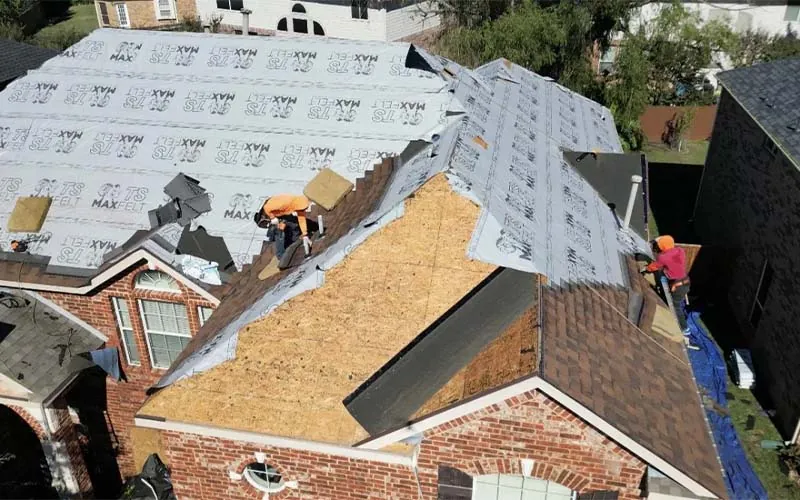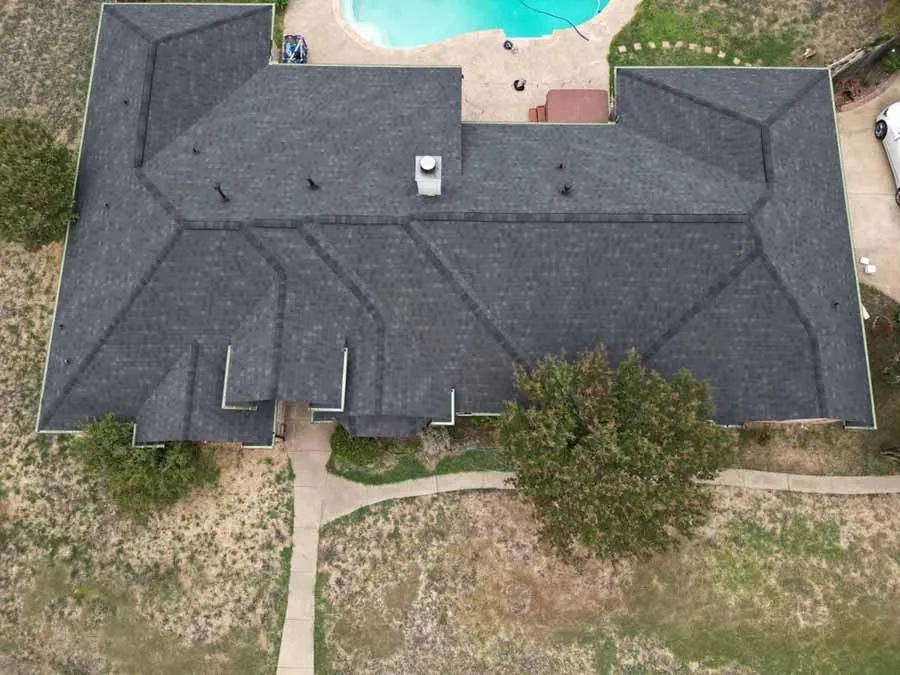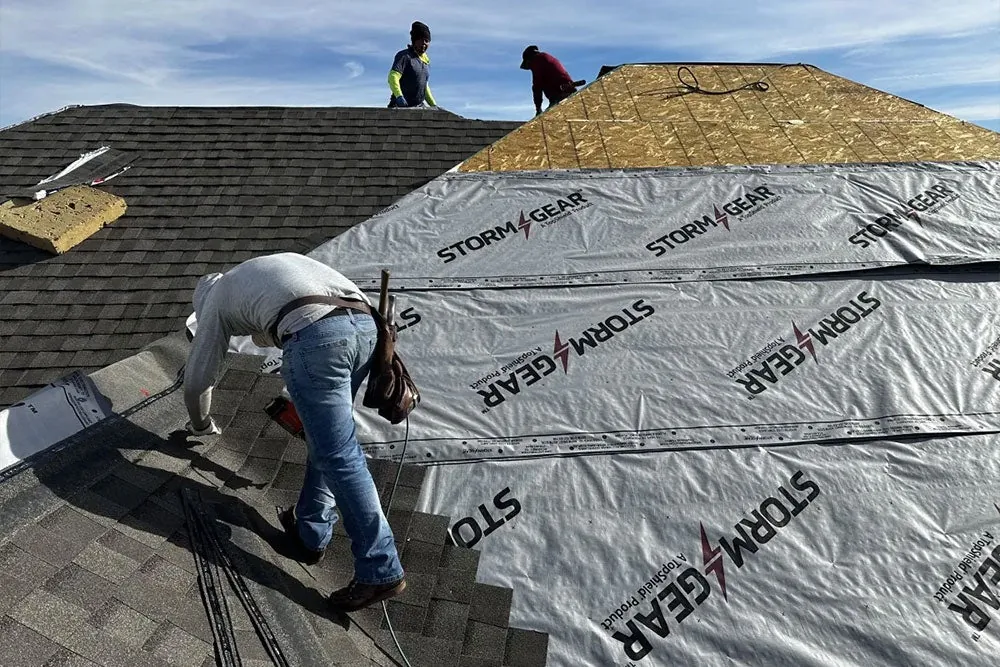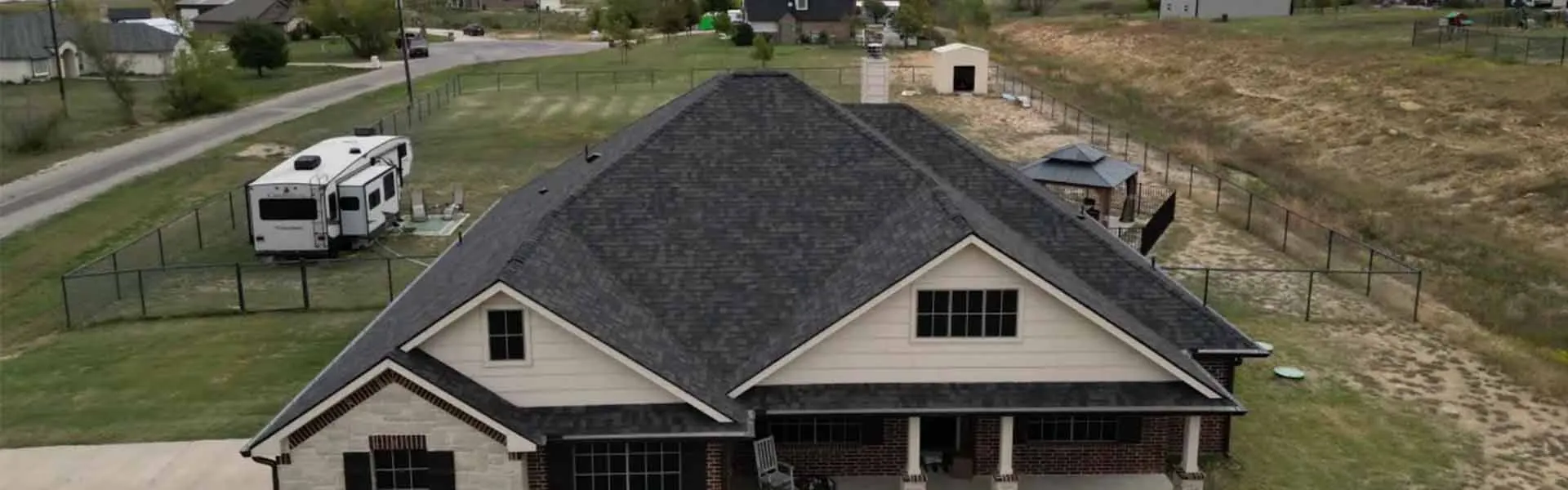
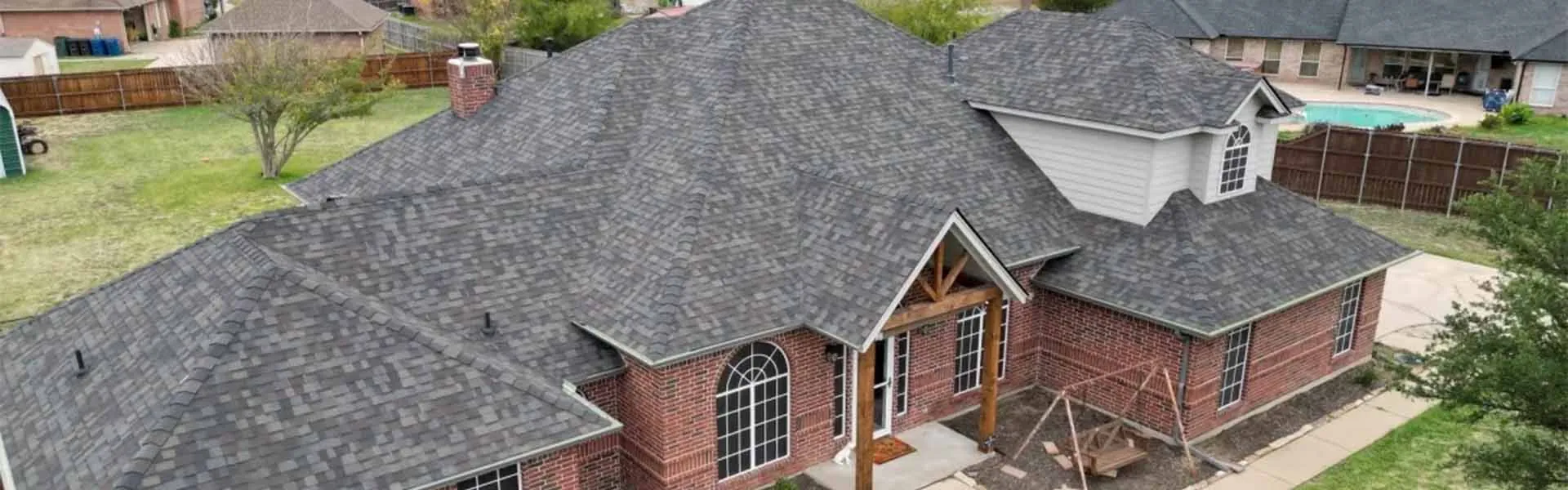
Wind damage on a roof usually looks like one of three things: shingles that are gone, shingles that are lifted or curled at the edge, or shingles with a straight crease across them where the wind bent them back. You may also see bare black felt, loose metal at the edges, or bits of shingle in the yard. Some of it is easy to see from the street. Some of it only shows up up close, because a shingle can lift in a gust and then lie flat again.
How wind hurts a roof
Wind does not push straight down on a roof. It flows over it and pulls up, a lot like air over a plane wing. The pull is strongest at the edges, the corners and the ridge (the peak at the top). That is why damage almost always starts there.
Each shingle is held by nails and a strip of glue that the sun melts into place. Once a gust breaks that glue, the shingle can flap. Each flap loosens it more. In the next storm it may tear off, or let rain blow under it.
Signs you can see from the ground
Walk all the way around the house. Use binoculars if you have them. Look for:
- Missing shingles. A gap in the pattern, or a spot of a different color where the layer under the shingles shows.
- Bare wood or black felt. Felt is the paper layer under the shingles. If you can see it, water can get in.
- Lifted or curled edges. Shingle edges that stick up or do not lie flat, mostly near the edges and the ridge.
- Missing ridge caps. The small shingles that run along the peak are some of the first to go.
- Loose metal. Drip edge (the metal strip at the roof edge) or flashing (the metal where the roof meets a wall or chimney) that is bent, lifted or hanging.
- Pieces in the yard. Whole shingles, torn strips, or chunks of the ridge on the lawn, in the flower beds or on the driveway.
- Gutter trouble. Gutters pulled away from the house, or a lot of shingle grit piled at the downspouts after one storm.
The sign most people miss: creased shingles
When a strong gust lifts a shingle and folds it back, it leaves a straight line across the shingle, like a fold in a piece of paper. Then the shingle drops back down and looks fine from the street. But that fold breaks the shingle. It may also break the glue under it. In the next windy rain, water can get under it, or it can tear off.
A creased shingle is hard to see from the ground. You need to be close, or have clear photos taken from above. This is a big reason to have someone check the roof after a strong storm, even if nothing looks wrong.
Signs inside the house
- New stains on the ceiling, most often near outside walls or under the top floor. Our post on ceiling water stains helps you tell a roof leak from the AC or a pipe.
- Daylight in the attic. On a sunny day, look up at the boards from the attic. Light coming through means a gap.
- Damp wood or wet insulation under a spot near the edge or the ridge.
In the attic, step only on the wood beams or a walkway. The ceiling drywall will not hold you.
Wind damage or just an old roof?
Old shingles curl and crack too. A few clues help tell them apart:
- Wind damage is in one area. It shows up on the side that faced the storm, at the edges and corners. Wear from age is spread across the whole roof, worst on the side that gets the most sun.
- Wind damage shows up all at once. The roof looked fine before the storm, and now there are shingles in the yard.
- Torn edges look fresh. A shingle that just tore has a clean, sharp edge. Old damage looks worn and dark.
Often it is both. An older roof with weak glue loses shingles in a wind that a newer roof would ride out.
Wind and hail often come together
In North Texas, the storms that bring strong wind often bring hail too. Hail leaves dark spots and dents where the gritty top layer was knocked off. If a storm brought both, check for both. Our post on what hail damage looks like shows what to look for.
What to do after a windy storm
- Stay off the roof. Wet, loose shingles are slick, and the wood under a bare spot may be weak. Look from the ground.
- Walk around and take photos. Shoot each side of the roof, the yard, the gutters and any stains inside. Phone photos keep the date.
- Pick up the pieces you find and set them aside. They help show what came off and from where.
- Cover what you can from inside. If water is coming in, put a bucket under it and move your things.
- Get it fixed before the next rain. A missing shingle is a small fix today. It becomes a leak, and wet wood, if it waits.
For questions about what your coverage includes, ask your insurance agent.
How to make a roof stand up to wind
- Fix lifted shingles early. A roofer can glue down a loose shingle before the wind takes it.
- Trim trees. Keep branches 6 to 10 feet back. Limbs hit harder than wind does.
- Ask about nailing when you replace. How many nails each shingle gets, and where they go, matters a lot in wind. Ask your roofer how they nail.
- Look at the roof type. Some roofs hold up to wind better than others. Metal roofs, for example, can be rated for 140 mph wind, but they cost more up front.
What to do next
If you see missing shingles or a new stain, call Legacy Roofing at (817) 602-2057. We are based in Crowley and work across Fort Worth, Burleson, Mansfield, Joshua and nearby towns. We show you photos of what we find and tell you what a roof repair would cost before we start. Not sure if the wind did anything? Book a free drone roof survey. Someone needs to be home for the flight, you see the pictures before we leave, and you get a written photo report. If something needs a closer look, we check it by hand.