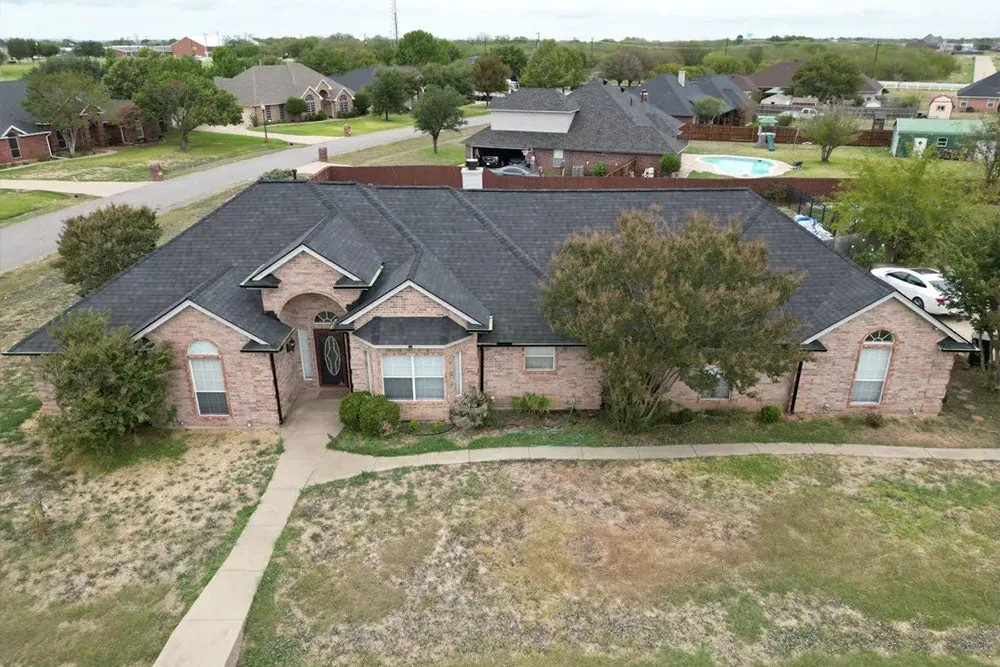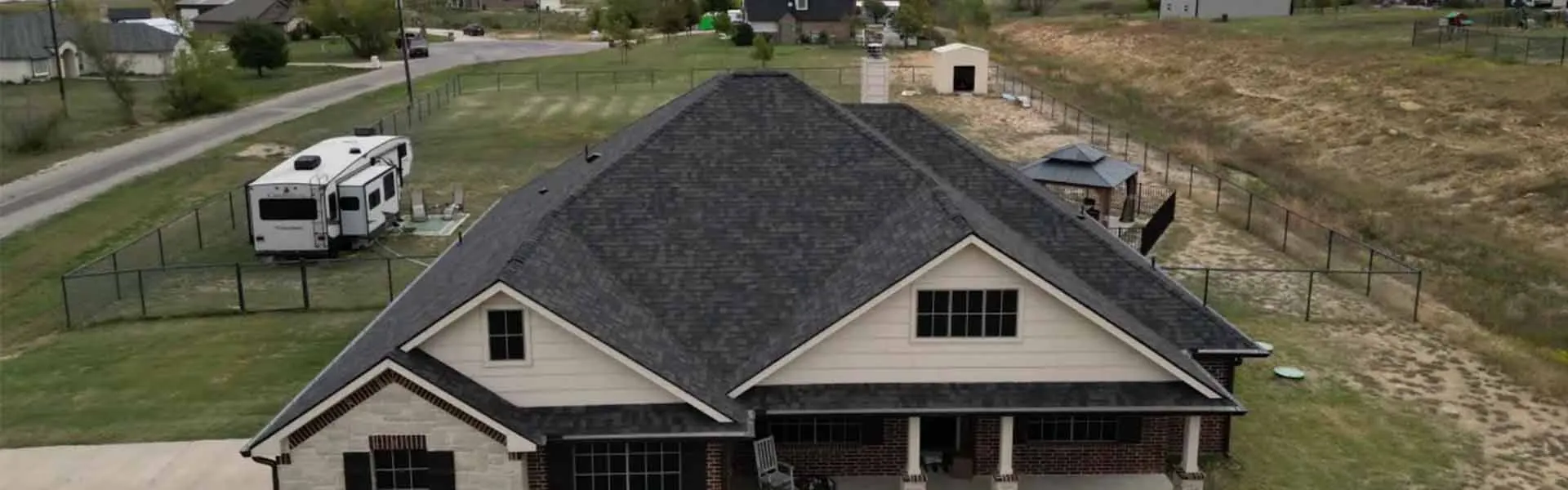
Black streaks on a shingle roof are most often algae, a tiny living thing that grows on the shingles. It is not mold from inside the house, and it is not dirt or soot. The streaks show up most on the side of the roof that gets the least sun, and they run down the slope because rain carries the algae as it spreads. For most homes, the streaks are a looks problem, not a leak problem. A gentle wash can clean them off. But a few other things can look like dark streaks, and some of those do matter, so it is worth a careful look.
What the streaks are
The algae starts as a few spots carried in by wind or birds. It grows on the shingles and feeds on the crushed stone in them. As it grows, it makes a dark coat that shields it from the sun. That dark coat is what you see.
Rain washes it down the roof, so the streaks start near the top and grow longer and wider over time. They often show first on a roof that is a few years old and slowly spread from there.
Why one side of the roof gets them
Algae likes damp and shade. The side of the roof that faces north, or sits under a big tree, stays wet longer after rain and dew. That gives the algae more time to grow. The sunny side dries fast, so it often stays clean.
In North Texas, our hot summers help keep algae in check on sunny roofs. But homes in Crowley, Burleson and Mansfield with big oaks, or homes in older parts of Fort Worth and Arlington with lots of shade, often have streaks on the shady slopes.
Do the streaks harm the roof?
Mostly no, but here is the honest answer:
- They are mainly about looks. The algae does not eat through a shingle or cause a leak by itself.
- They can hold water. A coat of growth keeps the shingle damp a bit longer after rain. Over many years, that can add a little wear.
- They can make way for moss. Moss is green and thick. It holds much more water and can lift the edges of shingles. In our dry heat, moss is less common, but it can show up in deep shade.
- They can hurt resale. A streaked roof looks older than it is. Buyers notice.
Other things that look like dark streaks
Not every dark mark is algae. Before you clean, rule these out, since they mean something different:
- Worn grit. Shingles have a top coat of grit (the small stone bits that shield them from the sun). When it wears off, you see the dark layer under it. Bare patches look like dark spots or smears, not long thin streaks. On an old roof, this means the shingles are near the end of their life.
- Hail marks. Hail knocks grit off in round dark spots, often scattered across the roof. Our post on what hail damage looks like shows the signs.
- Rust stains. A red-brown streak below a vent, a pipe or the metal flashing (the metal where the roof meets a wall or chimney) can mean that metal is rusting. Rusty metal can let water in, so have it checked.
- Soot. Dark marks right around a chimney can be from smoke.
- Tar or sealant drips. Black runs near a patch can be old roof cement melting in the heat.
A quick test: algae streaks are even, smooth and follow the slope down from the top. Spots, smears or marks that start at a vent are a different story.
How to clean them safely
The streaks can be cleaned off, but the way you do it matters.
- Do not use a pressure washer. High-pressure water blasts off the grit that shields the shingles. It can make an old roof wear out years early.
- Use a soft wash. A soft wash is a low-pressure spray of a cleaner made for shingles. It kills the algae, and the next few rains rinse the dark coat away. Some streaks fade over a few weeks, not right away.
- Protect your plants. Many roof cleaners can harm grass and shrubs. Wet the plants first, cover them, and rinse them after.
- Stay off the roof. Wet shingles are slick, and a cleaner makes them more slick. Falls from roofs cause bad injuries. Spray from a ladder at the edge only if you are sure-footed and the roof is low, or hire it out.
If you hire someone, ask what they spray and at what pressure. Anyone who plans to pressure wash the shingles is the wrong pick.
How to slow them down
- Trim the trees. More sun and air on the roof means less algae. It also keeps leaves and branches off the shingles.
- Keep the gutters clear. Wet leaves at the roof edge hold damp next to the shingles.
- Add a metal strip at the ridge. A thin strip of zinc or copper near the peak lets a small amount of metal wash down the roof each time it rains. That slows algae on the slope below it. It works best on the rows nearest the strip.
- Pick algae-resistant shingles on a new roof. Many shingles now come with grit that has copper mixed in to slow algae. If you are replacing your roof anyway and you have a lot of shade, ask for them.
When streaks mean it is time to look closer
Streaks alone are not a reason to replace a roof. But call a roofer if you see streaks along with any of these:
- Curled, cracked or missing shingles.
- Lots of grit in the gutters or at the bottom of the downspouts.
- Green moss growing thick between shingles.
- A stain on a ceiling or in the attic.
What to do next
If you are not sure whether your dark marks are algae, worn grit or something more, see our roof repair page, or call Legacy Roofing at (817) 602-2057. If your roof is old and the streaks come with worn shingles, our roof replacement page explains what a new roof involves. We work in Crowley, Fort Worth, Burleson, Mansfield, Joshua and nearby towns, and we will tell you plainly what we see.