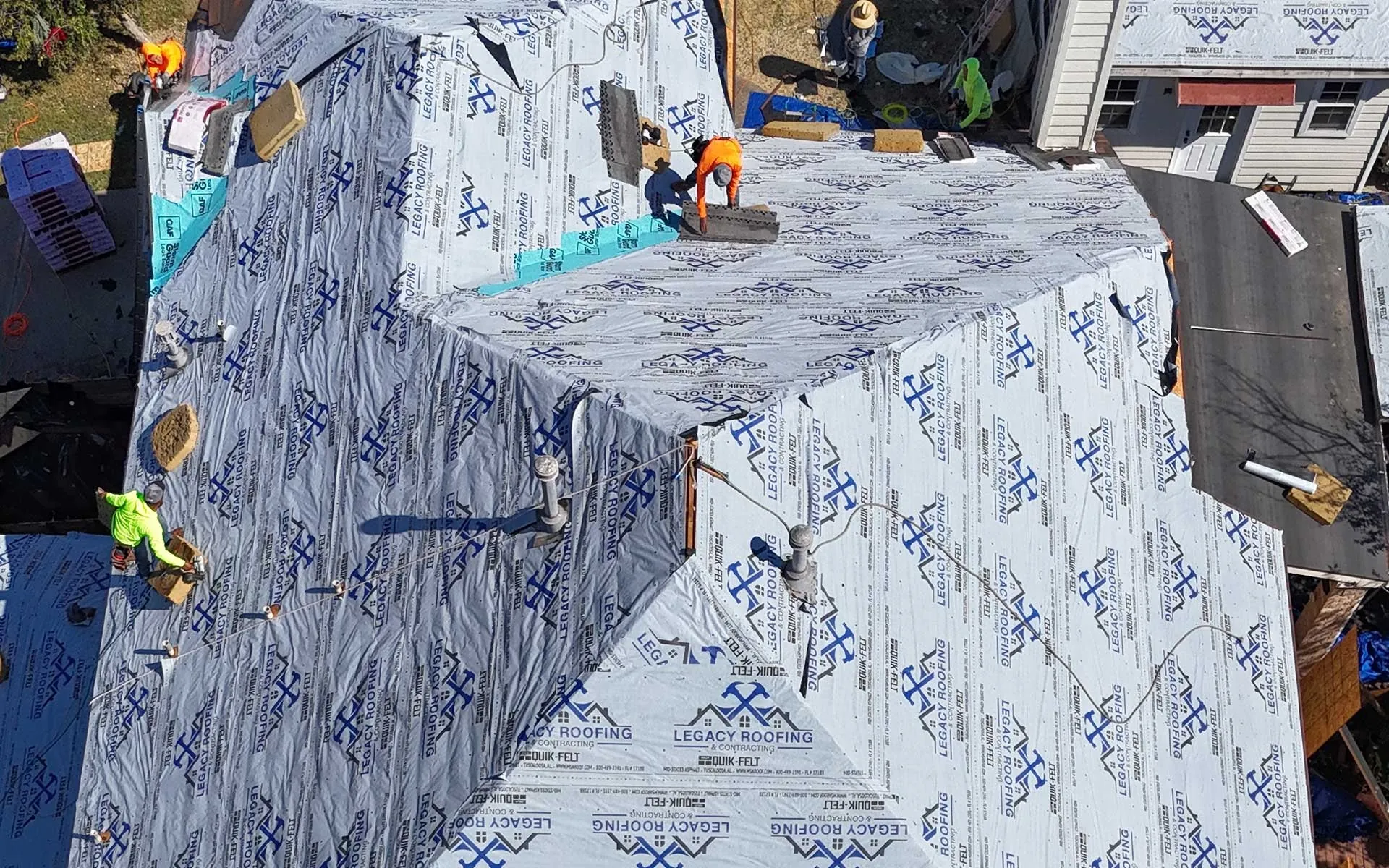
Most flat roofs on shops, offices, churches and warehouses in North Texas are one of five kinds: a white plastic sheet (TPO or PVC), a black rubber sheet (EPDM), rolled asphalt sheets (modified bitumen), layers of tar and gravel (built-up), or metal panels. Each one can be a good roof. What matters most is how well the seams, edges and drains were done, and whether water drains off fast. Knowing which kind you have helps you plan repairs before a leak lands on a desk.
First: flat roofs are not really flat
Roofers call them low-slope roofs. They tilt a little toward drains, gutters or scuppers (openings in the low wall at the roof edge that let water out). The tilt is small, so a clogged drain or a low spot can leave water sitting on the roof. That standing water is called ponding. It is heavy and it finds every weak seam. Most flat roof problems come back to water that does not leave.
The common types, in plain words
- TPO. A single-ply roof, which means one layer of sheet. TPO is a white or light gray plastic sheet. The seams are melted together with hot air, so they become one piece. The white top bounces back a lot of sun, which helps keep a building cooler in a Texas summer.
- PVC. Looks a lot like TPO: a white plastic sheet with heat-welded seams. It holds up well to grease and oils, so it is often used on restaurants where kitchen fans blow onto the roof.
- EPDM. A black rubber sheet, like a thick inner tube. It bends without cracking and handles hail fairly well. The seams are glued or taped, not melted, so seams are the spot to watch as it ages. Being black, it soaks up heat.
- Modified bitumen. Rolls of asphalt sheet, often with a gritty top like a shingle. The sheets are heated or glued down and overlap at the seams. It is tough and easy to patch.
- Built-up roof. The old tar-and-gravel roof. Layers of felt and hot tar are built up, then topped with gravel. It is thick and lasts a long time when kept up, but it is heavy, and leaks can be hard to trace under the gravel.
- Metal. Many warehouses, shops and metal buildings have low-slope metal panel roofs. They shed water fast and can last a long time. The weak spots are the screws, the seams between panels, and rust where paint has worn off.
You may also hear about roof coatings. A coating is a thick paint-like layer rolled or sprayed over an old roof to seal it and reflect sun. It is not a new roof. It can add years to a roof that is still dry and solid underneath. It will not fix a roof that is wet inside or falling apart.
How to tell which one you have
If you can safely see the roof, or have photos of it, look at the color and the top:
- Smooth and white or light gray: most likely TPO or PVC.
- Smooth and black, a bit soft like rubber: most likely EPDM.
- Gritty, like a shingle, in long overlapping rows: most likely modified bitumen.
- Covered in loose gravel: most likely a built-up roof.
- Ribbed panels with screws: a metal roof.
Old building papers may also list it. Please do not walk a flat roof yourself unless there is a safe way up and someone with you. Skylights and roof edges cause bad falls.
How each holds up in North Texas
- Heat. Long summers bake the roof every day. White roofs like TPO and PVC stay cooler. Black roofs and gravel roofs get much hotter, which ages them faster.
- Hail. Hail can crack or puncture a sheet roof, crush the board under it, and dent metal. Damage on a flat roof is often hard to see from the ground. Look for dents in the metal vents and AC units on the roof. If those are dented, check the roof itself too.
- Hard rain. Big storms dump a lot of water fast. Clogged drains and low spots turn into ponds.
What fails first on any flat roof
No matter the type, leaks tend to start in the same places:
- Seams. Where two sheets meet. Glued seams can peel; welded seams can split if they were not done well.
- Edges and walls. Where the roof turns up a wall or meets the metal edge. This is flashing (the metal or sheet that seals the joint) and it takes a beating.
- Things that poke through. AC units, vents, pipes and skylights all need a good seal around them.
- Drains. Leaves, grit and trash block them, and water backs up.
- Low spots. Water that sits for days after rain wears the roof and finds any small gap.
Repair, coat or replace?
The honest answer depends on what is under the top layer. A roof with a few bad seams and a dry deck can often be repaired. A roof that is sound but worn may be a good fit for a coating. A roof with wet insulation (the foam board under the sheet) usually needs to be replaced, at least in the wet areas, because wet insulation stays wet, gets heavy and rots the deck. The trade-off is simple: a repair costs less now, but patching a roof that is wet inside often means paying for the same leak twice. A good roofer shows you photos of which case you are in. For questions about what your insurance covers after a storm, ask your insurance agent.
Questions to ask about your building's roof
- What type of roof is this, and what shape is it in?
- Where does water sit after rain, and why?
- Are the seams, edges and drains in good shape?
- Is the insulation under the roof wet anywhere?
- Can it be repaired or coated, or does it need to be replaced?
What to do next
If you own or manage a shop, office, church or warehouse in Crowley, Fort Worth, Arlington, Mansfield, Burleson, Cleburne or a nearby town, start with clear photos of the roof. A drone covers a large flat roof in minutes and shows ponding water, open seams and worn spots. Our commercial roofing page explains how we repair and replace flat and metal roofs, and our free drone roof survey page tells you how to set one up. You can also call Legacy Roofing at (817) 602-2057. We will tell you plainly what we see.