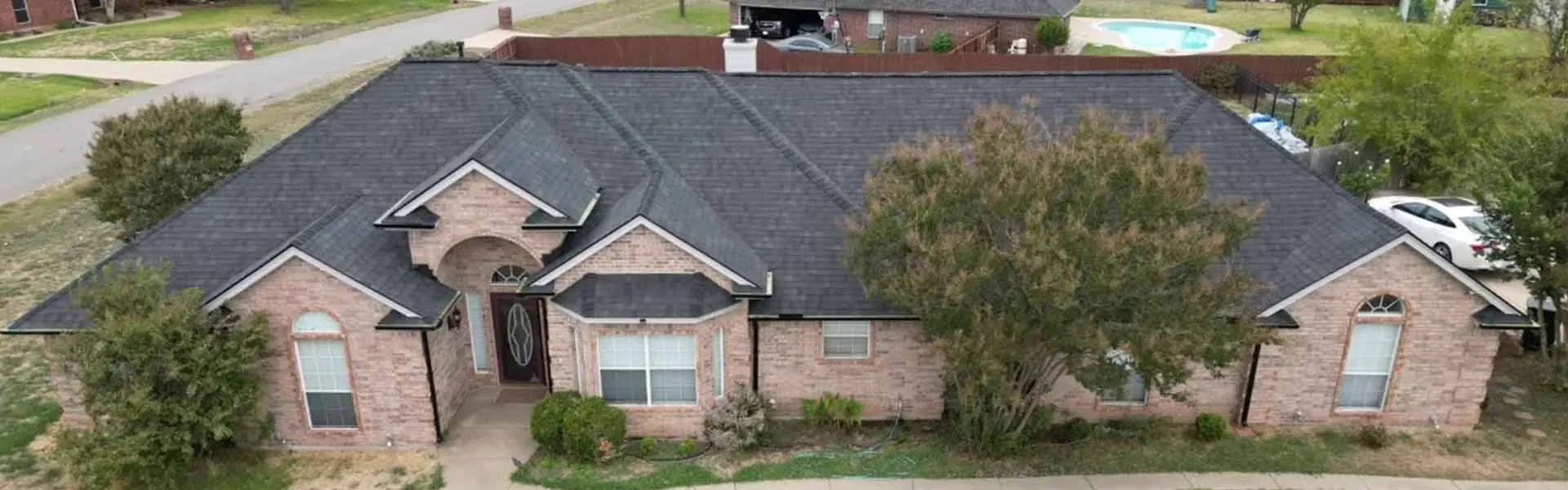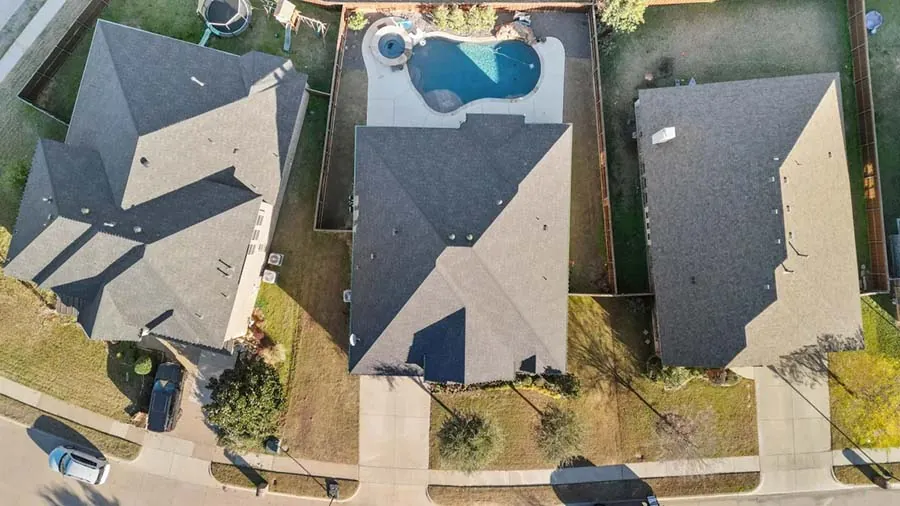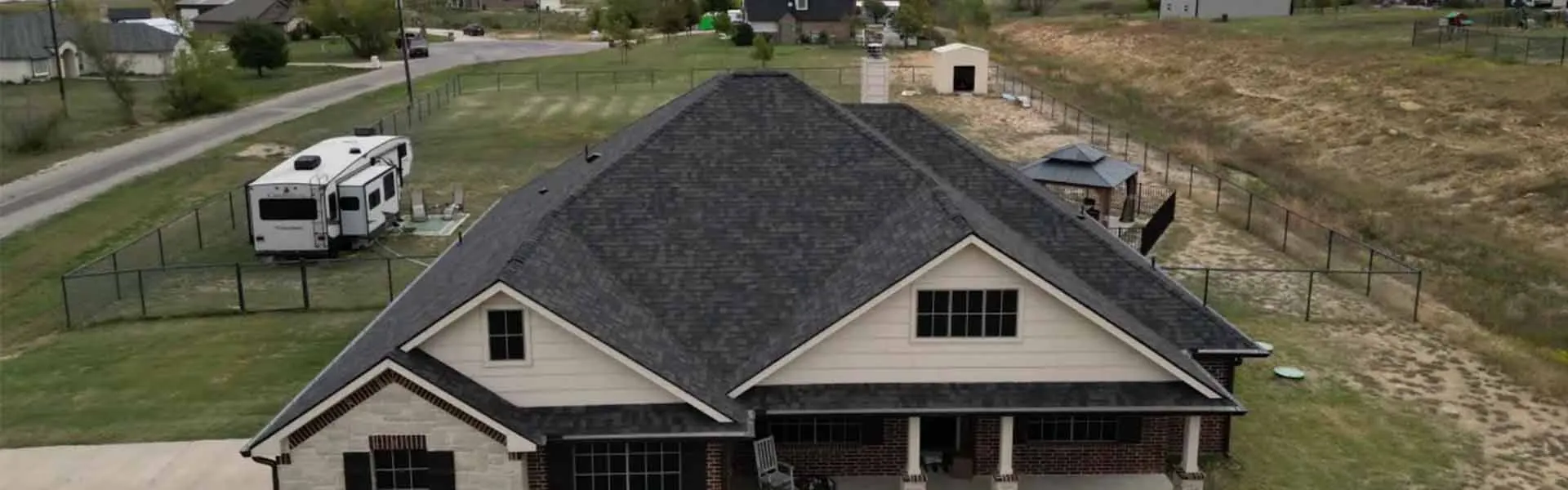
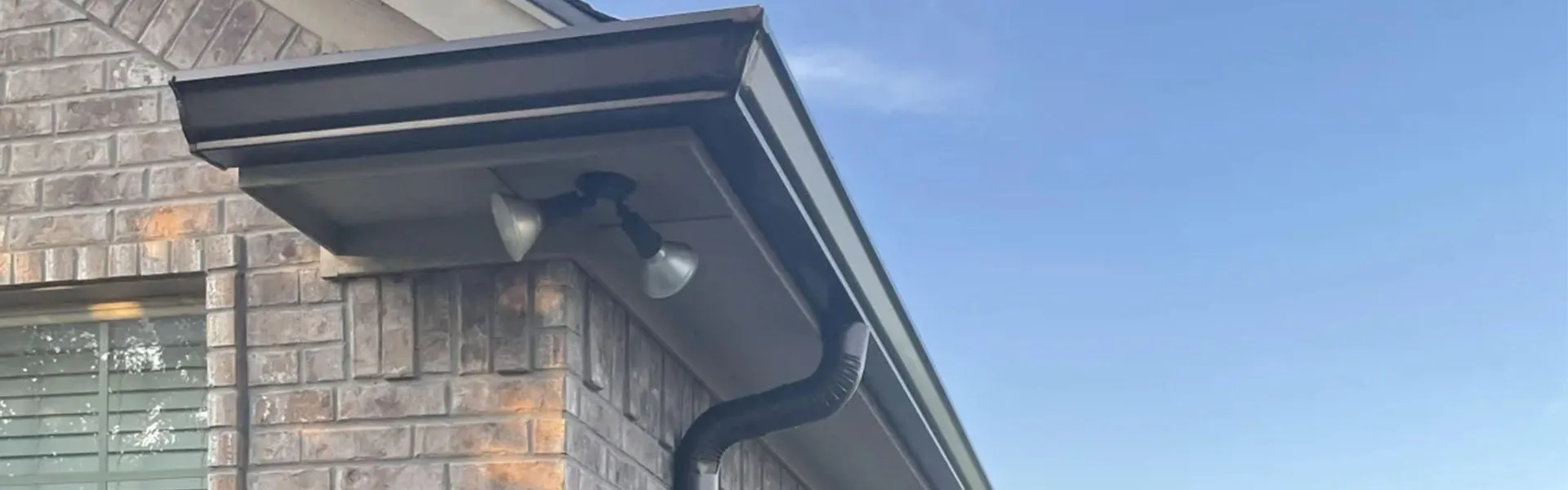
A little shingle grit in the gutters is normal, most of all on a new roof or after a hard rain. A lot of grit at once, or grit that keeps showing up year after year with bare spots on the shingles, is a warning. Sudden piles after a hail storm can mean the hail knocked granules loose. A slow, steady flow on an older roof can mean the shingles are wearing out.
What the grit is
The grit is called granules. They are the small, sand-like grains pressed into the top of every asphalt shingle. They give the roof its color, but their real job is to shade the shingle from the sun. Under the granules is a layer of asphalt, a black, tar-like coating. Sun and heat dry out bare asphalt fast. In a North Texas summer, a shingle that has lost its granules can crack, curl and start to leak years sooner than it should.
When grit is normal
- A new roof. New shingles come with extra loose granules on top. The first few hard rains wash them off. It is common to see grit in the gutters and at the downspouts for the first several weeks, and sometimes a bit longer. It should slow down and then stop.
- A small amount after heavy rain. A fast, hard rain can wash a few loose grains off any roof. A light dusting in the gutter or at the bottom of a downspout is fine.
When grit is a warning
- A lot of grit right after a hail storm. Hail hits shingles hard and knocks granules off in spots. If you saw little or no grit before the storm and now see piles, the roof very likely took hits. Our post on what hail damage looks like on a roof shows what those spots look like.
- Grit that never stops on an older roof. As shingles age, the asphalt dries out and lets go of its granules. If your roof is older and you clean out grit every time you clean the gutters, the shingles are wearing thin.
- Grit plus bare spots. From the yard, look for dark or shiny patches on the shingles where the color is gone. Those are bald spots.
- Grit plus other signs. Curling edges, cracks, missing shingles, or a stain on a ceiling inside all mean it is time to call a roofer.
How to check, safely
You can learn a lot without going up on the roof. Please stay off the roof, and only use a ladder if you are steady on one and someone is with you.
- Look at the downspouts. Check the ground, splash blocks or drain ends at the bottom of each downspout, and the edges of the driveway. Grit piles up there after it rains.
- Look in the gutters. If you can see into them safely, look for a layer of grit in the bottom. Grit feels like coarse sand and is the same color as your roof.
- Look at the roof from the yard. Stand back far enough to see each side of the roof. Look for spots that are darker, lighter or shinier than the rest.
- Take photos. Take a photo of the grit with a coin next to it for size, and a photo of each side of the roof. Write down the date.
How much is too much?
There is no exact line, but here is a simple way to think about it. A few grains you can wipe away with one finger is normal. A layer you can scoop up with your hand, or a pile at the bottom of each downspout, is a lot. What matters most is change. If you see much more grit than you did before, find out why.
Other things that knock grit loose
- Tree limbs. Branches that rub the roof in the wind scrub granules off. Trim limbs back so nothing touches the roof.
- Pressure washing or foot traffic. A pressure washer blasts granules off, and every walk on the roof wears a little off, most of all on a hot day. Do not pressure wash shingles.
- A hot attic. Poor airflow in the attic bakes the shingles from below, and they age faster. Our post on attic ventilation explains why.
Does grit hurt the gutters?
It can. Grit is heavy. Mixed with leaves, it turns into a thick sludge that blocks gutters and downspouts. Water then spills over the side, near the base of the house, or backs up under the roof edge. Clean the gutters at least twice a year, and more often if you have trees over the house. Our post on whether you need new gutters has more on that.
Can you fix a roof that is losing grit?
Lost granules do not grow back, and you can not glue new ones on in a way that lasts. What a roofer can do depends on the cause and how much of the roof is hit:
- A few bad spots on a younger roof can often be fixed by swapping out those shingles.
- Hail spots across many slopes often mean the roof needs to be replaced, since the hits weaken the shingles even where the grit looks fine.
- An old roof shedding grit all over is near the end of its life. A patch will not buy much time.
The honest trade-off: waiting can be fine for a young roof with a little grit, but on a worn or hail-hit roof, waiting often turns a roof job into a roof job plus a ceiling and wall repair. If you have a storm question about what your insurance covers, ask your insurance agent.
What to do next
If you are finding more grit than usual at your home in Crowley, Fort Worth, Arlington, Mansfield, Burleson, Joshua or a nearby town, get a clear look at the roof. Set up a free drone roof survey. Someone needs to be home for the flight, and you see the pictures before we leave. You get a written photo report, and if something needs a closer look, it is checked by hand. If a few spots need work, our roof repair page explains how we fix them, or call Legacy Roofing at (817) 602-2057. We will tell you plainly what we see.