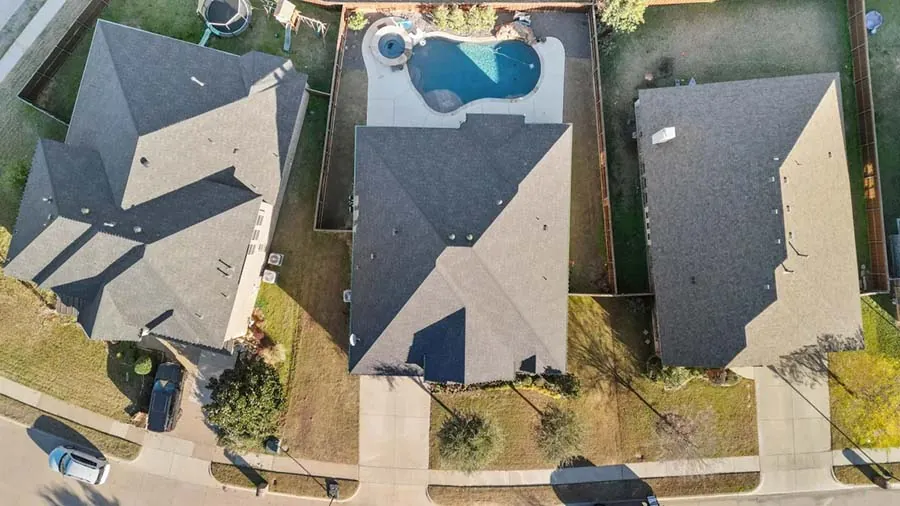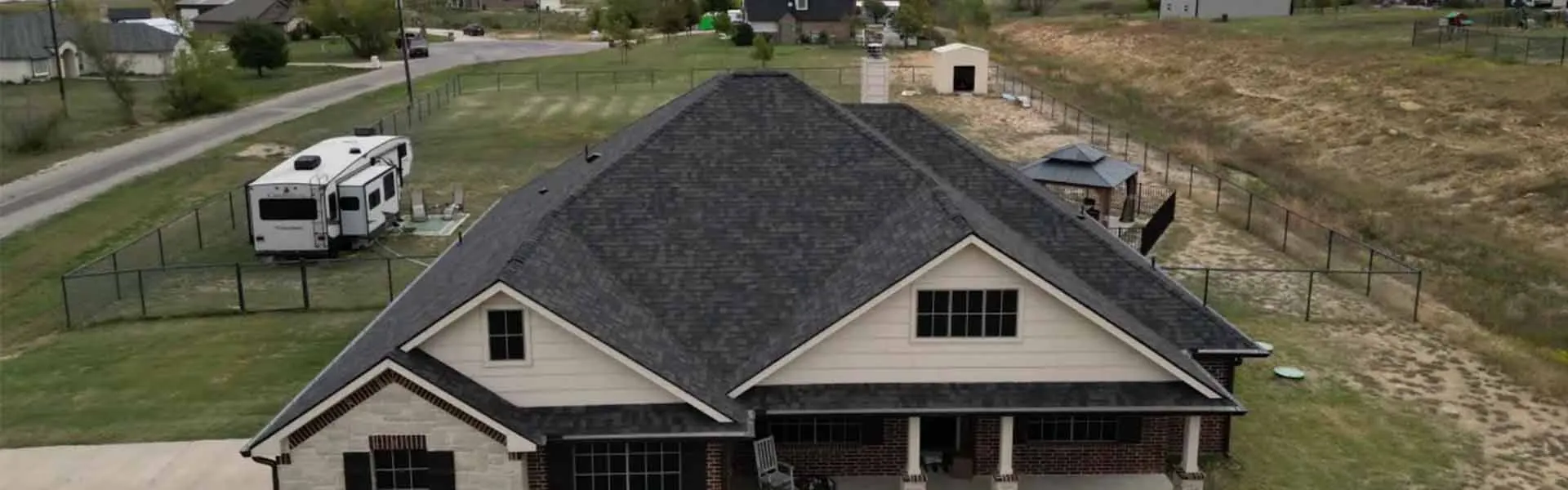
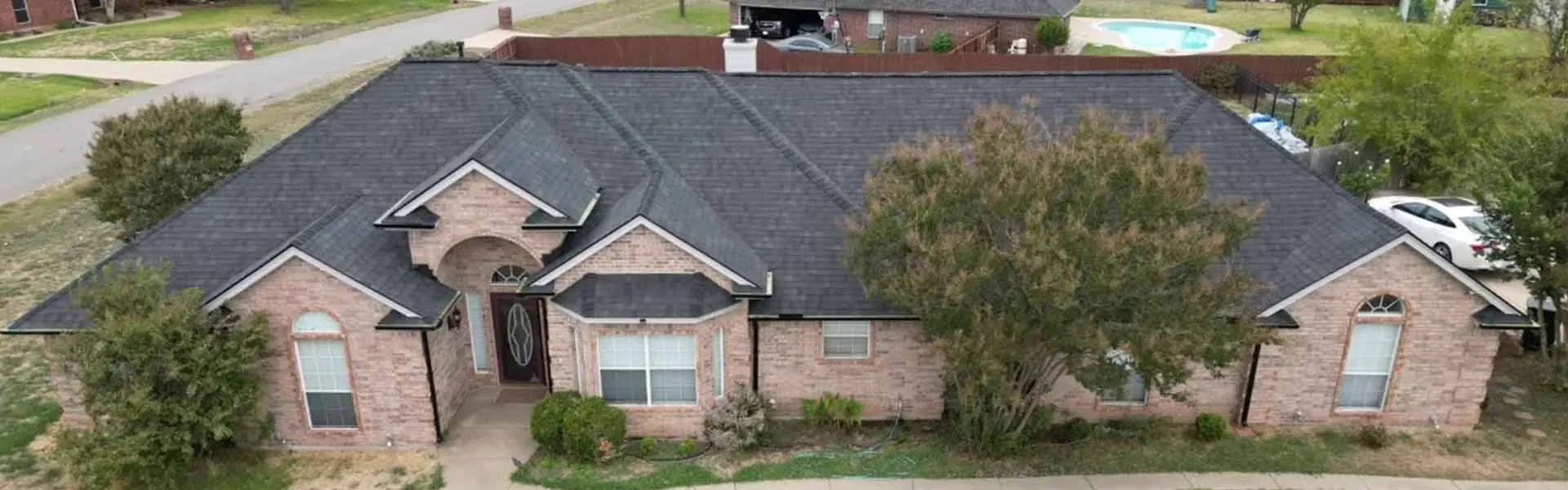
Hail damage to siding shows up as cracks, holes or dents, most often on the side of the house that faced the storm. On windows, look for torn screens, dented metal frames, chipped glass, and fog between the panes. Walk around the house the same day, take photos of every side, and look at the roof too. If hail was big enough to crack siding, it was big enough to hurt shingles, and the roof is where a small mark can turn into a leak.
Why one side gets hit the most
Storms in North Texas often come in with wind. The wind pushes the hail at an angle, so one or two sides of the house take most of the hits. That is the first place to look. A fence, a shed or a car on that same side will often have marks too. If you see dents on the grill or the mailbox, check the wall behind it.
What hail does to each kind of siding
- Vinyl siding. Vinyl is thin plastic. Hail can crack it, punch round holes in it, or knock out chips. Cold makes vinyl stiff, so a hail storm on a cool day can do more harm. Cracks let water get behind the siding, where it can soak the wood wall.
- Fiber cement siding. This is a hard board made of cement and wood fiber. It does not dent, but big hail can chip the corners, crack a board, or knock off paint. Bare spots should be painted so the board does not soak up water.
- Wood siding. Hail leaves small dents, dings and split spots. Paint can flake off where it hit. Wood that stays bare can rot.
- Aluminum or steel siding. Metal dents. A dent is often only a looks problem, but a dent that cracks the paint can rust over time.
- Brick and stone. Brick holds up well. Look closer at the mortar (the cement between the bricks), the window trim, and any wood or siding up high, like the gables (the triangle part of the wall under the roof peak).
What hail does to windows
- Screens. These are often the first thing to show hail. Look for small tears, holes and dents in the mesh. Screens are easy to see and easy to photo.
- Frames. Metal frames can dent. Vinyl frames can crack. Check the bottom and top edges.
- Glass. Look for chips, star-shaped cracks or a break. Cover a broken pane with plastic and tape to keep rain out, and keep kids and pets away from the glass.
- Seals. Most windows have two panes of glass with a sealed gap. A hard hit can break the seal. Days or weeks later you may see fog or a haze between the panes that you can not wipe off.
- Window trim and caulk. Hail can knock out caulk (the soft seal around the frame) and chip the trim. Gaps there let water into the wall.
How to check safely
Wait until the storm has passed and there is no lightning. Stay on the ground. Please do not climb a ladder or get on the roof.
- Start on the side that faced the storm. Then walk all the way around.
- Use low light. Early morning or late day sun hits the wall at an angle and makes dents easy to see.
- Take wide photos and close photos. Take one of each whole wall, then close ones of each mark. Put a coin or a pen next to a mark so the size is clear.
- Check the soft metal. Gutters, downspouts, AC fins and vent covers dent easily. Dents there show how big the hail was.
- Write down the date. Note the date and time of the storm with your photos.
Old marks or new ones?
New hail marks look clean. Fresh cracks in vinyl have sharp edges. Chips in paint show bright, clean color under them. Old marks look dirty or faded, and bare wood will be gray. If you are not sure, your before photos help a lot. It is a good idea to take photos of every side of the house once a year, on a calm day, so you have something to compare. Our post on old hail damage vs. new explains how roofers tell the two apart on shingles.
Siding damage is a clue about your roof
Here is the part many people miss. The roof takes hail straight on, while the walls only take it at an angle. So if your siding or screens have marks, the roof very likely got hit too. Shingle damage is hard to see from the ground. Hail can knock granules (the small grains on top of the shingle) loose or leave soft spots, called bruises, that you can not see from the yard. Those spots can wear through and leak months later. Our post on what hail damage looks like on a roof shows what a roofer looks for up top.
What to do the same day
- Cover broken glass and any hole in the siding with plastic and tape.
- Pick up glass and sharp bits from the yard.
- Keep your photos and notes in one place.
- Get the roof looked at, not just the walls.
- For any question about what your insurance covers, ask your insurance agent.
Who fixes what
Siding is fixed by a siding company, and glass and window seals by a window company. A roofer looks after the roof, the gutters, and the roof edge where it meets the wall. Fix the roof and any open holes first, since that is where water gets in. A cracked vinyl panel can often be swapped one at a time. The trade-off is that new siding may not match old, sun-faded siding, so ask about color match before work starts.
What to do next
If hail hit your home in Crowley, Fort Worth, Arlington, Mansfield, Burleson, Joshua or a nearby town, start with the roof. Set up a free drone roof survey. Someone needs to be home for the flight, and you see the pictures before we leave. You get a written photo report, and if something needs a closer look, it is checked by hand. You can also read our Class 4 roofing page to see a roof made to stand up to hail, or call Legacy Roofing at (817) 602-2057. We will tell you plainly what we see.