After a hail or wind storm, you can learn a lot about your roof in about 10 minutes without ever leaving the ground. Wait until the storm has fully passed, grab your phone, and walk a slow loop around the house. Look at the yard, the gutters, the things around the roof, and then the roof itself. Finish with a quick look inside. If you find any of the signs below, take photos and get a closer look before the next rain. If you find nothing, that is good news, but some damage only shows up from above.
Before you start: stay safe
- Wait for the storm to pass. Lightning can strike miles ahead of the rain.
- Stay off the roof and off the ladder. Wet shingles are slick, and a spot that took a hit may be weak. Everything on this list can be done from the ground.
- Look for downed power lines first. If a line is down or a limb is touching one, stay far away and call the power company.
- Bring your phone. Photos keep the date and time, and they help a roofer see what you saw.
Minutes 1 to 2: the yard and driveway
Start at the front door and walk the whole yard. The ground often tells you what the roof went through.
- Shingle pieces. Whole shingles, torn strips or bits of the ridge cap (the small shingles along the peak of the roof).
- Hail size. If hail is still on the ground, put a coin or a ruler next to it and take a photo. Hail the size of a quarter or bigger can hurt shingles.
- Broken limbs. Branches on the lawn mean branches may have hit the roof too.
- Shredded leaves and plants. Torn-up leaves on the ground are a sign of hard hail.
Minutes 3 to 4: the soft metal and outdoor things
Hail leaves easy-to-see marks on soft metal. These are the best clue you have from the ground about how hard it hit up top.
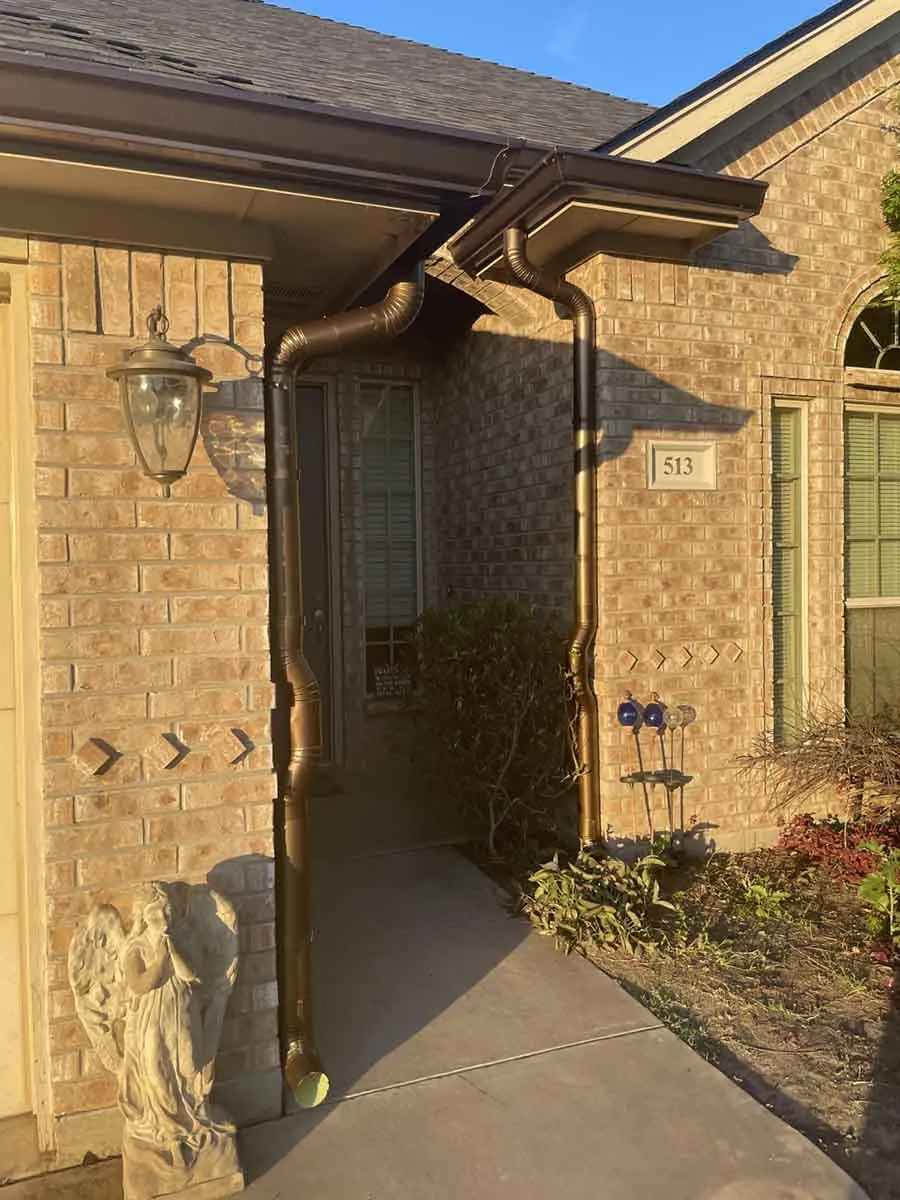
- Gutters and downspouts. Look for dents, and for gutters pulled away from the house.
- The AC unit outside. Dents in the thin metal fins on the side.
- Mailbox, grill, patio furniture and car. Fresh dings or chipped paint.
- Window screens and siding. Small tears in screens, or cracks and chips in siding.
If the soft metal at ground level is dented, the roof likely took hits as well.
Minutes 5 to 7: the roof from every side
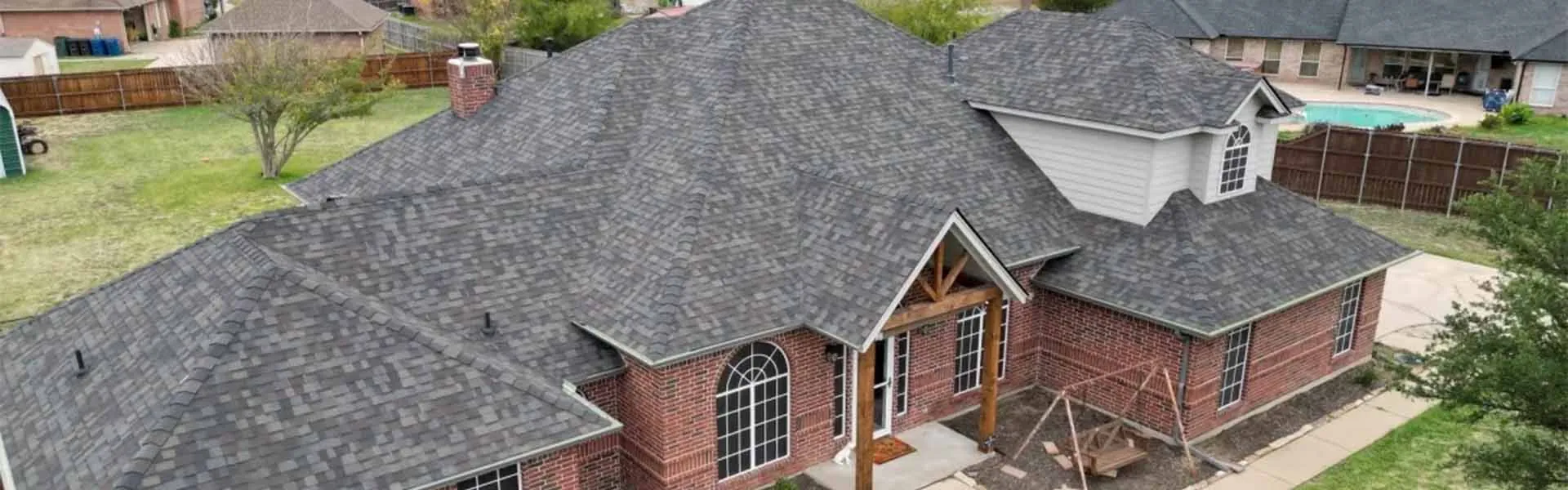
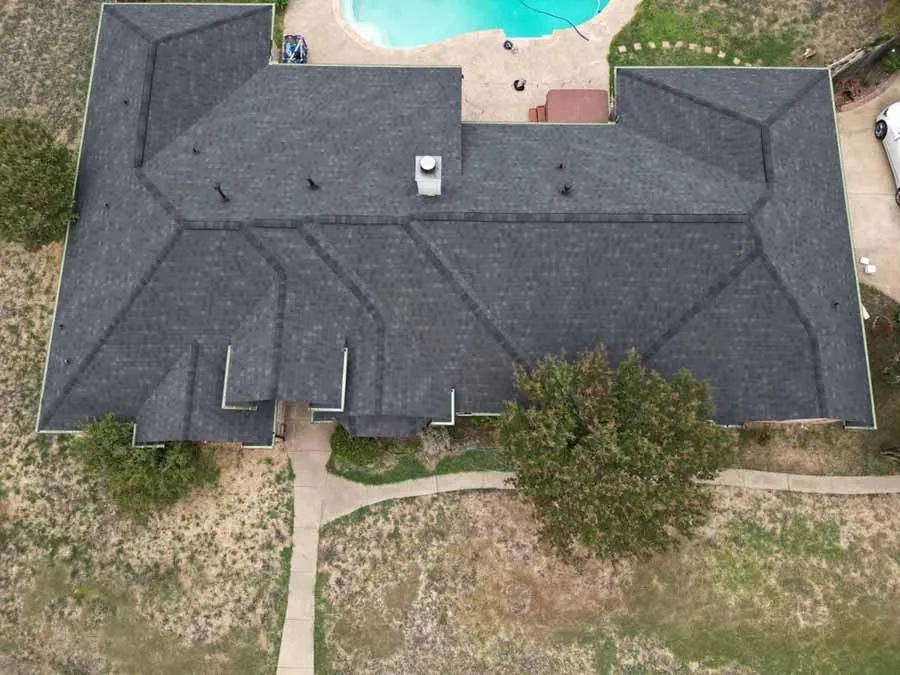
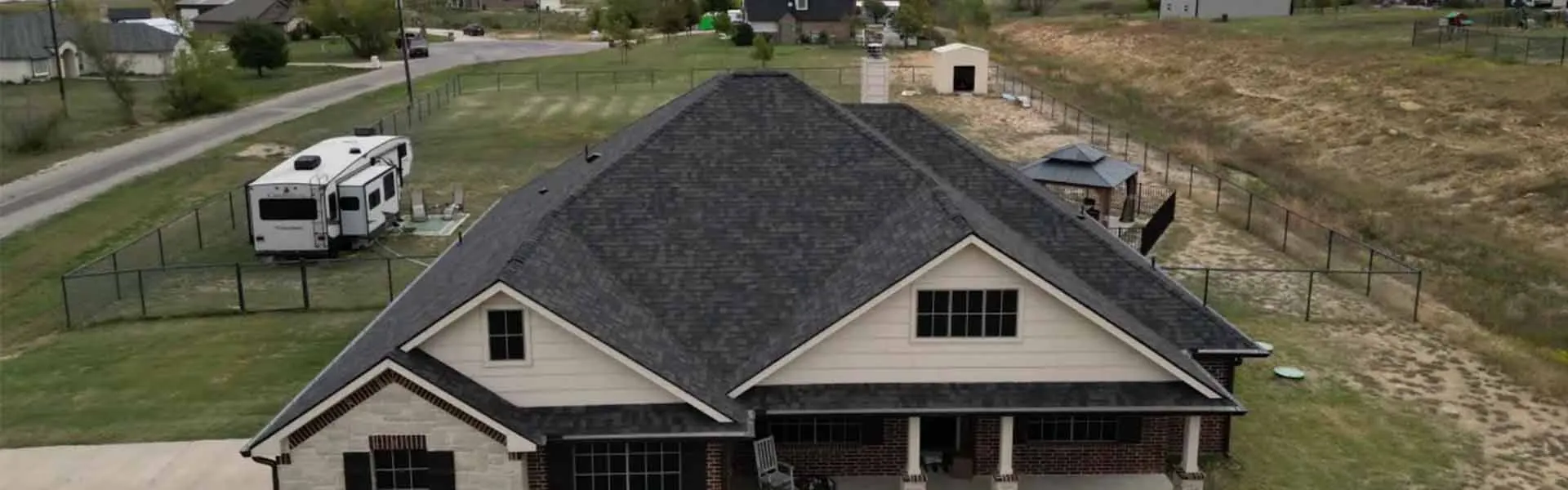
Now step back far enough to see each slope of the roof. Walk across the street or to the back fence if you need to. Binoculars help a lot. Go side by side, and take a photo of each one.
- Missing shingles. A gap in the pattern, or a patch of a different color.
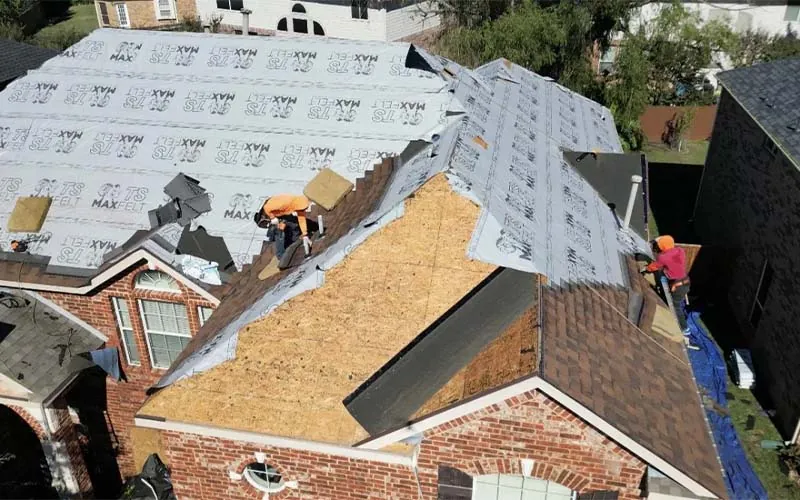
- Bare spots. Black felt (the paper layer under the shingles) or bare wood showing.
- Lifted or curled edges. Shingles that do not lie flat, mostly near the edges, corners and peak, where wind pulls hardest.
- Dark spots. Small round marks where hail knocked off the gritty top layer of the shingle.
- Vents and caps. Dents on the metal vents, pipes or the cap on top of the chimney.
- Loose metal. Flashing (the metal where the roof meets a wall or chimney) or drip edge (the metal strip along the roof edge) that is bent or hanging.
- Limbs on the roof. Even a small branch can crack shingles where it landed.
Pay the most attention to the side that faced the storm. In North Texas, that is often the west or north side, but storms can come from any direction.
Minutes 8 to 9: the downspouts
Look at the ground where each downspout lets out. A little shingle grit (the sand-like coating on top of shingles) is normal on any roof. A big pile of it after one storm is not. It can mean hail knocked a lot of grit loose at once.
Minute 10: a quick look inside
- Ceilings. Check the top-floor ceilings, closets and the corners near outside walls for new stains.
- The attic. If you can get in safely, look up for daylight through the boards and feel for damp wood or wet insulation. Step only on the beams or a walkway.
- Windows and skylights. Look for water on the sills.
A new stain does not always mean a roof leak. Our post on ceiling water stains helps you tell the roof from the AC or a pipe.
What your walk-around can miss
A ground check is a good start, but it has limits. Some of the most common storm damage is hard to see from the yard:
- Bruised shingles. Hail can crack the mat inside a shingle without leaving a mark you can see from far away.
- Creased shingles. Wind can fold a shingle back, then let it drop flat again. It looks fine from the street, but it is broken.
- Damage on a slope you cannot see, like the back side of a steep roof or a section hidden by trees.
So if the yard and gutters show signs of a hard storm but the roof looks fine from the ground, it is still worth having someone look from above. Our posts on hail damage and wind damage show what those look like up close.
If you found something
- Keep your photos together in one album on your phone, with a note of the storm date.
- Save any shingle pieces you picked up in the yard.
- Catch any water inside with a bucket and move your things out of the way.
- Get it checked before the next rain. A missing shingle is a small fix today and a leak next week.
- Be careful who you hire. After a big storm in Fort Worth, Arlington or Mansfield, out-of-town crews knock on doors. Pick a roofer with a local office and get the price and the work in writing.
For questions about what your coverage includes, ask your insurance agent.
What to do next
If your walk-around turned up missing shingles, dents or a new stain, call Legacy Roofing at (817) 602-2057. We are based in Crowley and work across Fort Worth, Burleson, Mansfield, Joshua and nearby towns. If you are not sure what you saw, book a free drone roof survey. Someone needs to be home for the flight, you see the pictures before we leave, and you get a written photo report. If something needs a closer look, we check it by hand.