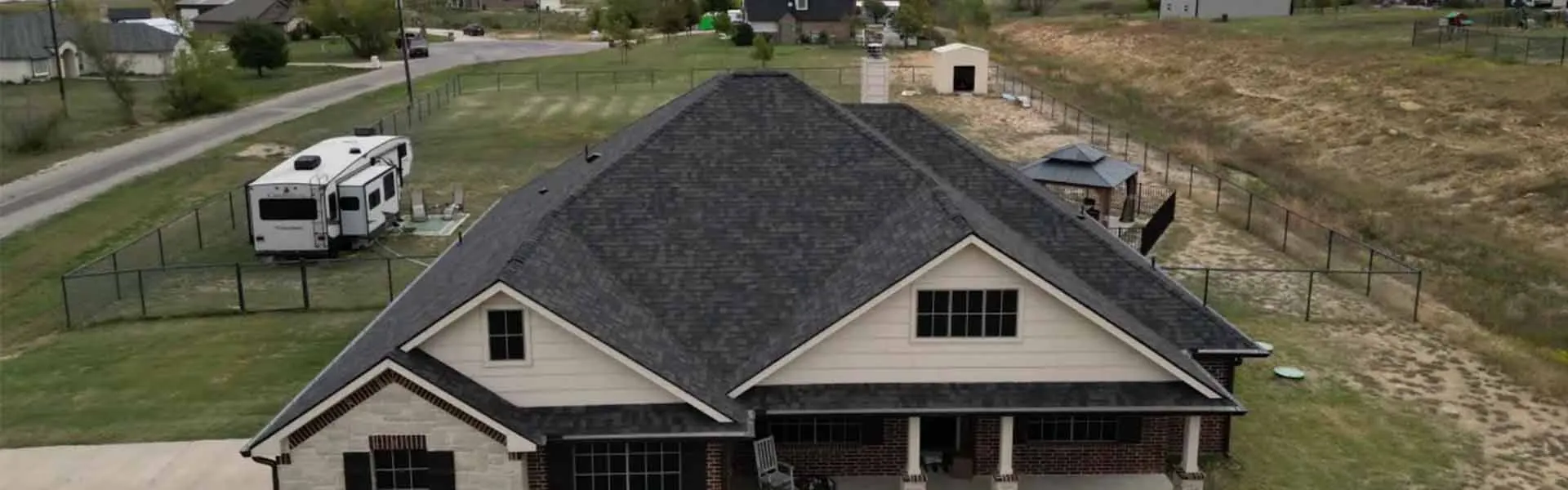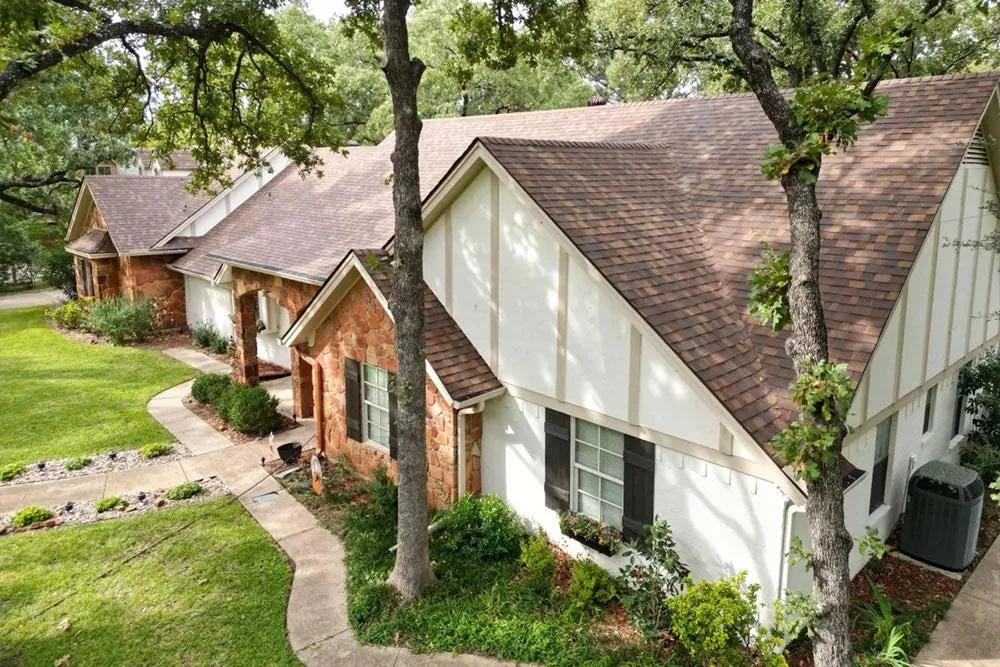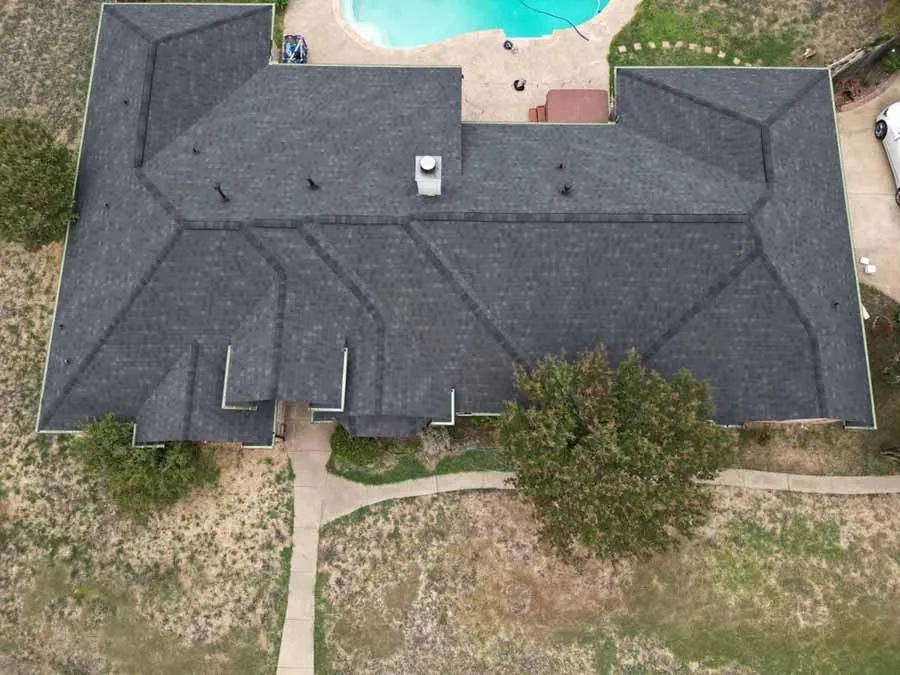
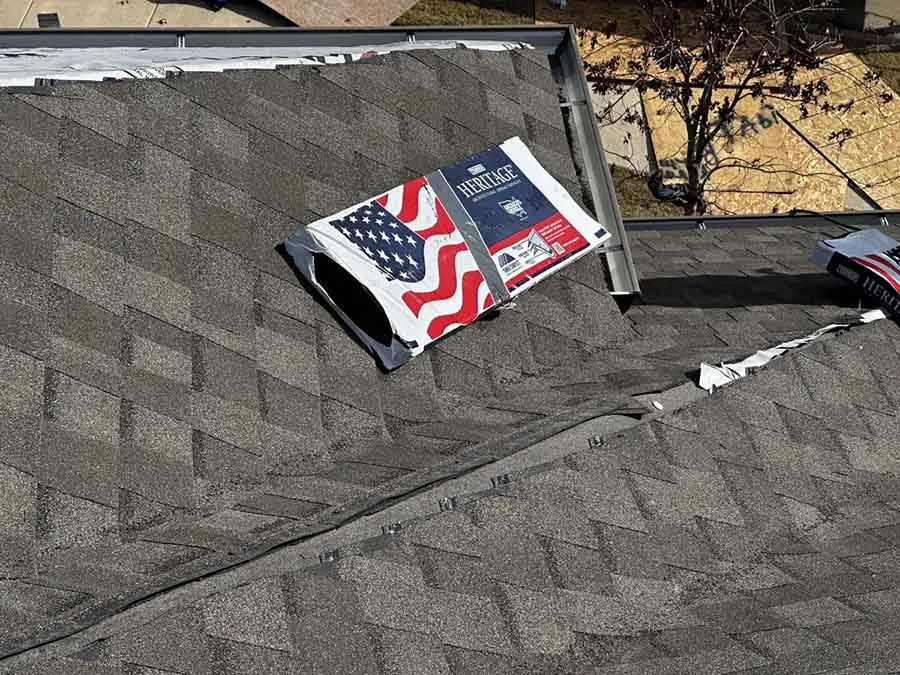
The most common signs of a bad roof install are rows of shingles that are not straight, nail heads you can see, shingles that lift or blow off in the first strong wind, old or missing flashing (the metal where the roof meets a wall or chimney), and a leak in the first few months. A new roof should look neat from the street and stay dry through its first storms. If yours does not, take photos, tell the roofer who did the job in writing, and get a second look from another roofer if the answer does not make sense. Here is what to check, and what matters most.
What a careful install looks like
It helps to know what "right" looks like first. On a well-built shingle roof:
- The rows run straight and even from one end of the roof to the other.
- The shingles hang a little past the roof edge, the same amount all the way along.
- There is metal drip edge along the edges, so water drips into the gutter, not down the wood behind it.
- Flashing at walls, chimneys and vents is new, tight and flat, not a thick line of caulk.
- No nail heads show on the face of the roof, except at a few spots that are sealed.
- The yard and driveway are clean when the crew leaves.
Signs you can see from the yard
Stand back far enough to see the whole roof. Look across it, not just up at it. Please do not climb on the roof.
- Wavy or crooked rows. If the lines look like a wave or slant across a slope, the crew may have rushed the layout. Some old roofs have a wavy deck (the wood under the shingles), but a new roof on a sound deck should look straight.
- Shingles that stick out or fall short at the edge. Too far out and the wind can catch them. Too short and water runs behind the gutter.
- Patches of a different color. A new roof should be one color. Odd patches can mean the crew ran short and used shingles from another batch.
- Old metal left in place. Rusty vents, pipe flashing or valley metal next to brand new shingles can mean old parts were reused.
- Shingles that look lifted or flap in the wind. New shingles have a strip of glue that seals each row to the row below once the sun warms it. If they still lift weeks later, the nails may be in the wrong spot.
Signs in the attic
Take a flashlight into the attic on a sunny day and turn off the light.
- Dots of daylight through the roof boards, other than at the vents, mean gaps.
- Nails that missed the wood. Rows of nails poking through beside a rafter (the long boards that hold up the roof) instead of into the boards above are a sign of rushed nailing.
- Dark spots or damp insulation near pipes, the chimney or a valley (the low line where two slopes meet) point to a leak.
- A hotter attic than before. If the new roof has fewer vents, or the vents were covered, the attic can get much hotter. Our post on attic ventilation explains why that matters in Texas.
Signs that show up after the first storms
Some mistakes hide until the weather tests them. Watch for these in the first year:
- Shingles in the yard after a windy day. A new roof should not lose shingles in a normal North Texas wind.
- A water stain on a ceiling, most often near a chimney, a skylight, a wall or a pipe. That is where flashing does its job, or fails to.
- Water behind the gutters or stains on the fascia (the board along the roof edge that the gutter hangs on). That often means missing or poorly set drip edge.
- Drips in one spot during hard rain but not light rain. That can point to a valley or a wall joint that was not built right.
Real problem or just looks?
Not every flaw is a big deal. Be fair to the roofer and to yourself:
- Usually just looks: a slight color shift between bundles, a few stray nails in the grass, a ridge line that is a hair off.
- Worth a call: crooked rows across a whole slope, shingles lifting, nail heads showing, old flashing left in place, caulk used in place of flashing.
- Call right away: any leak, any missing shingles, or soft spots you can see as a dip in the roof line.
Our post on flashing and drip edge shows what those parts should look like up close.
What to do if you think the install was bad
- Take dated photos. From the yard, from the attic, and of any stain.
- Contact the roofer who did the job, in writing. A text or email with photos is better than a phone call alone. Ask them to come look and tell you, in writing, what they will do.
- Stop a leak from spreading. Put a bucket under drips and move things away from wet spots. If water is coming in fast, a tarp may be needed.
- Get a second look if the answer does not add up or nobody comes. Another roofer can tell you if the problem is a small fix or a sign of bigger mistakes.
- Keep every paper: the contract, the invoice, any permit, and every message.
If you have questions about your home coverage, ask your insurance agent.
How to avoid a bad install next time
- Get a written estimate that lists the parts: new drip edge, new flashing, new pipe boots, the type of underlayment and how the vents will be handled.
- Ask to see photos of the bare deck before the new shingles go on, so you know any bad boards were replaced.
- Be careful with any roofer who knocks after a storm, wants to start the same day, or will not put things in writing.
What to do next
If you think your roof was put on badly, set up a free drone roof survey for a second look. Someone needs to be home for the flight, and you see the pictures before we leave. You get a written photo report, and if something needs a closer look, it is checked by hand. If you need a fix, see our roof repairs page, or call Legacy Roofing at (817) 602-2057. We work in Crowley, Fort Worth, Burleson, Mansfield, Joshua and nearby towns, and we will tell you plainly what we see.