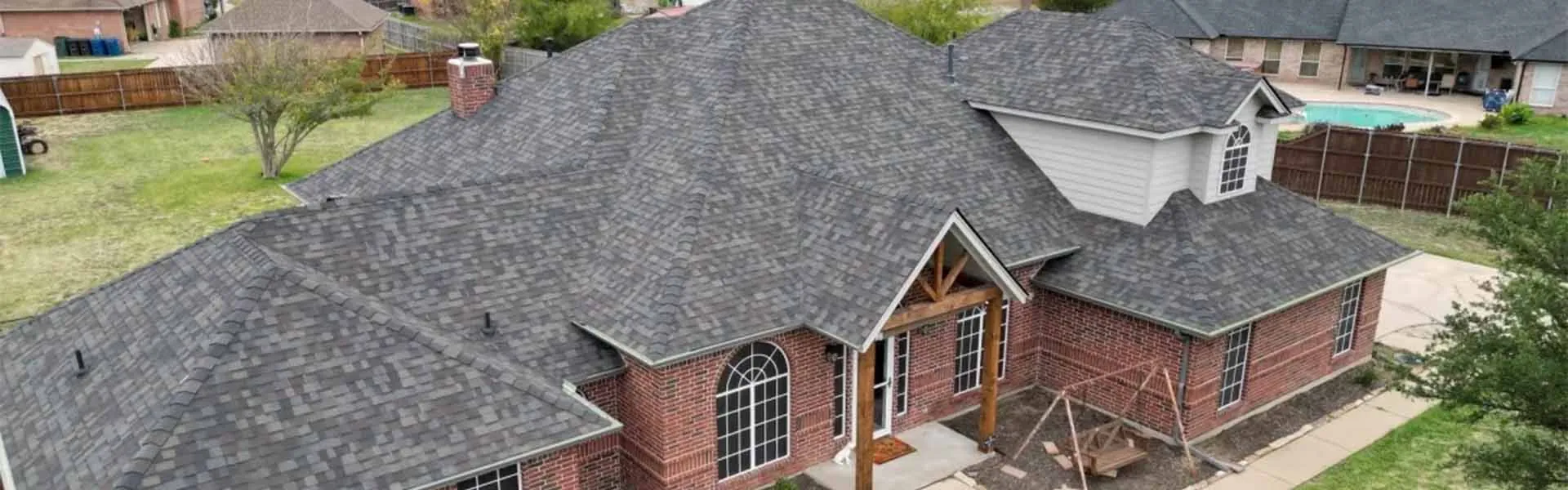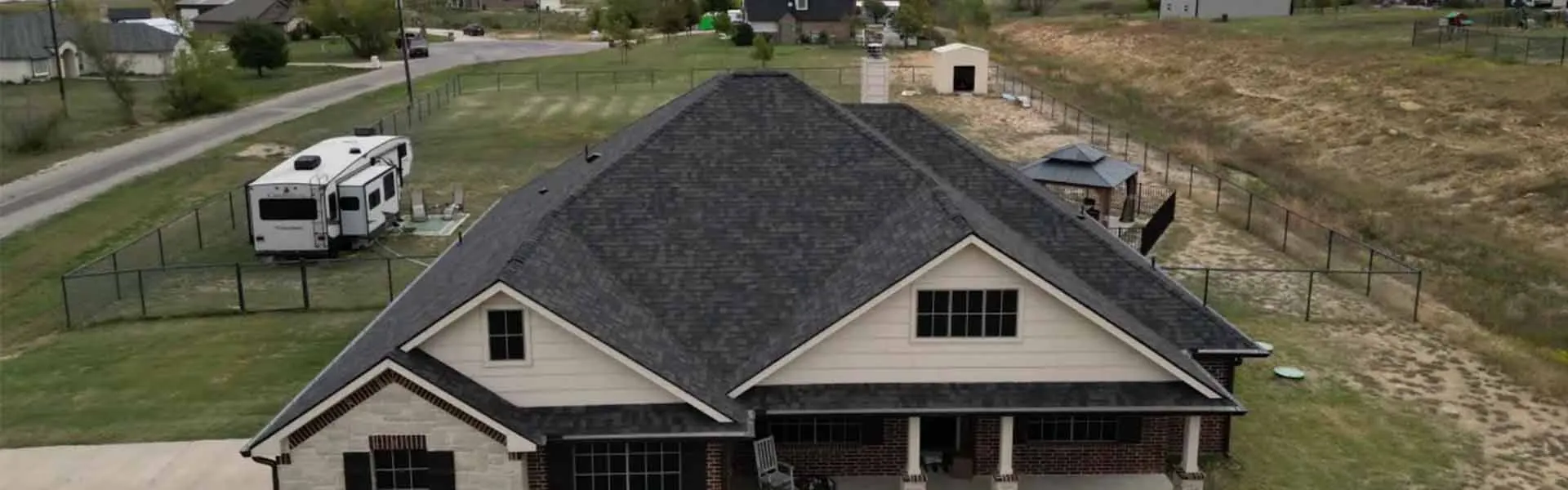
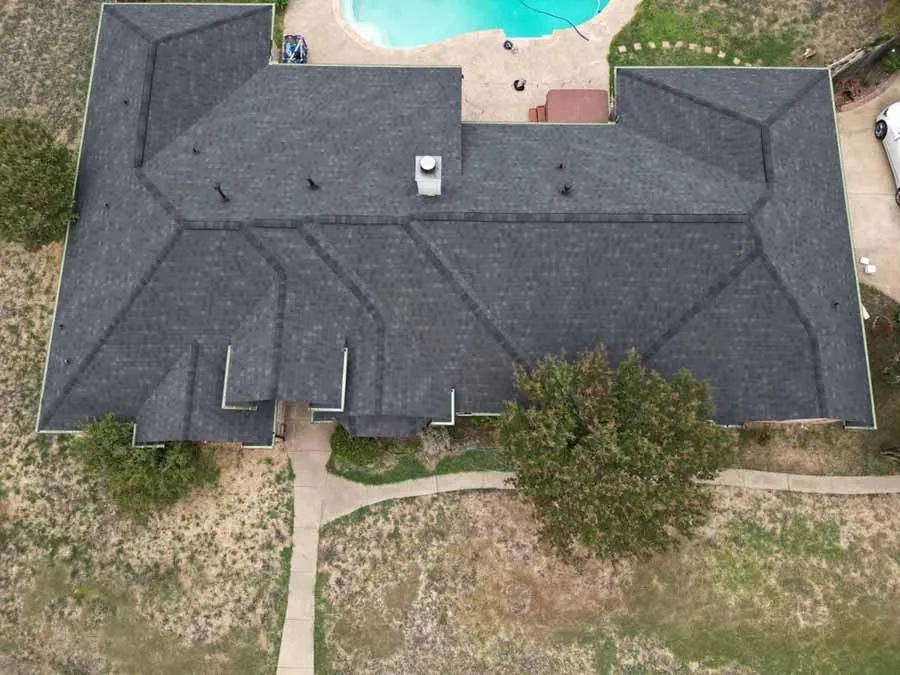
During a drone roof survey, a pilot stands in your driveway or the street and flies a small drone over your house. The flight takes about 15 minutes. The drone takes photos of every part of the roof, from the ridge (the peak) down to the gutters. You need to be home, since we need your OK to fly over the house, and you see the pictures before we leave. If a spot needs a closer look, it is checked up close by hand. A few days later you get a written report with dated photos. Here is each step, plus what the photos can and can not tell you.
Step 1: You ask, and we call to set a time
You send the short form or call the office. We call back to pick a day that works for you. Drones do not fly well in rain or strong wind, so if the weather turns bad, we pick a new time. A calm, dry day gives the clearest photos.
Step 2: The pilot shows up and says hello
The pilot meets you at the door, tells you what will happen, and asks if you have seen any leaks, stains or loose shingles. Tell them everything, even small things. A water stain in a closet or a shingle in the yard tells the pilot where to look hardest.
Nobody needs to come inside. The whole survey happens from the outside.
Step 3: The drone flies
The drone goes up and flies over the roof in a slow pattern. It takes photos from above and from the sides, slope by slope. It gets close to the parts that leak most often:
- Shingles. Hail marks, cracks, curled edges, missing pieces and bare spots where the grit (the small stone bits on top) has worn off.
- Flashing. The metal where the roof meets a wall or a chimney.
- Pipe boots. The rubber collars around pipes that stick out of the roof. Texas sun cracks them.
- Valleys. The low lines where two slopes meet and the most water runs.
- Vents, gutters and the drip edge. Dents, rust and gaps. Dents in soft metal are a clue that hail fell on the house.
You can watch from the yard if you like. Keep kids and dogs back, since the pilot needs to watch the drone the whole time.
Step 4: You see the pictures before we leave
When the drone lands, the pilot goes over the photos with you on a screen. For the first time, you can see your own roof up close. If something looks wrong, the pilot points to it and tells you what it is in plain words. If the roof looks good, you hear that too.
Step 5: A closer look by hand, if needed
A photo shows where a mark is. It can not always show if a shingle is soft, cracked through, or just scuffed. So if a spot needs a closer look, it is checked up close by hand. Most of the time, the photos are enough.
Step 6: The written report
The report comes by email or a link. It is free, and it is yours to keep whether or not you hire us. A good report has:
- Dated photos of every part of the roof.
- Anything worth noting circled, with a plain note on what it is.
- What needs work now, what can wait, and what is fine.
- A clear call, even when that call is "leave it alone."
If your roof is fine, the report says so. Dated photos of a healthy roof help if you sell the house, or if you want to compare after the next big storm.
What the photos can and can not show
A drone is a great tool, but it is not magic. To be honest about it:
- It can show missing or lifted shingles, worn grit, hail marks, dented metal, loose flashing, cracked pipe boots, sagging gutters and debris in the valleys.
- It can not show what is under the shingles, like the underlayment (the layer between the shingles and the wood) or the wood deck itself.
- It can not see inside the attic. If you have a stain on a ceiling, check the attic with a flashlight too. Our post on water stains on the ceiling shows what to look for.
- Light hail marks can be hard to read in a photo. That is one more reason a closer look by hand matters when something is in doubt.
Drone or ladder: which is better?
Each has a job. A drone sees the whole roof, including steep or high slopes that are risky to walk. It is quick, and you get clear photos you can look at again later. Walking a roof lets a person press on a shingle and feel if it is soft. It also adds wear to an old roof, and on a hot Texas day, foot traffic can scuff soft shingles. The best plan uses both: the drone first, then hands-on checks only where they are needed.
How to get ready
- Write down what you have seen. Stains, drips, shingles in the yard, grit at the bottom of the downspouts, and when you saw them.
- Move cars if you can, so the pilot has room in the driveway.
- Keep pets inside during the flight.
- Think of your questions. How old the roof is, if you know, and any work done on it before.
If a storm just came through, you can do a quick check from the ground first with our 10-minute roof walk-around. Please do not climb on the roof.
Questions to ask any drone roofer
- Will I see the photos before you leave?
- Do I get to keep the report, even if I do not hire you?
- Who checks a spot by hand if the photos are not clear?
- Will you tell me if the roof is fine?
If a roofer will not show you the photos, or finds a big problem on every roof, get a second look. For coverage questions, ask your insurance agent.
What to do next
To see your own roof, set up a free drone roof survey. Someone needs to be home for the flight, you see the pictures before we leave, and you get a written photo report. If something needs a closer look, it is checked by hand. Or call Legacy Roofing at (817) 602-2057. We work in Crowley, Fort Worth, Burleson, Mansfield, Joshua and nearby towns, and we will tell you plainly what we see.