Most skylight leaks do not come through the glass. They come through the flashing (the metal that seals the gap between the skylight and the roof) or the shingles just above it. Sometimes the "leak" is not a leak at all, but water from the warm air in your house that forms drops on cold glass. You can tell which one it is by when the water shows up and where the drops are. If water shows up only when it rains, look at the flashing and the roof first. If it shows up on cold mornings with no rain, it is likely that moist air. If the seal or the glass itself is cracked, the skylight may need to be replaced.
Leak or condensation? Check this first
Condensation is water that forms when warm, damp air inside the house touches cold glass. It can drip just like a leak, so it fools a lot of people.
- Likely condensation: water shows up on cold mornings, even when it has not rained. Drops form all over the glass, and it dries up as the day warms.
- Likely a leak: water shows up during or right after rain. It runs down one side or one corner of the frame. It gets worse in hard, wind-driven rain.
If it is condensation, more airflow often helps: run the bath fan, crack the skylight if it opens, and keep the room less humid. If it is a leak, keep reading.
Where skylight leaks come from
Water can get in at a few spots, from most to least common:
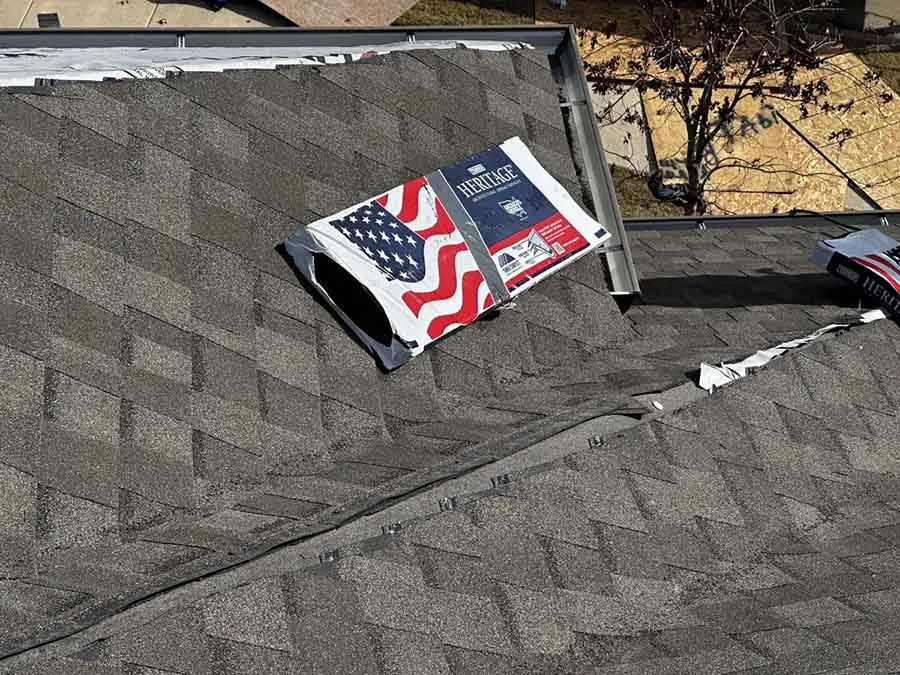
- The flashing around the skylight. This is the big one. Flashing can rust, bend, pull loose or be put on wrong. Some skylights were sealed with only a thick line of caulk (a rubber-like paste) and no real flashing. Texas sun cracks caulk in a few summers, and then water walks right in.
- The shingles above the skylight. A skylight is like a rock in a creek. Water runs down the roof and hits it. If leaves and grit pile up on the high side, water backs up under the shingles. Worn, cracked or missing shingles above it make that worse.
- The seal between the glass and the frame. Over time, the rubber seal can dry out and shrink. Water then gets in around the edge of the glass.
- The glass or dome itself. Hail can crack glass or a plastic dome. Plastic domes can also turn cloudy and brittle in the sun and crack on their own. Fog between two panes means the seal between them has failed.
- The shaft below. The shaft is the boxed-in tunnel between the roof and your ceiling. If the attic has poor airflow, damp air can wet the shaft walls. That looks like a leak but starts inside.
What you can check safely
You can learn a lot without a ladder. Please do not climb on the roof, and stay off it when it is wet.
- From inside, during rain. Use a flashlight. Watch where the first drop forms. Water on the high side of the frame points to the flashing or shingles above. Water at the edge of the glass points to the seal.
- From the attic. If you can reach the outside of the skylight shaft, look for dark stains or wet wood. Note which side is wettest.
- From the yard. Look for leaves or debris piled above the skylight, shingles that are missing or curled near it, and metal that looks bent or rusty.
- After a hailstorm. Look for cracks in the glass or dome, and dents in the metal frame. Our post on what hail damage looks like shows what to look for on the rest of the roof.
In the meantime, put a towel or a bucket under the drip and move anything that can be ruined. Wet drywall can grow mold, so do not wait too long.
Fix it, replace it or cover it over?
Once a roofer finds the cause, you have three main choices. Each has trade-offs.
- Repair the flashing or shingles. Good when the skylight itself is sound and only the seal around it failed. This is often the smallest job. The trade-off: if the skylight is old, its seal or glass may be the next thing to go.
- Replace the skylight. Good when the glass is cracked, the panes are fogged, the dome is brittle, or the frame is rotted. A new skylight comes with new flashing made to fit it. The trade-off: it is a bigger job, and the inside trim may need touch-up paint.
- Remove it and close the hole. Some homeowners decide they do not need the skylight. The roofer frames in the opening, adds new deck (the wood boards under the shingles) and shingles over it. The trade-off: you lose the daylight, and the shingles on the patch may not match an older roof exactly.
Skylights and a new roof
If your roof is near the end of its life, the best time to deal with a skylight is when the new roof goes on. The flashing around a skylight should be new with a new roof, not reused. If the skylight is old, many homeowners replace it at the same time. Our post on flashing and drip edge explains how that metal keeps water out.
When you get an estimate for a new roof, ask how they will handle each skylight. A good estimate says so in writing.
Questions to ask a roofer about a skylight leak
- Where exactly is the water getting in? Can you show me a photo?
- Will you put in new flashing, or seal over the old?
- Does the skylight have enough life left to keep, or should it be replaced?
Be careful with any fix that is just more caulk on top. It may stop a drip for a while, but in North Texas heat it tends to crack again. For coverage questions after a storm, ask your insurance agent.
What to do next
If your skylight drips when it rains in Crowley, Fort Worth, Burleson, Mansfield, Joshua or a nearby town, see our roof repairs page or call Legacy Roofing at (817) 602-2057. To see the whole roof first, set up a free drone roof survey. Someone needs to be home for the flight, and you see the pictures before we leave. You get a written photo report, and if something needs a closer look, it is checked by hand. We will tell you plainly what we see.