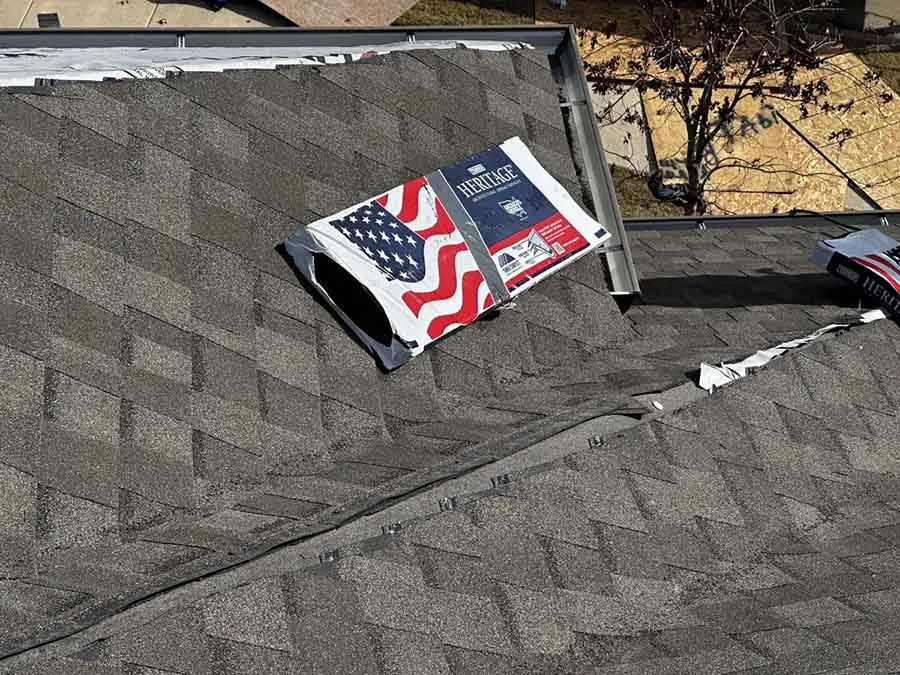
A bruised shingle is a shingle that hail hit hard enough to crack or crush the layer inside it, even though the top may still look whole. Press on the spot and it feels soft, like a bruise on an apple. It almost never leaks right away. But the damage is real. Over the next months, the grit on top falls off at that spot, the sun dries out the shingle, and a crack opens up. That is when a leak can start. So a bruise is worth finding early, while it is still a small problem.
What is inside a shingle
To see why a bruise matters, it helps to know how a shingle is built. Most shingles on North Texas homes have three layers:
- The mat. A thin sheet in the middle, a lot like a stiff cloth. It gives the shingle its strength.
- The tar. A thick coat on both sides of the mat. This is what keeps water out.
- The grit. Small stone bits pressed into the top. The grit shades the tar from the sun and gives the shingle its color.
When hail hits, the grit and tar soak up some of the blow. If the hit is hard enough, the mat under them cracks or gets crushed. The top can stay in place for now. That hidden break is the bruise.
What a bruise looks like
From the yard, most bruises look like nothing at all. Up close, a fresh bruise often shows one or more of these signs:
- A soft spot. The shingle gives a little when pressed, where the rest of it feels firm.
- A small dark circle. Some of the grit is knocked off or pushed down, and the dark tar shows through.
- A round shape. Hail is round, so the mark is too. It is often about the size of a coin.
- A random spread. Hail marks are scattered across a slope, with no line or pattern.
Some bruises show no mark on top at first. The only sign is the soft feel. That is why a bruise is easy to miss in photos taken from far away.
Why a bruise leads to a leak later
A bruise is a slow problem. Here is how it usually goes:
- The hit. Hail cracks the mat. The shingle still sheds water.
- The grit lets go. With the mat broken under it, the grit at that spot comes loose. Rain washes it into the gutters.
- The sun goes to work. Bare tar bakes in the Texas sun. It dries out and gets brittle.
- A crack opens. Heat in the day and cooler nights make the shingle swell and shrink. The weak spot splits.
- Water gets in. Rain finds the crack and runs under the shingle. A stain shows up on a ceiling, sometimes a year or more after the storm.
By then, most people have forgotten the storm. That is why it helps to get the roof checked soon after hail, and to keep dated photos.
Bruise or something else?
Not every dark spot on a roof is a bruise. Here is what else it can be:
- Blisters. Heat can make small bubbles in a shingle. When they pop, they leave pits. Blisters often come in groups on the sunny side, and the pits have sharp, raised edges. A bruise has no raised edge and feels soft.
- Normal wear. Old shingles lose grit all over, little by little. That looks like an even, thin roof, not scattered round spots.
- Scuffs. Shoes, ladders and tools leave scrapes in a line or a path. Hail marks are round and random.
A good roofer tells these apart by pressing on the spot, looking at the edges of the mark, and checking the soft metal nearby. Dents on vents and gutters are a strong clue that hail was big enough to bruise.
What size hail can bruise a shingle?
Hail about 1 inch across, the size of a quarter, can bruise a standard shingle. An older roof, already dried out by years of sun, can bruise from smaller hail. Wind makes it worse. Hail that comes in sideways hits one side of the roof harder than the rest.
Class 4 shingles are built to take hail better. They are tested by dropping a steel ball on them, and they have to hold up without cracking. Very large hail can still hurt them, but they shrug off much of the hail that bruises a standard shingle. Our post on whether Class 4 shingles are worth it goes deeper.
What you can check without a ladder
Please do not climb on your roof to press on shingles. Shingles are slick, roofs are steep, and a fall is not worth it. Here is what you can do from the ground:
- Look at the soft metal. Dents on gutters, downspouts, roof vents, the AC unit or the mailbox mean the hail was hard.
- Check the downspouts. A big pile of grit at the bottom right after one storm is a warning sign.
- Look at the sides that faced the storm. Use binoculars, or zoom in with your phone camera, and look for scattered dark spots.
Our post on a 10-minute walk-around after a storm walks through this step by step.
Can a bruised shingle be fixed?
A few bruised shingles in one area can often be swapped out one by one. The roofer lifts the shingles above, pulls the nails, slides in a new one, and seals it down. The hard part is matching the color on an older roof.
If bruises are spread across every slope, patching does not make much sense. Each fix risks breaking the glue on the shingles around it, and the rest of the roof took the same hits. In that case, a new roof is often the better choice. Questions about what your coverage includes go to your insurance agent.
What to do next
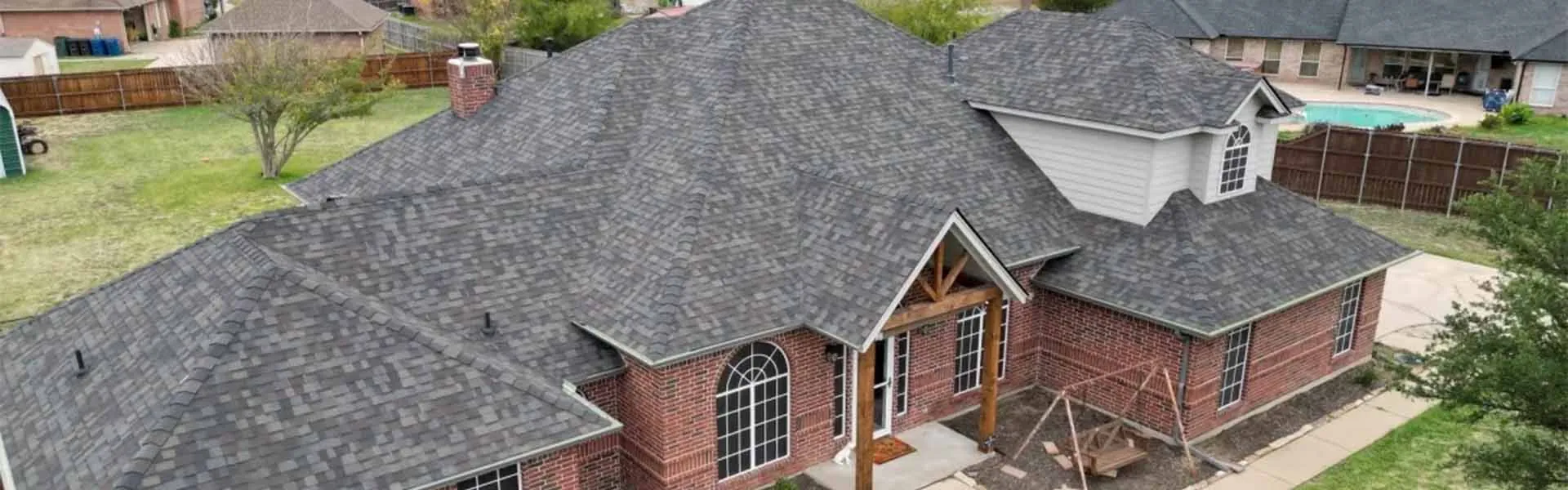
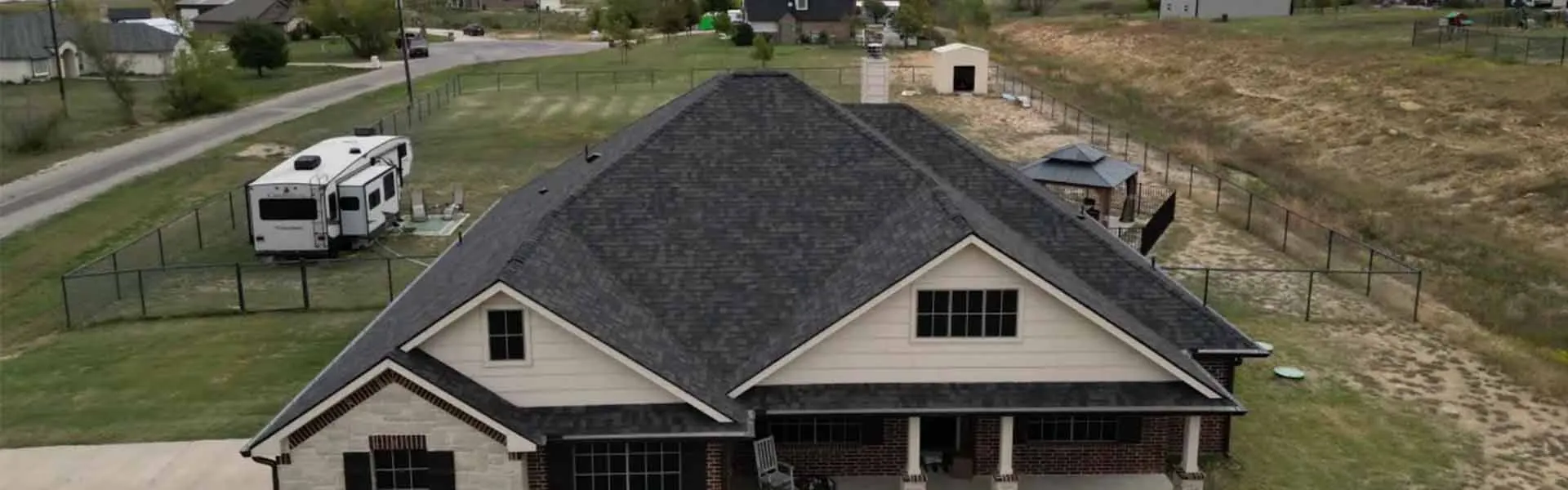
If hail hit your part of Crowley, Fort Worth, Burleson, Mansfield or Joshua, and you see dents on the gutters or vents, it is worth a closer look at the roof. Book a free drone roof survey with Legacy Roofing. Someone needs to be home for the flight. You see the pictures before we leave, and you get a written photo report. If something needs a closer look, we check it by hand. If we find a few bad shingles, see our roof repair page, or call us at (817) 602-2057.