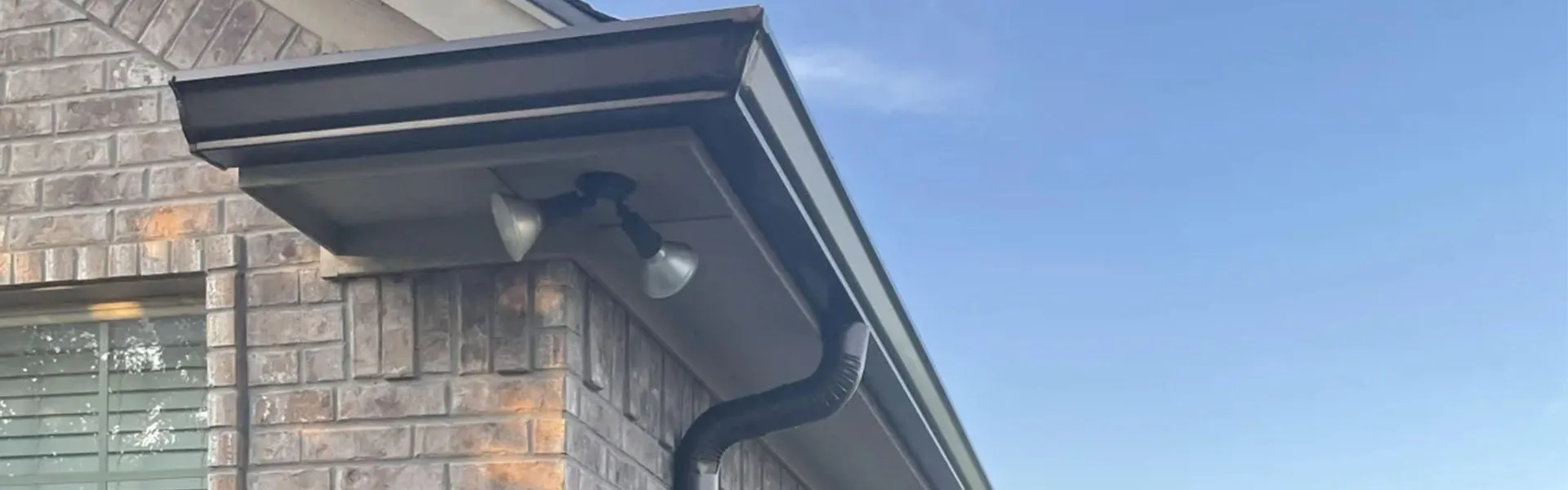
You likely need new gutters if they sag or pull away from the house, leak at many seams, have rust or holes, or spill over in every hard rain even when they are clean. One loose hanger or one leaky corner is a repair. Problems along the whole run mean it is time for a new set. In North Texas, getting this right matters more than people think, because the water that spills over lands right by the foundation, and our clay soil does not like that.
What gutters actually do
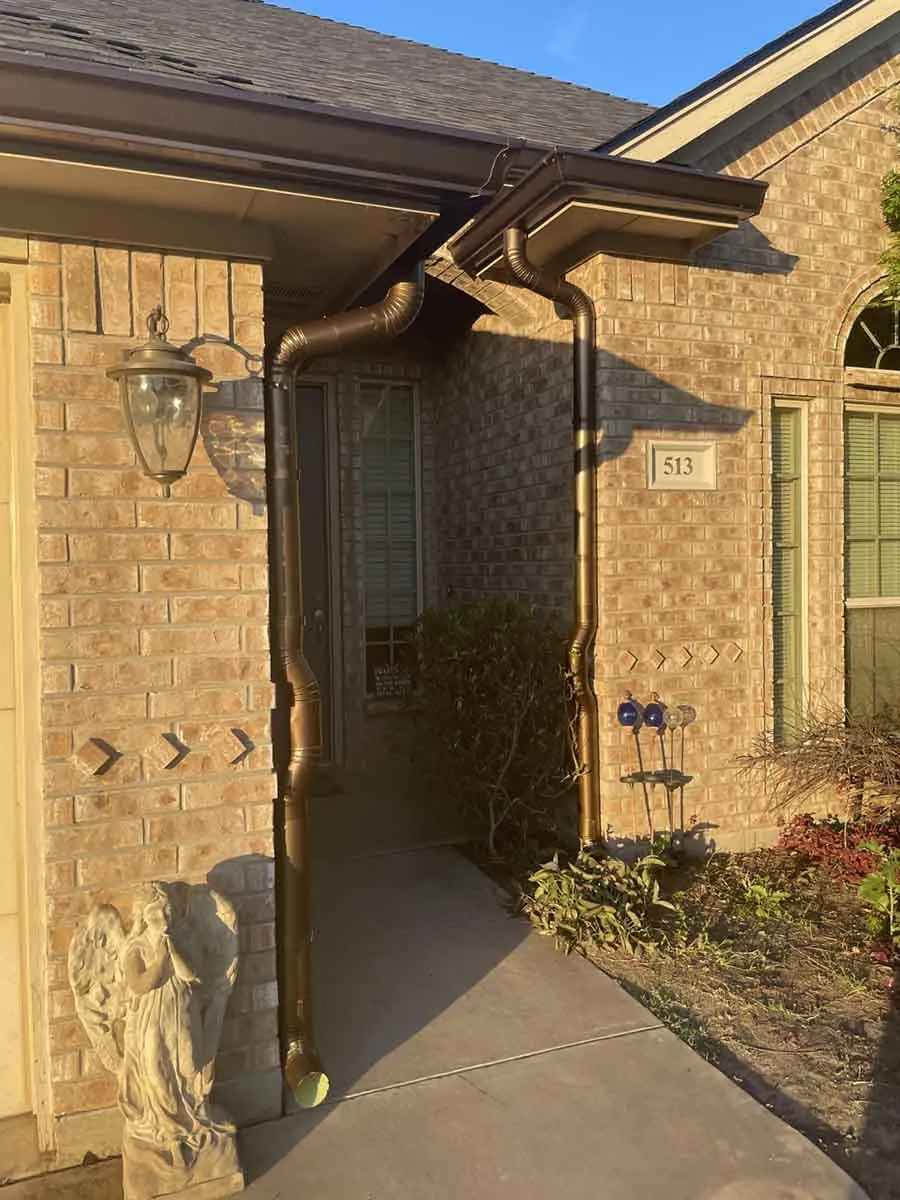
A roof sheds a lot of water. In a hard storm, a normal house roof can send hundreds of gallons off its edges in an hour. Gutters catch that water and send it to the downspouts (the pipes that run down the wall), which carry it away from the house.
Without them, or with gutters that do not work, water falls in a sheet along the walls. It digs a trench in the flower beds, splashes mud on the brick, and soaks the ground by the foundation. Clay soil swells when wet and shrinks when dry. Around Crowley, Burleson and Fort Worth, that swelling and shrinking is hard on a slab. Water that sits by the house also finds its way into the fascia (the board the gutter hangs on) and rots it.
Signs your gutters need work
Look for these during or right after a good rain:
- Water pouring over the edge. If the gutter is clean and still spills, it may be too small, sloped wrong, or short a downspout.
- Sagging or pulling away. A gutter that dips in the middle holds water and gets heavier. Soon it pulls the hangers out.
- Drips at the seams and corners. Older gutters come in short pieces joined together. Each joint is a place to leak.
- Rust, holes or split metal. Steel gutters rust through. Once holes start, they spread.
- A trench under the roof edge. A washed-out line in the mulch or dirt means water is landing there, not in the gutter.
- Peeling paint or soft wood on the fascia or the trim near the gutter.
- Standing water in the gutter a day after the rain stops. That means it is not sloped to drain.
Repair or replace?
Not every gutter problem means new gutters.
- Repair if the trouble is in one spot: a loose hanger, one leaky corner, a downspout that came apart, or a short stretch that needs to be re-hung at the right slope.
- Replace if the trouble is all along the run: many leaky seams, rust in more than one place, sagging on several sides, or gutters that are just too small for the roof.
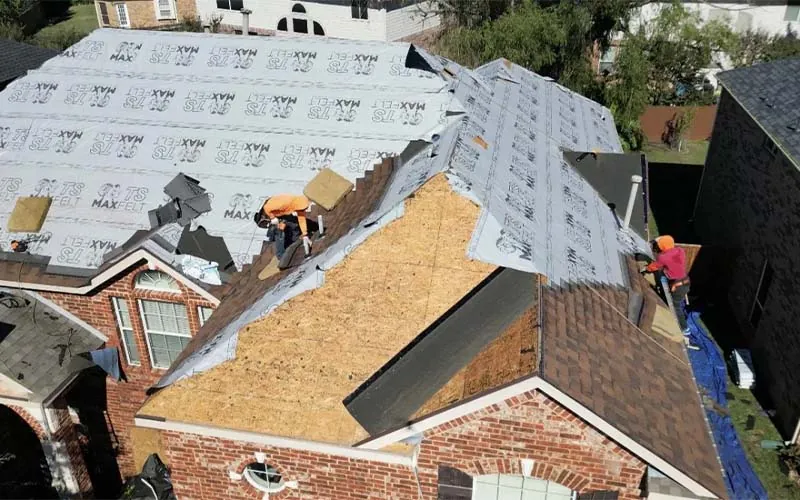
- Think about timing. If you are getting a new roof soon, that is the easiest time to change the gutters too. The old ones often come down during the tear-off anyway.
Hail dents alone do not always mean the gutters have to go. Small dents can look bad and still drain fine. Dents that make the gutter hold water, or that cracked the metal, are a different story. Dents in gutters are also a clue that hail hit the roof. Our post on what hail damage looks like shows what to check next.
Sizes: why bigger often helps here
Most homes have gutters that are 5 inches or 6 inches across the top. A 6-inch gutter holds a lot more water than a 5-inch one. In North Texas, where a storm can dump a lot of rain in a short time, the bigger size often makes sense when:
- The roof is large, or one long slope drains into one gutter.
- The roof is steep. Water comes off a steep roof faster and can shoot right over a small gutter.
- Two roof slopes meet in a valley (the low line where two slopes join) and dump into the same spot.
- Big trees drop leaves into it. More room means it clogs less often.
Downspouts matter just as much. A bigger downspout drains faster and clogs less. Most runs need a downspout at each end, or one every 30 to 40 feet on long runs.
The common types
- K-style. The most common shape on houses. The front has a curve that looks a bit like crown molding. It holds a lot of water for its size.
- Half-round. A round trough. It looks nice on some older or custom homes, but holds less water than a K-style of the same width.
- Seamless. Made on site from one long piece cut to fit each side of the house. With no joints along the run, there are far fewer places to leak. Corners still have joints.
- Sectional. Short pieces joined together. Cheaper to buy, but every joint can leak in time.
Most homes here end up with aluminum gutters. Aluminum does not rust, is light, and comes in many colors to match the trim. Steel is stronger but can rust.
What to ask before anyone puts up new gutters
- What size gutter and downspout do you plan to use, and why? The answer should fit your roof.
- Where will each downspout come down? They should land where the ground slopes away from the house, not by the front walk or the AC unit.
- How will the water get away from the house? Ask about extensions or splash blocks that carry water several feet out.
- What holds the gutters up, and how far apart? Hidden hangers spaced close together hold up better than the old long nails that work loose.
- What happens to the fascia? If the board behind the old gutter is rotten, it should be fixed before new gutters go on it.
- Is the slope set so water drains? A gutter should tilt a little toward each downspout so it does not hold water.
- Is the old set hauled off, and is the price in writing? You should know what is included before work starts.
What to do next
If your gutters spill over, sag or leak, call Legacy Roofing at (817) 602-2057. We are based in Crowley and work across Fort Worth, Burleson, Mansfield, Joshua and nearby towns. We measure the roof edge, plan where each downspout comes down, and give you a written price. See our gutter installation page for more. If hail dented the gutters and you want to know about the roof too, book a free drone roof survey. Someone needs to be home for the flight, you see the pictures before we leave, and you get a written photo report.