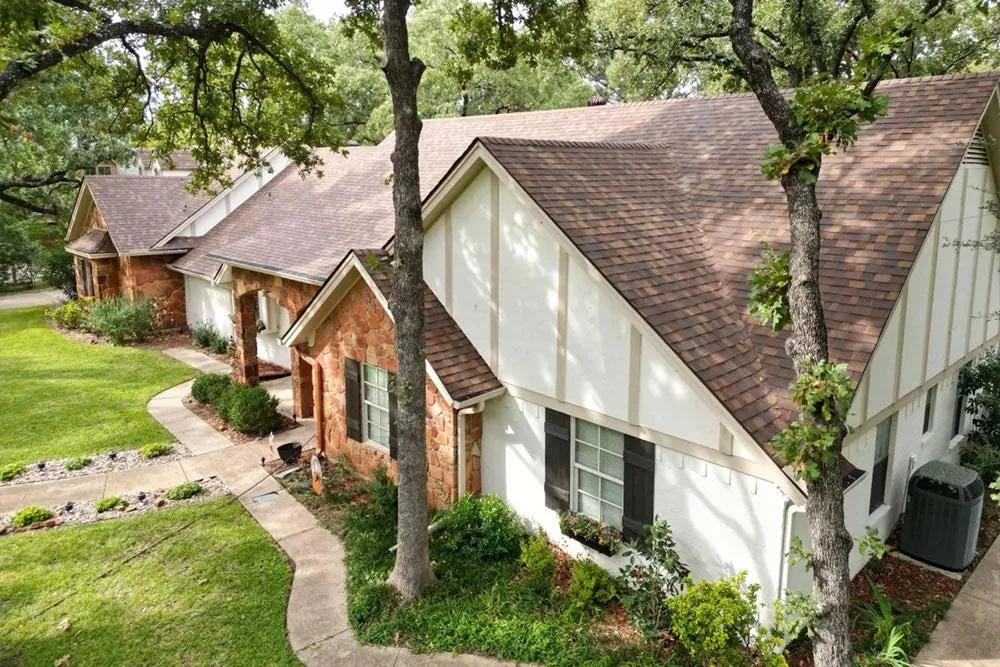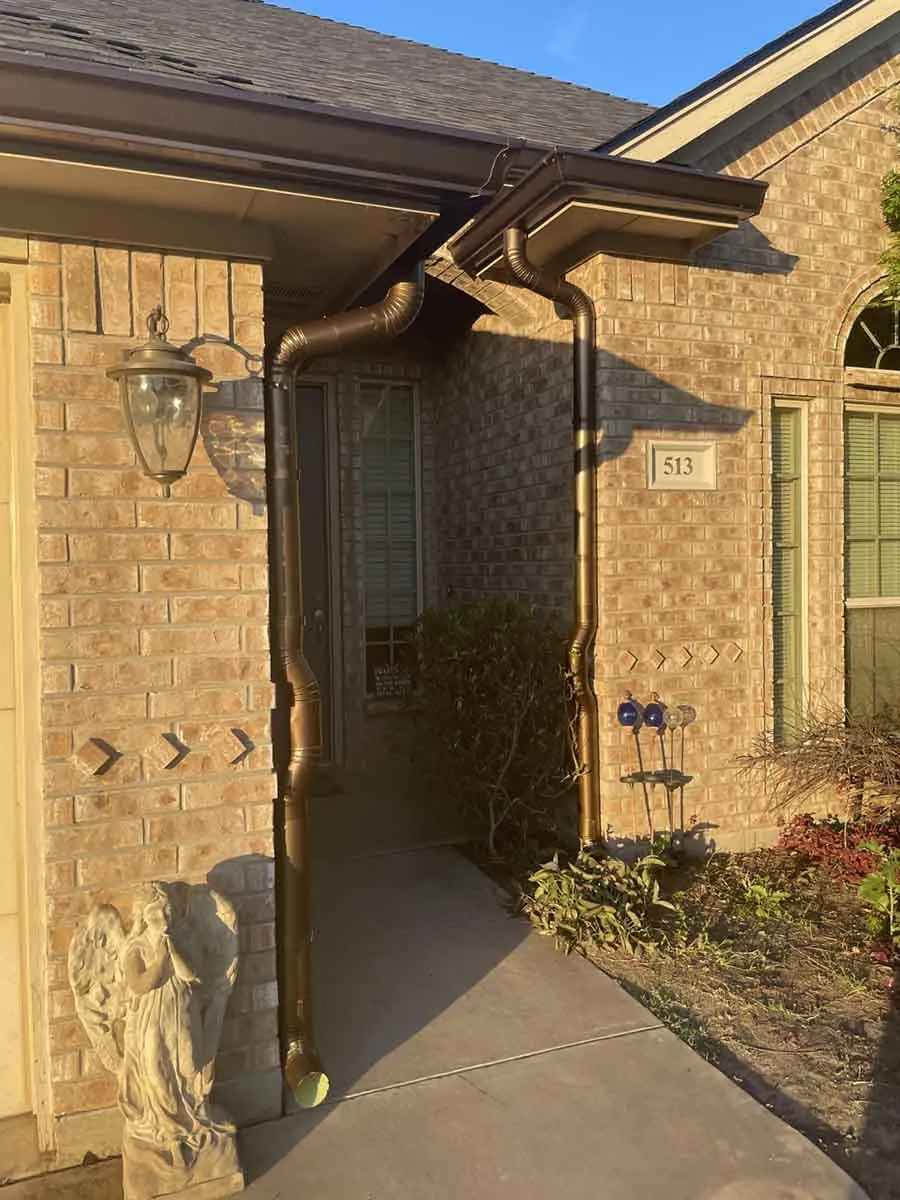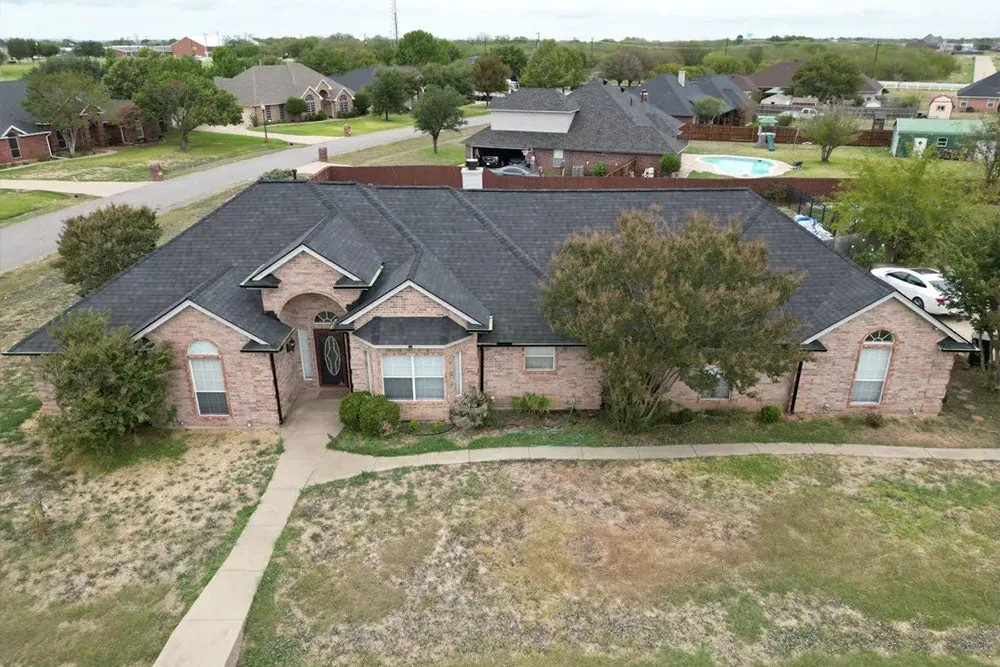
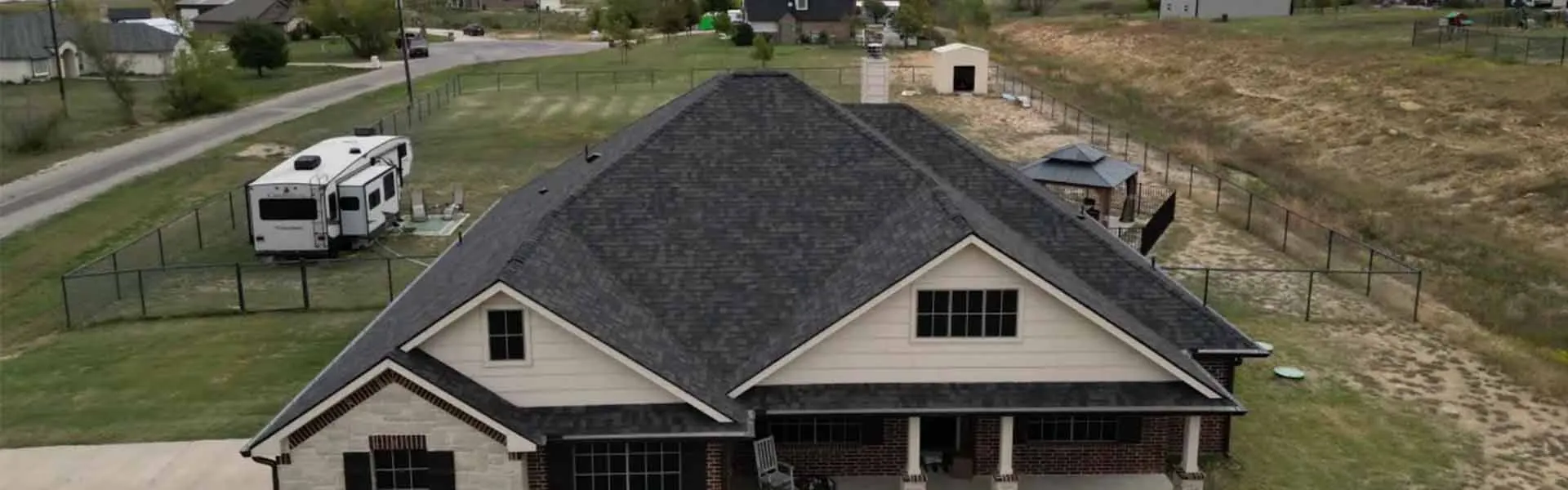
If your roof is more than about halfway through its life, replace the roof first and then put the solar panels on. Panels can last for decades. Most shingle roofs in North Texas do not last that long, because hail, wind and summer heat wear them down. If the roof wears out while the panels are on it, the panels have to come off, be stored, and go back up when the new roof is done. A roof check before you sign for solar is the cheapest step in the whole project.
Why the age of the roof matters
Solar panels sit on metal rails. The rails are bolted to the roof through small holes, and each hole is sealed with flashing (a metal or rubber piece that keeps water out). Once the panels are up, a big part of your roof is covered.
- You can not see the shingles under the panels. Hail marks and worn spots hide in their shade.
- A roofer can not easily fix what is under them. Many repairs mean the panels on that part of the roof have to come off first.
- The roof and the panels should wear out at about the same time. If the roof has only a few good years left, you will pay to take the panels off and put them back well before the panels are done.
Our post on how often to replace a roof in North Texas explains how long each kind of roof tends to last here.
How to tell if your roof is ready
Look at these before you sign for solar. You can check most of them from the yard and the attic. Please do not climb on the roof.
- Age. Find out when the roof went on. Check your closing papers or ask the last owner.
- Granules. Granules are the small grains on top of shingles. Lots of grit in the gutters or bare, shiny spots on the shingles mean the roof is wearing thin.
- Hail marks. Dark spots where granules were knocked off, or soft spots in the shingle, are signs of hail. Our post on bruised shingles shows what to look for.
- Curling or cracking. Shingle edges that turn up or split are near the end of their life.
- The deck. The deck is the wood the shingles are nailed to. In the attic, look for dark stains, soft spots or daylight. Bolts for the solar rails go into this wood, so it has to be solid.
- Old leaks. Stains on the ceiling or in the attic should be found and fixed before anything new goes on the roof.
If two or more of these show up, plan on a new roof first. If the roof is young and in good shape, solar can go right on.
If the roof needs work, what is the order?
Here is the order that causes the fewest problems.
- Get the roof checked. Get photos of every slope where panels will go.
- Replace or repair the roof. Do this before the solar crew comes out.
- Then install the panels. The solar company sets the rails on a fresh roof and seals each hole.
Tell your roofer about the solar plan up front. A roofer can add extra underlayment (the layer under the shingles that keeps water out) where the panels will go, and can make sure vents and pipes are not in the way of the panel layout. Tell the solar company the roof is new, too.
What if you already have panels and need a new roof?
This is common in Crowley, Fort Worth, Mansfield and Burleson after hail. It can be done with some planning.
- The panels come off first. This is usually done by a solar crew, not the roofer. Panels are electric, so the system has to be shut down safely.
- They are stored during the job. Ask where they will be kept and who is in charge of them while they are off.
- The new roof goes on. The roofer puts on the new roof and new flashing.
- The panels go back up. The solar crew puts the rails back and seals the holes again.
Read your solar paperwork before you call anyone. If you lease the panels or pay a monthly bill for them, the solar company may need to be the one that takes them off. Some contracts also say who is allowed to touch the system. For questions about storm coverage for the roof or the panels, ask your insurance agent.
Leaks around solar panels
Most leaks on a roof with solar start at the bolts that hold the rails. Each one is a hole in the roof. If the flashing was skipped, cracked in the heat, or was only a dab of sealant, water can run down the bolt into the deck.
Watch for a ceiling stain under the panels or dark spots on the attic wood near the bolts. If you see them, ask who put the panels in and who should fix the leak. Sometimes it is the solar company, sometimes the roofer, and sometimes both need to come out. Our post on ceiling water stains helps you trace a stain to its source.
Other things to watch for
- Birds and squirrels. The space under panels is a dry, shady nest spot. Nests hold leaves and water against the roof. A wire screen around the edge of the panels keeps animals out.
- Hail. After a big storm, have both the panels and the roof checked.
Questions to ask before you go solar
- How old is my roof, and how many good years does it have left?
- Is the deck solid where the rails will be bolted?
- How will each bolt hole be flashed and sealed?
- If the roof needs work later, who takes the panels off and puts them back?
- Will you give me photos of the roof before the panels go on?
What to do next
If you are thinking about solar on a home in Crowley, Fort Worth, Arlington, Burleson, Mansfield, Joshua or a nearby town, get the roof checked first. Set up a free drone roof survey. Someone needs to be home for the flight, and you see the pictures before we leave. You get a written photo report, and if something needs a closer look, it is checked by hand. If the roof should be replaced first, our roof replacement page explains the job, or call Legacy Roofing at (817) 602-2057. We will tell you plainly what we see.