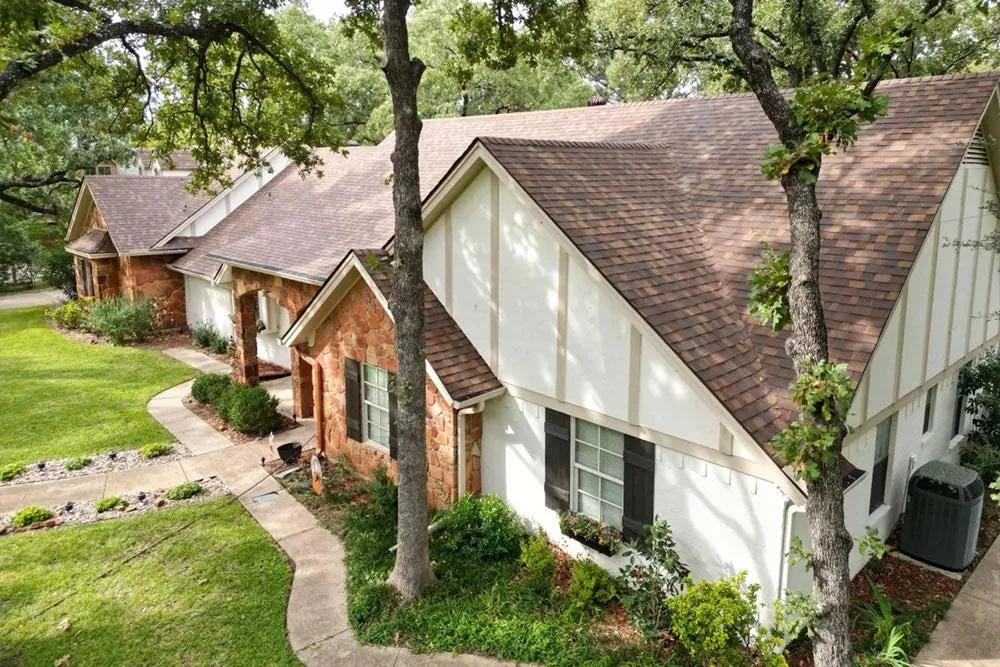
A roof line that sags almost always means something under the shingles is weak. Most often it is the deck (the wood boards the shingles are nailed to) that got wet from a slow leak and went soft. It can also be too much weight, like two or three layers of old shingles, or a rafter (one of the long boards that hold up the roof) that cracked, bent or was cut. A small wave in the deck is common and not an emergency. A dip that is getting worse, a ridge that bows in the middle, or new cracks in your walls are signs to get it looked at soon.
What a sagging roof looks like
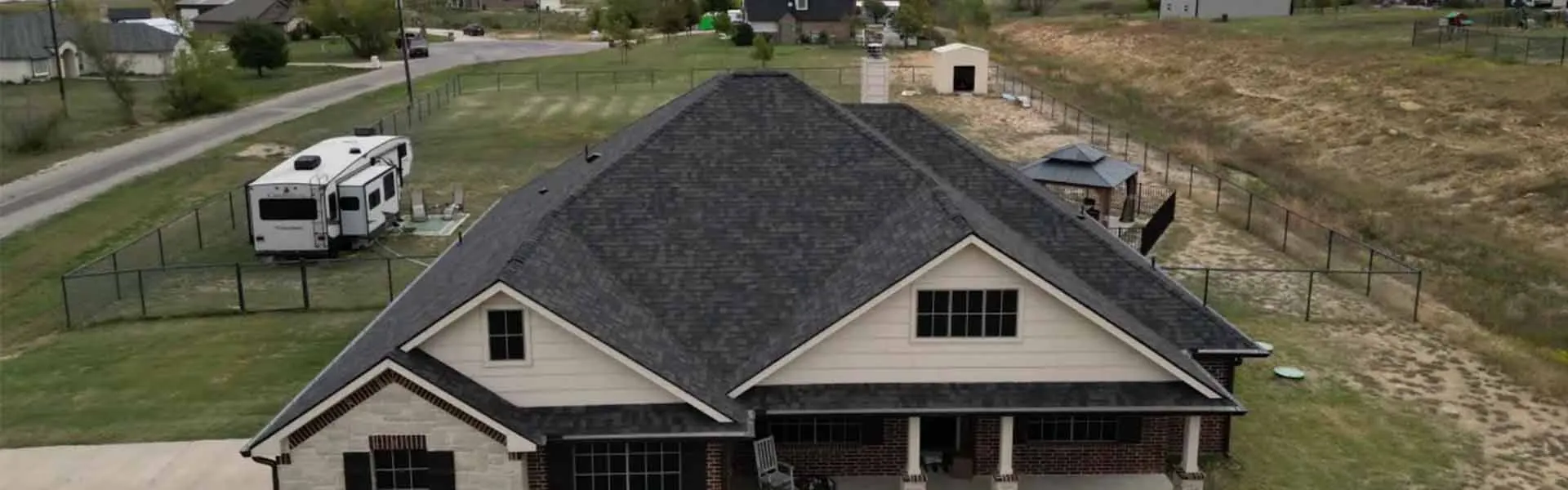
Look at the roof from across the street in early morning or late day light. Low sun makes dips easy to see.
- A dip in the ridge. The ridge is the top peak of the roof. It should be a straight line. If it bows down in the middle like an old horse's back, the framing may be giving way.
- Low spots on a slope. A soft dip in one area often means the deck boards there are wet or rotten.
- A wavy look. Small waves between each rafter can mean the deck boards are thin or have sagged a bit over time. This is common on older homes.
- A bowed roof edge. If the edge of the roof droops, the fascia (the board along the edge) or the ends of the rafters may be rotted.
What can cause it
Here are the common causes, from most to least likely.
- Water in the deck. A slow leak at a pipe boot, a chimney or a worn spot can wet the wood for months before you see a stain. Wet wood goes soft and bends. Our post on pipe boot leaks shows one of the most common sources.
- Too much weight. Some roofers put new shingles right over the old ones. Two or three layers add a lot of weight the framing was not built for.
- Thin or old deck boards. Older homes may have thin boards or wide gaps between them. Over the years they can sag between the rafters.
- A weak or cut rafter. A rafter can crack from age or a knot in the wood. Sometimes a rafter or brace was cut in the attic to make room for a vent, a fan or an air unit.
- Poor attic airflow. A hot, damp attic can make the wood swell, warp and rot. Our post on attic ventilation explains why airflow matters in a Texas summer.
- A storm. High wind, a fallen limb or the odd ice storm can crack framing.
- The house moving. North Texas clay soil swells when wet and shrinks when dry. When the house shifts, walls can move and the roof line can change with them. If you also see cracks in brick or doors that stick, the cause may be the ground and not the roof.
How to check safely
Please do not walk on a roof that sags. Soft wood can give way under your feet.
- From the yard. Take a photo of the roof line from the same spot every few months. If the dip gets deeper, that tells you a lot.
- From the attic. On a dry day, take a flashlight. Look for dark stains on the deck boards, wood that looks soft or black, nails that are rusty, and rafters that are cracked, bent or pulled apart where they meet. Step only on the framing, not between it.
- Inside the house. Look for ceiling stains, cracks in the drywall near the top of walls, and doors that stick in rooms below the dip.
How worried should you be?
It depends on what you see. A light, even wave on a roof that has looked the same for years is often just old deck boards. It is not urgent.
Call soon if the dip is new or getting deeper, if you see a sharp bend instead of a gentle curve, if the ridge bows, if you find cracked rafters in the attic, or if you have a leak at the same spot. Call right away if you hear cracking, see daylight through the deck, or a limb has landed on the roof. Keep people out of the rooms under that spot until it is checked.
How a roofer fixes it
A good roofer finds the cause first and shows you photos.
- Replace the bad deck boards. If a leak rotted the wood, the roofer takes off the shingles in that area, cuts out the soft boards, puts in new ones and fixes the leak. The trade-off: new shingles on a patch may not match an older roof exactly.
- Add a board to a weak rafter. A new board is fastened along the side of a cracked rafter to make it strong again. This is called sistering. Bigger framing problems may need a carpenter, or an engineer to say what the fix should be.
- Add braces in the attic. Braces can support a long span or put back one that was cut out.
- Tear off and start over. If there are several layers of shingles, or the deck is soft in many places, a full new roof may be the right call. Our roof replacement page explains what that job looks like.
Be careful with anyone who wants to shingle over a sagging roof without looking at the wood. New shingles will not fix soft wood, and they add weight. For coverage questions after a storm, ask your insurance agent.
Questions to ask a roofer
- What is causing the sag? Can you show me a photo?
- How many layers of shingles are on the roof now?
- Will you replace any soft deck boards, and will that be written in the estimate?
- Is this a roof problem, a framing problem, or something with the house itself?
What to do next
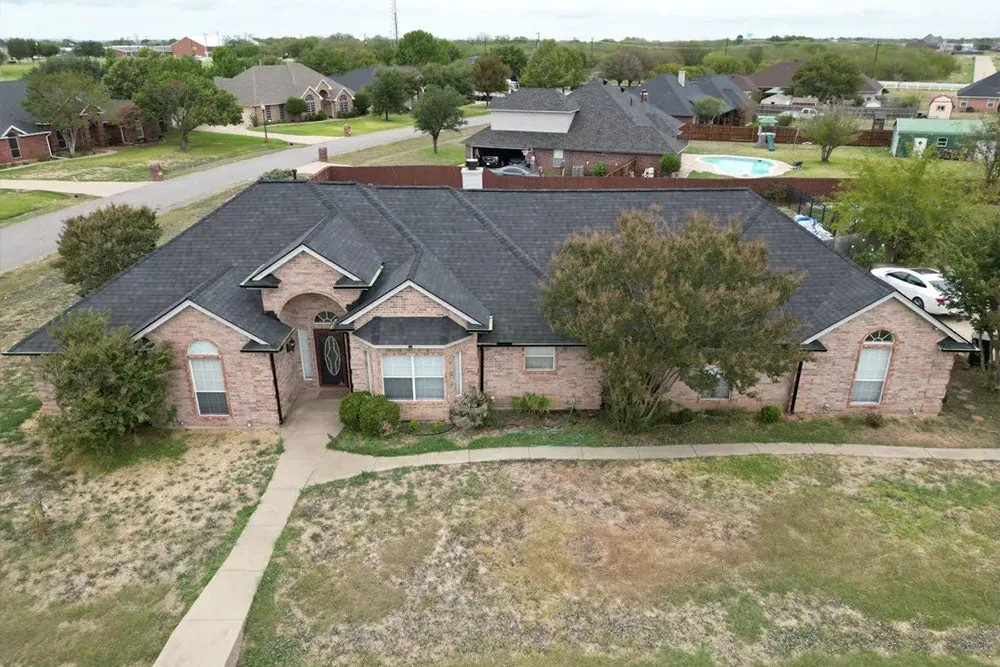
If your roof line dips on a home in Crowley, Fort Worth, Arlington, Burleson, Mansfield, Joshua or a nearby town, see our roof repairs page or call Legacy Roofing at (817) 602-2057. To see the whole roof first, set up a free drone roof survey. Someone needs to be home for the flight, and you see the pictures before we leave. You get a written photo report, and if something needs a closer look, it is checked by hand. We will tell you plainly what we see, and if the cause is not the roof, we will say so.