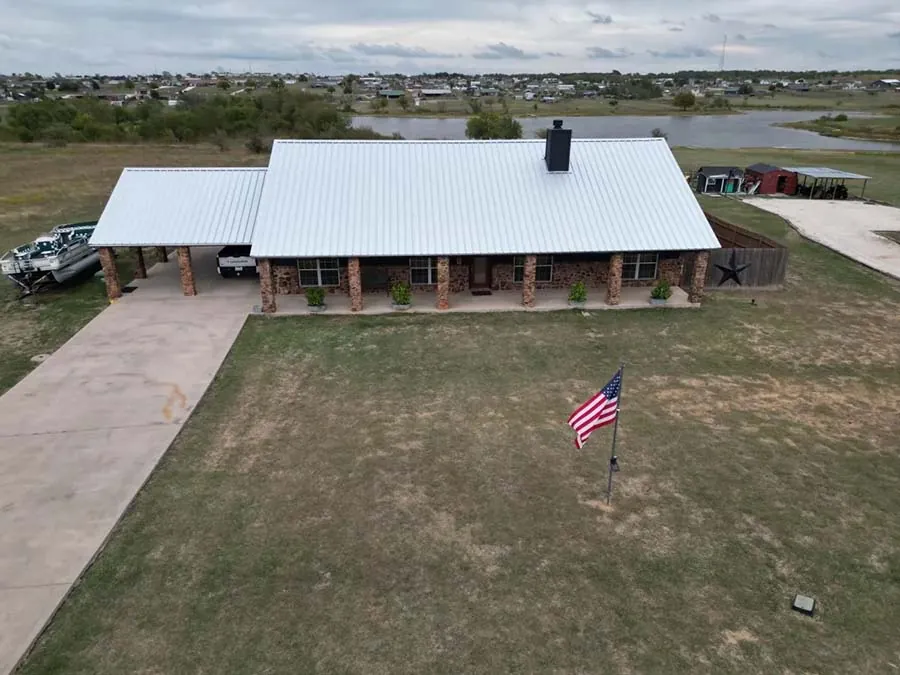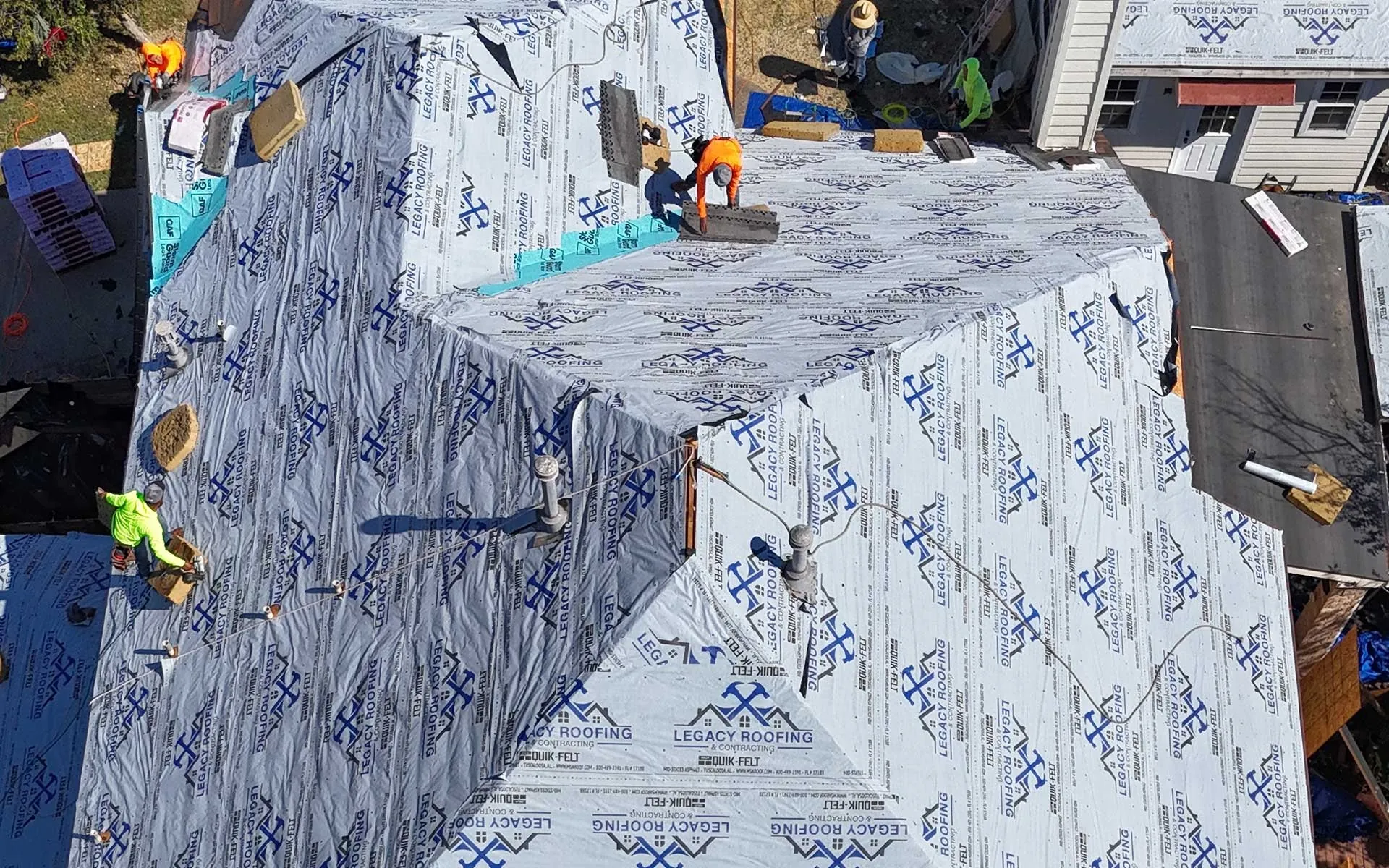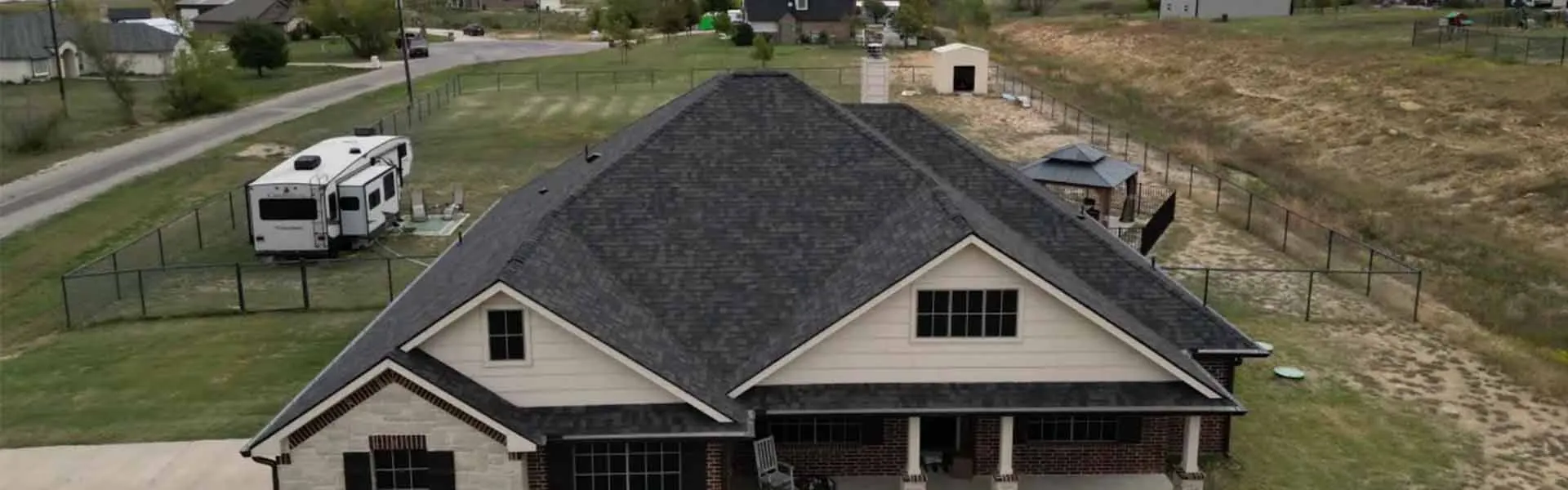
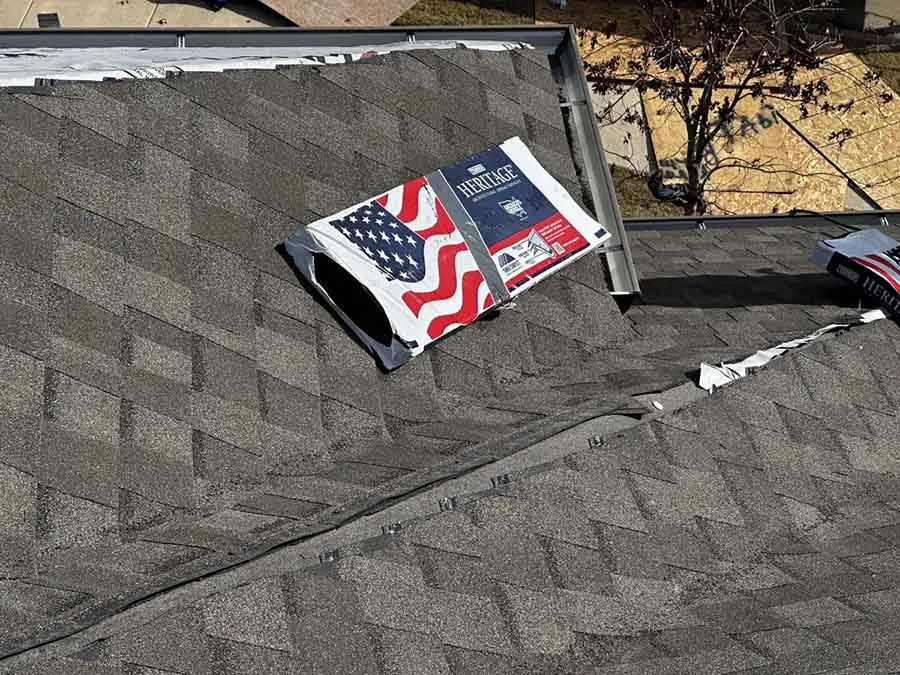
There is no set number of times you can patch a roof. A sound roof can take many small patches over its life, as long as each one fixes one clear cause, like a cracked pipe seal or a few shingles torn off by wind. Patching stops making sense when the same leak keeps coming back, when new leaks show up in new spots every season, or when the shingles are worn out all over. At that point you are not fixing the roof. You are chasing it.
What a roof patch is
A patch is a small repair to one spot. A roofer lifts the shingles around the problem, takes out the bad ones, fixes what is under them, and puts new shingles in, woven into the old ones so water runs over them the right way. A patch can also mean sealing new flashing (the metal that seals the joint where the roof meets a wall, chimney or vent) or swapping a worn pipe boot (the rubber collar around a pipe that sticks up through the roof).
A patch is not a blob of tar or a tube of caulk smeared on top of a shingle. That may slow a drip for a while, but sun and heat in North Texas dry it out, and it cracks. It also hides the real cause, so the next roofer has a harder time finding it.
What decides how many patches a roof can take
- The age of the roof. On a young roof, a patch fixes a spot and the rest of the roof keeps doing its job. On an old roof, the shingles around the patch are dry and brittle. They can crack when the roofer lifts them, and the next weak spot is often a few feet away.
- The cause of each leak. One storm that tore off a few shingles is a clear cause with a clear fix. Leaks from shingles that are simply worn out have no single cause, so a patch only fixes the spot you can see.
- How spread out the problems are. Two patches on one slope is not a big deal. Patches on every side of the house tell you the whole roof is aging at once.
- The wood under the shingles. That wood is called the decking. If a leak went on for a long time, the decking can turn soft or rot. A patch on top of soft wood will not hold. The bad wood has to be cut out and replaced first.
Signs patching has stopped paying off
- The same leak comes back. If a spot was patched and it leaks again, the first fix missed the cause, or the area around it has worn out too. Ask why before you pay for the same patch again.
- New leaks in new places. One leak after a spring storm, then another in a different room after a summer storm, then a third the next year is a pattern. The roof is failing in more than one place.
- Patches on many slopes. Look at the roof from the yard. If you can count patches of different color on most sides, the roof has been patched about as far as it should go.
- The shingles are worn all over. Curled edges, cracks, bare spots where the grit is gone, and piles of grit at the downspouts all mean the shingles are near the end of their life.
- The patches keep costing more. Each repair is bigger than the last, or each one turns up rotten decking. Add up what you have spent on patches to see the trend.
Hail is a different case
A patch works for damage in one spot. Hail hits the whole roof at once. Even where you cannot see a mark, the hits can crack the mat inside the shingle and knock grit loose. Patching the few spots you can see leaves the rest of the hits in place, and they tend to show up later as new leaks. If hail is the reason you are asking about a patch, get the whole roof looked at first. Our post on what hail damage looks like on a roof shows what to look for. If you have a question about what your insurance covers, ask your insurance agent.
Will the patch match?
Often it will not match perfectly. Shingles fade in the sun, so new ones look a little darker or brighter than the old ones for a while. Shingle colors and styles also change over time, so an exact match may not be made anymore. On the back of the house, that may not bother you. On the front, or if you plan to sell soon, it might. Ask your roofer to show you the closest match before the work starts.
When a patch is the right call
Patching is not a bad thing. It is often the smart, honest choice. A patch makes sense when:
- The roof is still fairly young and the shingles lie flat and still have their grit.
- The problem has one clear cause, like wind damage, a fallen branch, a worn pipe boot or loose flashing.
- The decking under the spot is still solid.
- The rest of the roof looks sound in clear photos.
A good roofer will tell you when a patch is enough, even though a new roof is a bigger job. If someone says you need a new roof, ask them to show you photos of the wear across the whole roof, not just one spot.
Keep a simple patch log
Write down each repair: the date, where on the roof, what caused it, and what was done. Keep the photos. In a few years, that log tells you, and any roofer you call, whether the problems are one-offs or a pattern.
What to do next
If your roof in Crowley, Fort Worth, Arlington, Mansfield, Burleson, Joshua or a nearby town has been patched before and is leaking again, get a clear look at the whole roof before you pay for another patch. Set up a free drone roof survey. Someone needs to be home for the flight, and you see the pictures before we leave. You get a written photo report, and if something needs a closer look, it is checked by hand. If the problem is in one spot, our roof repair page explains how we fix it. For the bigger question, read roof repair or replacement, or call Legacy Roofing at (817) 602-2057. We will tell you plainly what we see.