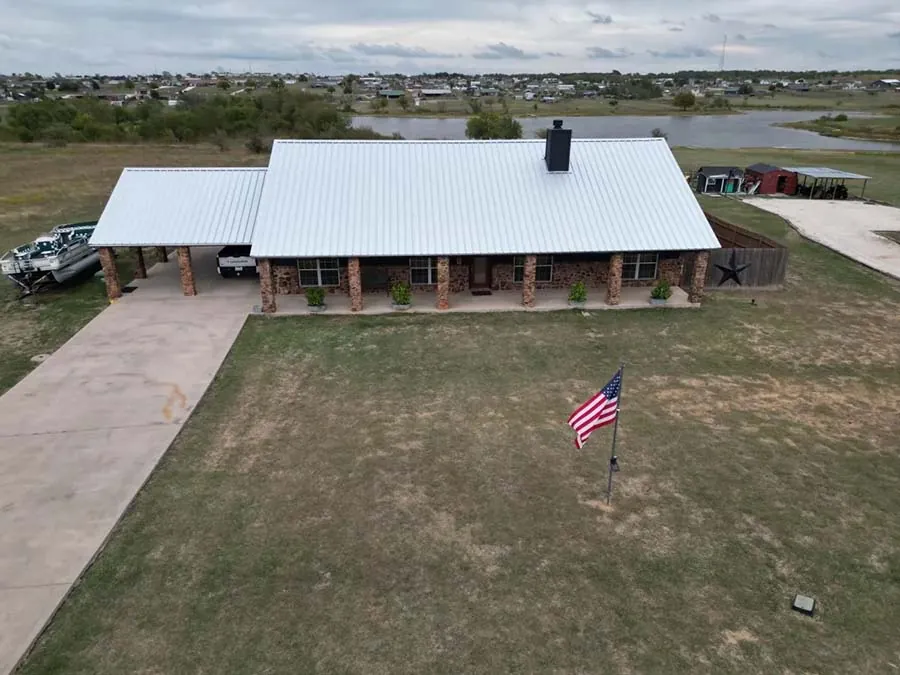
Metal is the usual roof for a shop, barn or carport in North Texas, and for good reason. It sheds rain fast, it does not dry out or curl in the heat, it is light, and it works on the low, gentle slopes most outbuildings have. The choices that matter most are which kind of panel you use, how the roof is fastened down against wind, and what goes under the steel so a closed shop does not "rain" on the inside. Get those three right and the roof should give you little trouble.
Why metal fits outbuildings so well
- Low slope. Many shops, barns and carports have a roof that is almost flat. Shingles need more slope to shed water. Metal panels run in long pieces from the top of the roof to the bottom, so water has few seams to get past.
- Light weight. Steel is much lighter than shingles, which suits the simple frames on most outbuildings.
- Heat. Steel does not lose grit or bake brittle in a long Texas summer the way shingles can.
The two kinds of metal panels
Both kinds are steel. They differ in how they are held down.
- Screw-down panels. These are the ribbed panels you see on most barns. Screws go right through the face of the panel into the frame. Each screw has a small rubber washer that seals the hole. They go on fast and cost less up front. The trade-off: there are hundreds of holes, and the rubber washers age in the sun. Over time some need to be tightened or swapped.
- Standing seam. The edges of each panel stand up and lock together, and the clips that hold them down are hidden under the seam. There are no screw holes in the face, so there are far fewer places for a leak to start. It costs more up front. It is a common pick for a shop you heat and cool, or one next to the house.
Our post on standing seam vs. stone-coated steel has more on how standing seam compares on a house.
The surprise in a closed shop: sweat
This is the problem people do not see coming. On a cool night, the steel roof gets cold. The warm, damp air inside the shop touches the cold steel and turns into water drops, the same way a cold glass of tea sweats on a hot day. The drops fall on your truck, tools and hay, and it looks like a leak.
Ways to stop it:
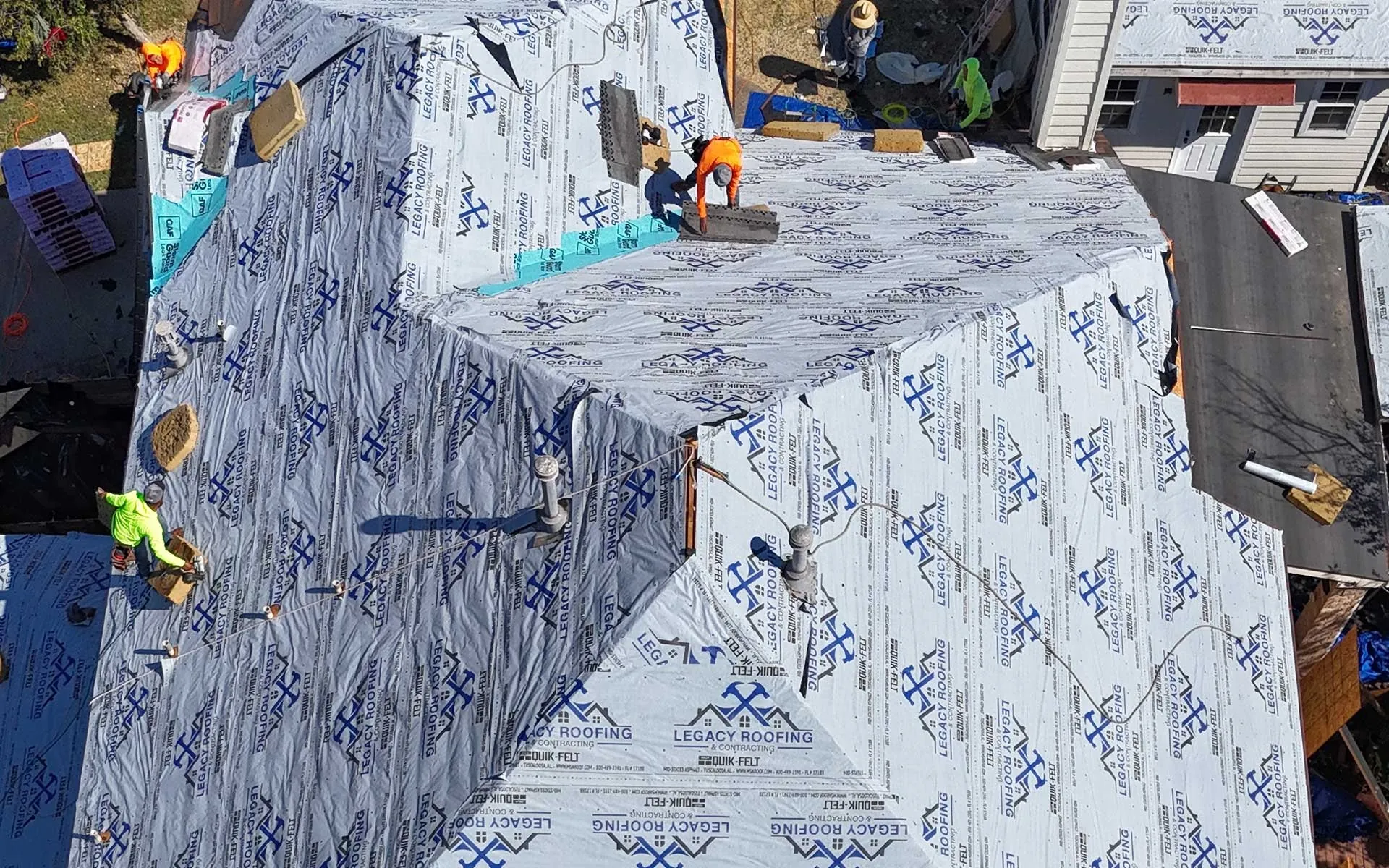
- A barrier under the panels. A layer of insulation with a facing, or a wrap under the steel, keeps damp air from reaching the cold metal.
- A felt backing on the panels. Some panels come with a soft, fuzzy layer on the underside. It holds the drops until they dry, so they do not fall.
- Air flow. A vent along the peak (a ridge vent) and openings low on the walls let damp air out.
- Cut down the damp. A bare dirt floor adds water to the air. A slab with a plastic sheet under it helps.
An open carport or barn has air moving through it, so sweat is less of a worry there.
Wind: open buildings catch it from below
A carport or a barn with an open side is like an umbrella. Wind gets under the roof and pushes up. What holds it down is the fasteners, how close together they are, and how well the frame ties to the posts. The edges and corners take the most force, so they need more fasteners. Ask your roofer how they fasten the edges, and ask them to look at the frame before they quote the job.
Hail and dents
Steel does not crack like a shingle, but big hail can dent it. On a ribbed barn panel, small dents are often only a looks problem. A dent that cracks the paint can rust over time, so it is worth a look after a big storm. Some panels carry a Class 4 rating, the top rating for hail, and some do not. If hail is a big worry, ask which panels have it and get it in writing.
Noise
A metal roof on an open barn or carport is loud in a hard rain. That is normal. There is no deck or attic to soften the sound. Insulation under the panels quiets a closed shop a lot. Our post on whether a metal roof is loud in the rain explains why.
Rust: where it starts
- Metal shavings. Drilling and cutting leave tiny bits of steel on the roof. If no one sweeps them off, each one rusts and leaves an orange spot. A good crew cleans the roof before they leave.
- Cut edges and scratches. The coating is gone there. Touch-up paint helps.
- Panels that touch dirt or wet wood. Keep the steel off the ground and away from piles of mulch, hay or wet lumber.
Don't forget the frame and the water
- Check the frame first. Metal panels screw to boards or metal strips that run across the roof, called purlins. On an old barn, some may be rotten or sagging. New panels on a weak frame will not last.
- Plan where water goes. A big metal roof dumps a lot of water fast, right where you walk in and out. Gutters, or ground that slopes away from the doors and slab, keep it from washing out your driveway.
- Watch the edge in an ice storm. When ice melts, it can slide off a metal roof in sheets. Do not park or stand under the low edge until it is gone.
- Check the rules. Some HOAs and cities have rules on outbuildings. Check before you order panels.
Questions to ask before you sign
- Screw-down panels or standing seam, and why for this building?
- What goes under the panels to stop sweat?
- How do you fasten the edges and corners?
- Is the frame sound, or does any of it need to be fixed first?
- Will you sweep off the metal shavings when you finish?
- Can I get the price in writing, with the house and shop priced together?
What to do next
If you have a shop, barn, carport or long porch to cover in Crowley, Burleson, Joshua, Cleburne or a nearby town, tell us everything you want roofed and we will price it together, in writing. Our metal roof installation page explains the panels we put on, or call Legacy Roofing at (817) 602-2057. We will tell you plainly what we see.