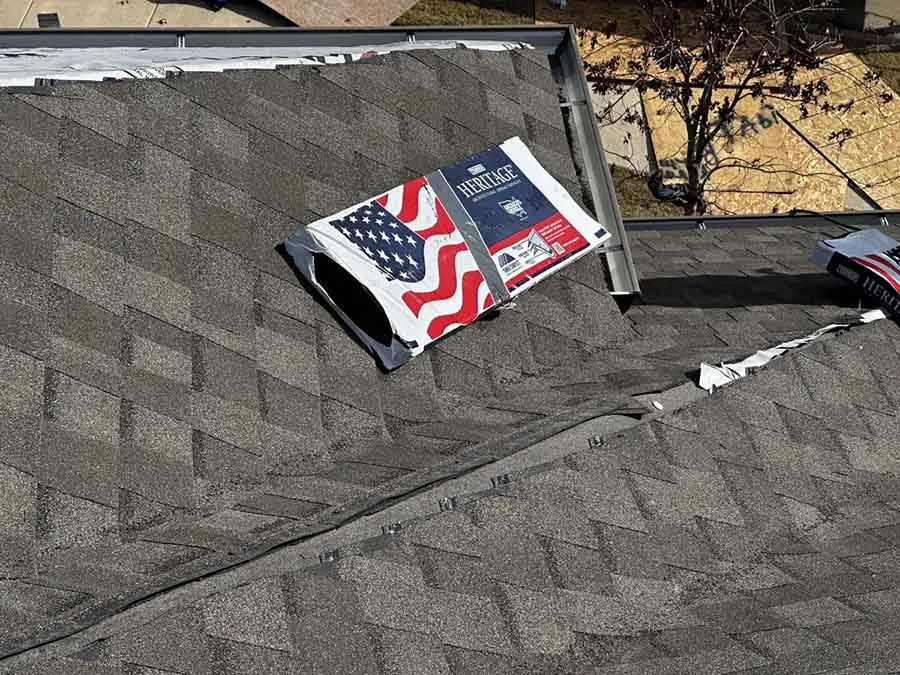
A pipe boot is the collar that seals around a pipe where it pokes through your roof. Most have a rubber ring on top of a flat metal or plastic base. In North Texas, the sun dries out that rubber until it cracks, and then rain runs down the pipe and into the attic. A cracked pipe boot is one of the most common roof leaks we see, and it is often one of the easiest to fix. Swapping a boot is a small job when it is caught early. Left alone, the drip can rot the wood under the shingles and stain the ceiling below.
What a pipe boot does
Every house has pipes that stick up through the roof. Most are vent pipes that let air into the drain lines so sinks and toilets drain well.
Each pipe needs a hole in the roof. The pipe boot covers that hole. It has two parts:
- The base. A flat piece that slides under the shingles above the pipe and sits on top of the shingles below it. That way, water running down the roof flows over it, not under it.
- The collar. A rubber ring that hugs the pipe tight. It keeps water from running down the outside of the pipe and into the hole.
When both parts are in good shape, water rolls right past. When the rubber fails, the pipe becomes a little funnel into your attic.
Why pipe boots fail so often in Texas
Rubber does not love the sun. On a summer day here, a dark roof gets far hotter than the air. The rubber collar bakes all day, then cools at night. Over the years it dries out, shrinks and splits.
A few other things speed it up:
- Age. On many roofs, the rubber gives out well before the shingles do. A roof can look fine while its pipe boots are already cracked.
- Hail. Hail can split a dried-out collar or dent a metal base.
- A bad install. A base set on top of the shingles above it, instead of under them, lets water slip right under it. Nails left bare on top of the base can rust and leak too.
Signs your pipe boot is leaking
Look for these:
- A stain on the ceiling near a bathroom, the kitchen or the laundry room. Those rooms sit under the vent pipes.
- A drip or a damp spot around a pipe in the attic, or dark, wet wood around the hole.
- Water on the pipe itself in the attic after a rain.
- A cracked or torn collar you can see from the ground. Use binoculars or zoom in with your phone camera. Look for a gap between the rubber and the pipe.
- A base that is lifted or loose, or shingles around it that are missing or curled.
A stain can show up a few feet away from the pipe, because water runs along the wood before it drips. Our post on a water stain on the ceiling walks through how to trace one.
How to check from the ground
Please stay off the roof. It is steep and slick, and a fall is not worth it. You can still learn a lot from below:
- Find the pipes. Walk around the house and look for the short pipes on the roof. Most homes have two to four.
- Zoom in. With binoculars or your phone camera, look at the top of each collar. Is the rubber smooth and snug, or is it gray, cracked or pulled back?
- Check the attic. On a dry day, take a flashlight up to the attic. Find where each pipe comes through. Look for dark wood, old water lines or rust on nails near the hole.
- Check again after rain. A fresh drip or a damp spot near the pipe is the clearest sign.
How a roofer fixes it
There are a few ways to handle a bad pipe boot. They are not all equal.
- Replace the boot. This is the right fix most of the time. The roofer lifts the shingles above the pipe, pulls the old boot, slides a new one under those shingles, and seals it down. Done well, it holds up far better than a patch.
- Slip-on collar. A new rubber collar can be slid over the old one in some cases. It can work when the base is still good.
- Sealant only. A bead of roof sealant around a cracked collar can stop a drip for a while. It is a short-term patch, not a fix. The sun dries out sealant too.
Ask which one you are getting. If someone only puts sealant on it, you will likely see them again.
The roofer should also check the wood around the hole. If water has been getting in for a while, the deck (the wood boards under the shingles) may be soft and need a new piece.
Which kind of boot is best?
There are a few common types:
- Plastic base with a rubber collar. Common on newer homes. The plastic can crack in the sun over time.
- Metal base with a rubber collar. The metal base holds up well. The rubber is still the weak spot.
- All-metal (lead or soft metal). The metal is folded down into the top of the pipe. With no rubber to dry out, it can last a long time. It costs more up front.
Ask what kind your roofer plans to use, and why. For a roof in full sun, a boot with no rubber collar can be worth it.
Fix the boot or the whole roof?
A cracked pipe boot on a roof that is in good shape is a repair, not a reason for a new roof. But if the boots are cracked and the shingles are worn, losing grit or curling, it may be time to look at the whole roof. When a roof is replaced, the pipe boots are replaced too. Our post on repair or replacement can help you make the call.
What to do next
If you see a stain near a bathroom or kitchen, or a cracked collar on a pipe, call Legacy Roofing at (817) 602-2057. We are based in Crowley and work across Fort Worth, Burleson, Mansfield, Joshua and nearby towns. See our roof repair page for more. If you want to see every pipe boot on your roof up close, book a free drone roof survey. Someone needs to be home for the flight, you see the pictures before we leave, and you get a written photo report. If something needs a closer look, we check it by hand.