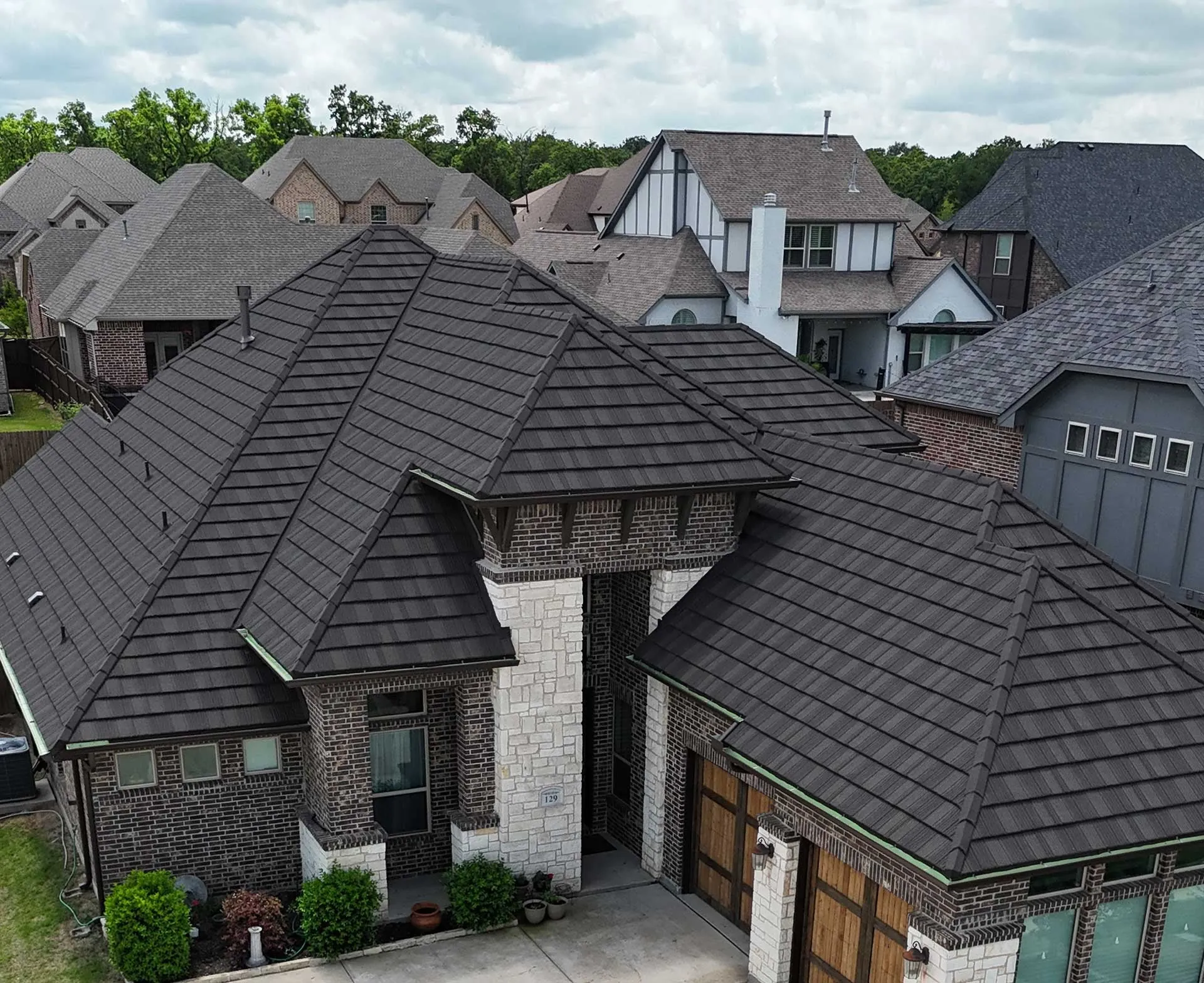
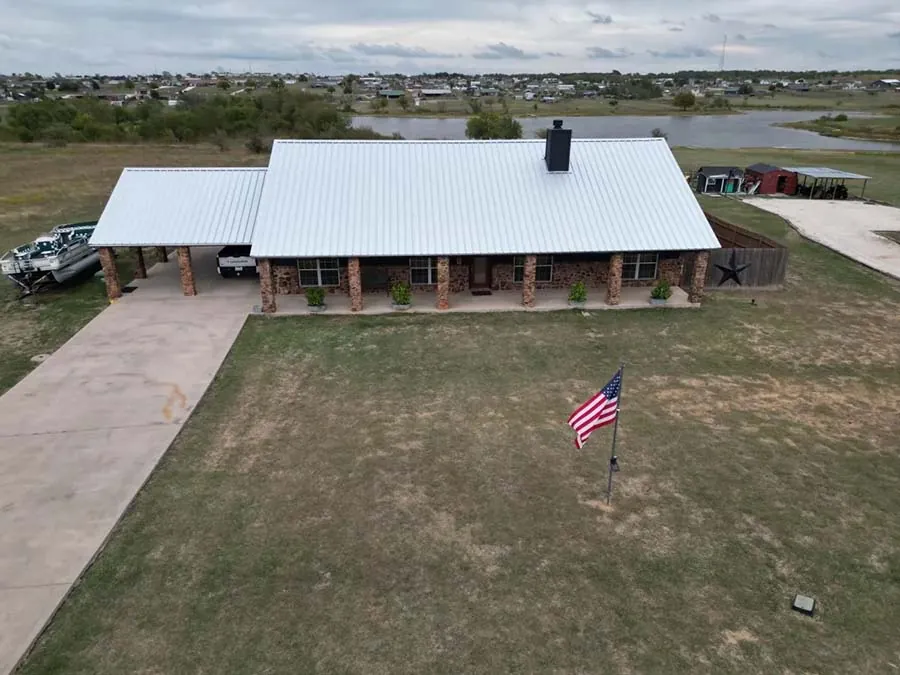
Both are steel roofs, and both are built to outlast shingles. The big difference is the look. Standing seam is long, smooth panels with raised ribs running from the top of the roof to the bottom. It looks like metal, on purpose. Stone-coated steel is steel pressed into the shape of wood shake or clay tile, with small bits of stone on top, so from the street it does not look like metal at all. If you love the clean, modern farmhouse look, or you are roofing a shop or a low-slope porch, standing seam is often the fit. If hail is your biggest worry and you want a roof that blends in with the houses around you, stone-coated steel is often the better pick. Both cost more up front than shingles.
What each one is
- Standing seam. Each panel is one long sheet of steel that runs the full length of the roof slope. Where two panels meet, their edges stand up and lock together. That raised edge is the "seam." The screws or clips that hold the panels down sit under the seam, out of the weather.
- Stone-coated steel. The steel comes in smaller panels, a few feet wide, shaped like shake or tile. Crushed stone is bonded to the top for color and texture. The panels lock together in rows with a foam pad underneath.
Looks
- Standing seam has clean, straight lines and a smooth finish. It suits ranch, farmhouse and modern homes, and outbuildings. On a long, simple roof it looks sharp. On a busy roof with lots of small angles, the lines can look choppy.
- Stone-coated steel looks like wood shake or clay tile. It has texture and shadow, like a more traditional roof. On a street full of shingle roofs in Mansfield or Burleson, it blends in. Most people who drive by never know it is metal.
If you live in a neighborhood with an HOA, check its rules early. Many HOAs in DFW suburbs list which roof types and colors they allow, and some treat the two kinds of metal differently.
Hail
Hail is the big question here, from Fort Worth down to Cleburne.
- Stone-coated steel carries a Class 4 rating, the top rating for hail. The stone texture also hides small marks well, because there is no smooth, shiny face to show them.
- Standing seam panels are smooth and flat. Steel does not crack the way a shingle does, but large hail can leave dents, and on a smooth panel a dent catches the light and is easy to see. Some panels carry a Class 4 rating and some do not. Ask your roofer which ones do, and get it in writing.
No roof is hail-proof. A Class 4 rating means a roof passed a hard impact test. It does not mean hail can never leave a mark. Be wary of anyone who says otherwise.
Wind and rain
Both handle our spring storms well when they are put on right.
- Stone-coated steel is rated for 140 mph wind. The panels lock to each other, so there are no loose flaps for the wind to catch.
- Standing seam panels are long and locked at the seams, and the fasteners are hidden. The panels shed rain fast, and they can go on lower-slope roofs, like some porches and add-ons, where many other roof types are not a good fit.
With either one, the edges matter most. Ask how the roofer handles flashing (the metal pieces where the roof meets a wall, a chimney or a vent) and the valleys (the low lines where two roof slopes meet).
Heat
Steel does not dry out, curl or lose grit in the sun the way shingles do. That is a big reason people choose metal in Texas. Light colors reflect more of the sun's heat.
Noise
People worry a metal roof will sound like a tin barn in the rain. On a house, it does not have to.
- Stone-coated steel has a foam pad under the panels, so it is as quiet as shingles.
- Standing seam on a house goes over a solid wood deck and underlayment (the layer under the roof), with an insulated attic below. Most people find it close to a shingle roof. An open barn or carport with no deck is louder.
Repairs
- Stone-coated steel comes in smaller panels, so one damaged piece can often be swapped on its own.
- Standing seam panels run the full length of the slope. A badly damaged panel can mean replacing that whole long panel, which is a bigger job.
Side by side
- Look: standing seam looks like modern metal; stone-coated steel looks like shake or tile.
- Hail: stone-coated steel is Class 4 and hides marks well; standing seam depends on the panel, and dents show more on the smooth face.
- Wind: both are strong; stone-coated steel is rated for 140 mph.
- Low-slope roofs: standing seam is the better fit.
- Repairs: stone-coated steel panels are smaller and easier to swap.
- Cost: both cost more up front than shingles. Ask for written prices on your own house.
Which one fits your house
Standing seam is often the better fit if:
- You want a clean, modern or farmhouse look.
- Your roof is long and simple, or has a low-slope porch.
- You are covering a shop, barn or carport, where looks come second.
Stone-coated steel is often the better fit if:
- Hail has cost you a roof before and you want the top hail rating.
- You want a roof that looks like shake or tile and blends in on your street.
- Your roof has a lot of angles, valleys and dormers.
Either way, metal pays off most if you plan to stay in the home a long time. If you may sell in a few years, a good shingle roof may be the better use of the money. Our metal vs. shingle comparison covers that. And if a Class 4 roof might change what you pay for coverage, ask your insurance agent about your own house before you count on it.
What to do next
To see both looks, start with our metal roof page and our stone-coated steel roofing page. Then call Legacy Roofing at (817) 602-2057. We are based in Crowley and work across Fort Worth, Burleson, Mansfield, Joshua and nearby towns. We will price the roof you are thinking about next to the other choices, in writing, so you can weigh them and decide.