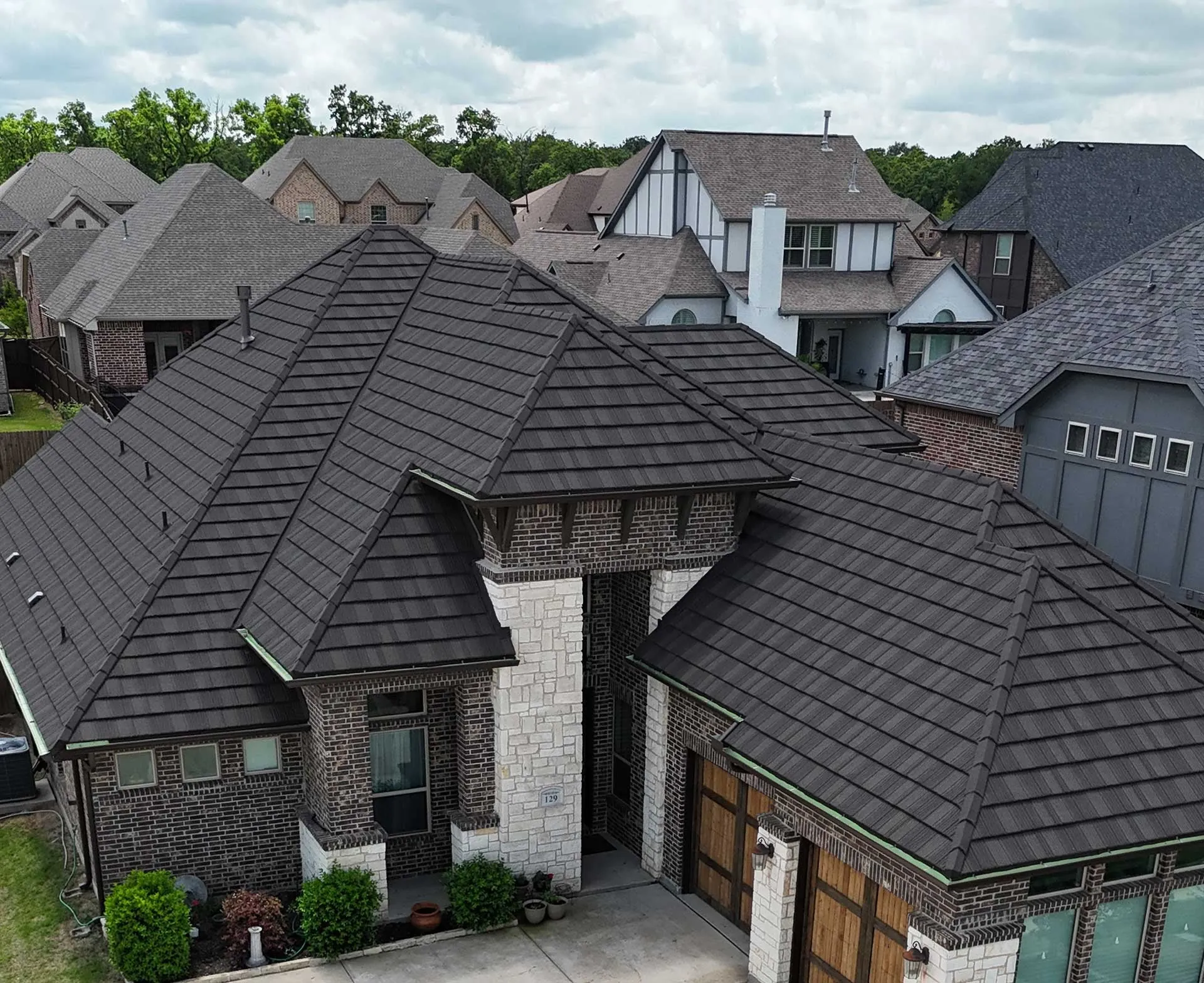
Stone-coated steel is a metal roof that does not look like metal. Each panel is a sheet of steel pressed into the shape of wood shake, clay tile or a thick shingle, with small bits of stone bonded on top. From the street, most people think it is a shake or tile roof. It carries the top hail rating (Class 4) and the top fire rating (Class A), it is rated for 140 mph wind, and it is rated to last 50 years. The trade-off is cost: it costs more up front than shingles. It fits best if you plan to stay in your home a long time and are tired of replacing roofs after hail.
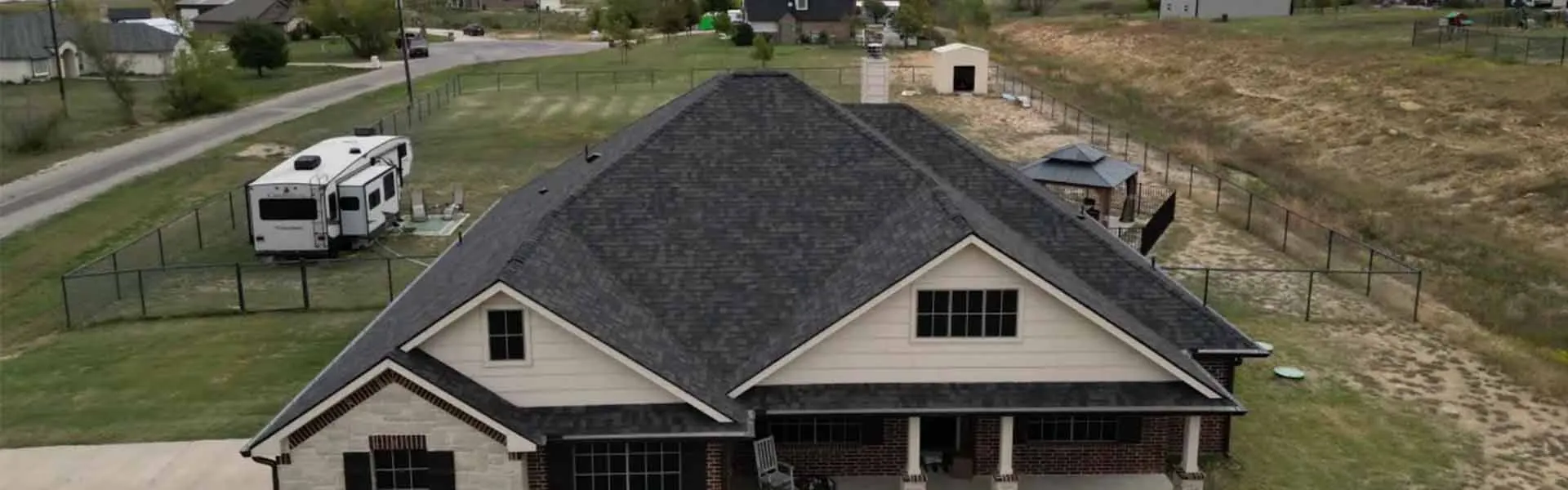
The photo at the top of this page shows an example home with a stone-coated steel roof.
How it is made
Think of it in three layers:
- The steel. This is the strong part. It does not crack, curl or dry out in the sun the way a shingle does.
- The stone. Crushed stone is bonded to the top of the steel. It gives the roof its color and texture, so it reads as shake or tile instead of shiny metal.
- The foam pad. A foam pad goes under the panels. It is the reason the roof is as quiet as shingles when it rains.
The panels are larger than a single shingle. They lock together in rows and are fastened down to the roof deck (the wood boards under the roof).
How it holds up in North Texas
Our weather is hard on roofs. Hail in the spring, strong wind in storms, and months of heat. Here is how stone-coated steel does with each.
- Hail. It carries a Class 4 rating, the top rating for hail. That means it passed a hard impact test. It does not mean hail can never leave a mark, so be wary of anyone who tells you that. But it is built to take a hit far better than a standard shingle.
- Wind. It is rated for 140 mph wind. The panels lock to each other, so there are no loose flaps for the wind to grab.
- Fire. It carries a Class A fire rating, the top rating. That matters in dry, windy stretches when grass fires spread.
- Heat. Steel does not dry out and crack in the sun. A shingle roof slowly loses its grit and gets brittle in Texas heat. Steel does not wear out that way.
Stone-coated steel vs. other roofs
It helps to see where it sits next to the other choices.
- Standard shingles cost the least up front. In our hail and heat, many need to be replaced far sooner than a steel roof would.
- Class 4 shingles are shingles made to take hail better. They are a middle path between standard shingles and steel. Our post on whether Class 4 shingles are worth it covers that choice.
- Standing seam metal is the clean, modern look with long panels and raised ribs running up the roof. Some people want that metal look.
- Stone-coated steel gives you the strength of steel with the look of shake or tile.
For a wider look at metal next to shingles, read our honest comparison of metal and shingle roofs.
Who it fits
Stone-coated steel tends to make sense if:
- You plan to stay. The higher price up front pays off over many years. If you will live in the house a long time, you may never need to re-roof again.
- Hail has cost you a roof before. Many homes in Crowley, Burleson, Mansfield and Fort Worth have had more than one roof in a short span because of hail. Steel is built to break that cycle.
- You love the look of shake or tile. Real wood shake can rot, split and burn. Real clay tile is heavy and can crack. Stone-coated steel gives you that look without those worries.
- You want less to think about. A steel roof does not curl, crack or lose its strength in the sun.
Who it may not fit
It is not the right roof for everyone. Be honest with yourself about these:
- You may sell soon. If you plan to move in a few years, you may not get the full value of a long-life roof. Shingles or Class 4 shingles may be the better use of the money.
- The budget is tight. If the roof must be done now and money is short, a good shingle roof put on well is a sound choice.
- Your HOA has rules. Many HOAs in DFW suburbs list the roof types and colors they allow. Check before you get far.
Questions to ask before you pick it
- Which looks and colors can I see? Ask to see real panels, not just a picture on a screen. Colors look different in the Texas sun.
- What is under the panels? Ask about the underlayment (the layer that goes under the roof) and the foam pad.
- How are the edges and walls sealed? Ask how they handle flashing (the metal where the roof meets a wall or a chimney) and the vents.
- Can I see the price next to shingles? A good roofer will price both, in writing, so you can see the gap and decide for yourself.
- Will a Class 4 roof change what I pay? Ask your insurance agent, for your own house, before you count on it.
What it is like to live with
Day to day, you will not notice much. It is as quiet as shingles in the rain because of the foam pad. You can still clean the gutters and check the roof from the ground after a storm, the same as any roof. Please stay off it yourself. Like any roof, it should be walked on only by someone who knows where to step.
Once a year, and after a big hail storm, take a look from the yard. Check for anything bent, loose or out of line, and look at the gutters for anything that came off the roof.
What to do next
If you live in Crowley, Fort Worth, Burleson, Mansfield, Joshua or nearby and want to know if stone-coated steel fits your house, see our stone-coated steel roofing page to see the looks. Then call Legacy Roofing at (817) 602-2057. We will price it next to shingles, in writing, so you can weigh the two and decide.